
Most people think a wetsuit is there to keep you warm. Warmth helps, but it is not the main reason we recommend one.
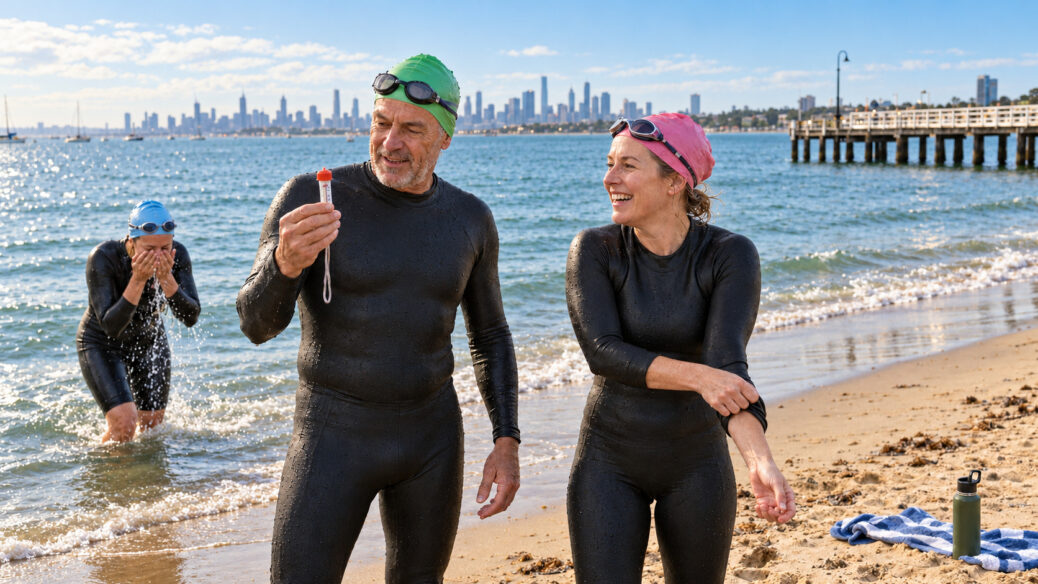
In Melbourne, racing in the bay means racing in a wetsuit. Port Phillip Bay rarely gets warm enough to put a wetsuit ruling in doubt, so age-group swims here are almost always wetsuit swims. Elite and pro fields have stricter limits and can occasionally be called non-wetsuit, but for age groupers it would be highly unusual to race the bay without one. The real reason to wear a suit is efficiency. A good wetsuit lifts your hips and legs into a better body position, and when your body position is right you swim better and use less energy. That is energy you get to spend on the bike and the run. The time to think seriously about sleeveless or no wetsuit is when you race further north, interstate or overseas, where warmer water brings the cut-offs into play.
This guide explains the rules and gives age-group athletes a practical way to choose between a full-sleeve wetsuit, a sleeveless wetsuit, a swimskin or no wetsuit at all. It is general race-preparation guidance. Always follow the athlete guide, the race briefing and the technical officials for your event.
Start With the Rules, Then Decide
A wetsuit decision starts with the official rules, then moves to confidence, swim distance and heat. In Australia, the AusTriathlon Race Competition Rules set the water temperatures that make a wetsuit mandatory, optional or forbidden.
For age-group racing at most Australian events, the rule is simple: wetsuits are mandatory at 15.9 C and below, and forbidden at 24.6 C and above. World Qualifying races are stricter for younger age groups (over swims up to 1500 m, wetsuits are forbidden from 22.0 C), and elite categories are stricter again. The final water temperature is taken about an hour before the start, and the Technical Delegate can change the ruling for safety.
So your question should not be “do I like wetsuits?”. It should be: Is it legal? Is it safe? Does it help me swim better? Can I get it off quickly? Will it overheat me? Have I rehearsed this choice in training?
The Temperature Cut-Offs Athletes Should Know
Rules vary by federation and race series, so the athlete guide is always the final word. These thresholds give you a practical planning frame well before race week.
| Water temperature | Practical decision | Coaching note |
|---|---|---|
| Below 13.0 C | Swim usually cancelled under AusTriathlon guidance | Have a duathlon-style plan in your head for very early season races. |
| 13.0 to 15.9 C | Wetsuit mandatory, and the swim may be shortened | Practise cold-water entry, breathing control and a calm first 200 metres. |
| 16.0 to 18.0 C | Full-sleeve wetsuit for most athletes | Warmth and buoyancy usually outweigh any shoulder restriction. |
| 18.1 to 21.0 C | Full-sleeve or sleeveless, depending on fit and confidence | Still wetsuit legal. In the bay, most age groupers stay in a full suit for the body position. |
| 21.1 to 24.5 C | Optional for most age-group racing | Sleeveless, a swimskin or no wetsuit may be smarter if you overheat easily. |
| 24.6 to 28.8 C | Forbidden in Australian age-group racing. At IRONMAN events you may still wear one, but you lose award and slot eligibility | Have a non-wetsuit swim plan ready well before race week. |
| Above 28.8 C | Prohibited at IRONMAN events | Heat risk becomes the priority. Follow event instructions. |
Cold water can also change the distance. Under the AusTriathlon guide, a 1500 m swim stays at 1500 m down to 14.0 C, drops to 750 m between 13.0 and 13.9 C, and is cancelled below 13.0 C. If you are racing early in the season, check the swim format in the athlete guide as well as the wetsuit ruling.
The numbers matter, but they are not the whole decision. A nervous first-time open-water swimmer may benefit from the buoyancy and security of a legal full suit at 20 degrees. A strong swimmer with tight shoulders may swim better sleeveless at the same temperature. A long-course athlete who overheats easily may choose no wetsuit on a legal but warm day to protect the back half of the race.
When to Wear a Full-Sleeve Wetsuit
Wear a full-sleeve wetsuit when the water is cold enough that warmth, buoyancy and body position help more than shoulder freedom. For many age-group triathletes that is the default from roughly 16 to 20 degrees, and it is compulsory below that, provided the suit fits well and has been tested in open water.
The full suit usually helps athletes who sit low in the water, cross over when they tire, or lose composure in the first few minutes of a crowded start. The extra buoyancy makes sighting easier and reduces the cost of small technique errors. In rougher water it also gives a psychological safety margin, which matters when your heart rate spikes and everyone around you is churning.
The downside is restriction. Tight shoulders shorten the stroke and raise effort. A rubbing neck becomes a distraction. In warm water or a short swim, the time you gain in buoyancy can be lost to overheating or a slow transition. A full suit is a tool, not an automatic upgrade.
When to Go Sleeveless
Go sleeveless when you want some buoyancy and core warmth but need more shoulder freedom or a cooler swim. Sleeveless suits often suit athletes with good body position, athletes who dislike shoulder restriction, and borderline-warm water where a full suit feels like too much.
On a mild morning with the water around 19 to 22 degrees, a sleeveless suit can feel smooth and controlled. It is also quicker to remove in T1, which matters in sprint and Olympic-distance racing where transition time is a real part of your result.
The trade-off is less warmth and sometimes less speed than a full suit. If you are anxious in cold water, or you rely on the suit for body position, sleeveless may not give you enough support. The only way to know is to test both at the same effort in open water, not to judge from a shop fitting or a warm pool swim.
When to Skip the Wetsuit
Skip the wetsuit when it is not legal, when the water is warm enough that overheating is a real risk, or when your stroke is clearly better without neoprene. Have a no-wetsuit plan ready for any race near the cut-off.
A no-wetsuit swim is not a failure. It is part of being race-ready. Athletes who only ever swim in a wetsuit can panic when a warm-water ruling takes it away. The fix is simple: include some controlled non-wetsuit open-water swims before race day, especially if your target race is in summer or somewhere warmer interstate.
Swimming without a suit also changes your tactics. You sit a little lower, need a steadier kick and spend more energy holding position in chop. Start calmer, sight more deliberately and pace honestly. If you are building toward a race on the Tri Alliance race calendar, check past conditions, but do not assume this year’s ruling will be the same.
More Than Warmth: Swimming Efficiently
For our Melbourne age-group squad, a wetsuit is the usual starting point for open-water swimming. The benefit goes beyond keeping warm: its buoyancy helps lift the hips and legs, supporting a more streamlined position and reducing the effort spent keeping the body level. That makes efficiency an important part of choosing your suit, alongside water temperature and the event’s wetsuit rules.
Some confident swimmers prefer sleeveless suits for the unrestricted feeling around their shoulders. That preference does not mean sleeveless is automatically better for stronger swimmers: a well-fitting full-sleeve suit can also allow a natural stroke. The aim is comfortable movement, good body position and a stroke you can sustain.
Make that support count by practising a relaxed head position, controlled breathing, body rotation and sighting without lifting your head excessively. Test your suit during training so you know you can swim comfortably and maintain your technique.
Race Distance Changes the Decision
The same water temperature can lead to different choices over different distances. In a sprint, a wetsuit can cost time if you fight it in T1. In a 70.3 or full-distance swim, warmth, body position and energy saved matter more.
For sprint and Olympic-distance racing, ask whether the suit makes you fast enough to justify the time it takes to remove. For a confident swimmer, sleeveless or no wetsuit can make sense in warmer legal water. For a developing swimmer, a legal full suit is often still worth it, because a calm swim sets up the bike.
For long-course racing the decision is more strategic. A wetsuit reduces the cost of the swim, but overheating early can hurt the rest of the day. Athletes in long-course triathlon training should test both the swim and the first 10 minutes of riding after T1, because that is where a too-hot swim shows up as a high heart rate and messy fuelling.
Fit and Practice Matter More Than Brand
A legal wetsuit that fits badly is still a poor race choice. The right suit seals without choking, lets your arms recover relaxed, and lets you breathe without feeling your chest is squeezed.
Before race day, rehearse four things. First, put the suit on properly, lifting enough material into the shoulders and hips. Second, swim at race effort for at least 10 to 15 minutes, not just a few easy strokes. Third, practise sighting and turning, because restriction often shows up when your head lifts. Fourth, take the suit off when you are tired, with wet hands and a raised heart rate.
Athletes on structured triathlon training plans should log their wetsuit choice in their session notes: water temperature, air temperature, suit type, shoulder feel, breathing, perceived effort, chafing and T1 removal time. Those notes are worth far more than race-week guessing.
Melbourne Open-Water Context
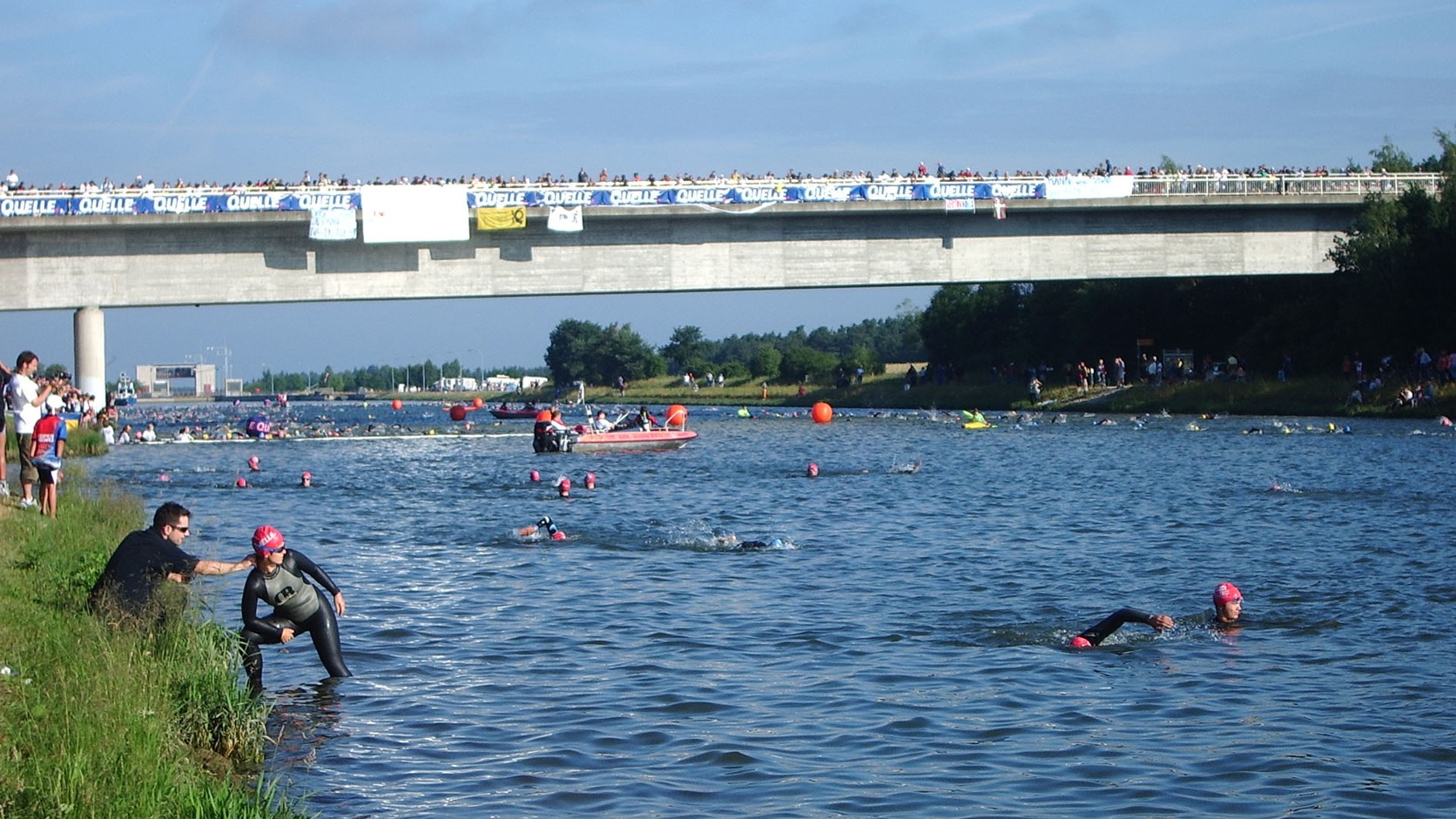
Melbourne rewards athletes who can adapt. Bay swims can turn from calm to choppy and exposed quickly, and your decision is shaped by wind, air temperature, cloud cover, start time and how long you stand on the beach waiting for your wave.
Early in the season the job is managing the first few minutes in cold water: the cold face, short breathing, tight shoulders and over-kicking. Get in gradually, put your face in and blow bubbles before you start swimming, and keep the first few minutes easy until your breathing settles. Even late in summer the bay rarely gets near the wetsuit cut-off, so for local races the question is fit, comfort and body position, not whether a suit is legal. Save your no-wetsuit practice for races further north or overseas. Athletes in Melbourne squad training should use supervised open-water sessions to get comfortable with cold entries and race-pace swimming in their suit.
The best decision is made before race week. Build a simple matrix: full suit below your tested comfort point, sleeveless in your borderline range, and no wetsuit if the race is likely to be warm or the suit is forbidden. Then rehearse each option enough that the official ruling does not throw you on the day.
When to Be Conservative
Do not force a wetsuit decision because another athlete looks confident. Be conservative if you are new to open water, if cold water makes your breathing unpredictable, if a suit restricts your neck, or if warm water leaves you feeling heavy and overheated.
Be cautious, too, if you have not tested the suit in open water. A pool swim does not recreate chop, sighting, contact, beach or deep-water starts, or the nerves of the first buoy. If the suit changes your stroke or your breathing, fix that in training, not at the event.
On race day, follow the technical officials. If the swim is shortened or changed because of temperature, wind or safety, the right response is not frustration. It is adjustment.
Put It Into Practice
- Pool session: 12 x 100 m steady, with every fourth 100 m at race effort. Notice whether your stroke wants more shoulder freedom or more body-position support.
- Gear check: put your wetsuit on dry, spend 5 minutes adjusting the hips, torso and shoulders, then practise 5 fast removals from zipped up to suit off at the ankles.
- Open-water session: swim 3 x 8 minutes continuous in your planned suit with 2 minutes easy between. Record the water temperature, air temperature, breathing control, shoulder feel and sighting.
- Decision matrix: write your race plan in three lines: full suit below X degrees, sleeveless between X and Y degrees, no wetsuit above Y degrees or whenever the rules forbid it.
Sources
This guide uses the AusTriathlon Race Competition Rules (August 2025) for Australian wetsuit thresholds, water-temperature procedure and cold-water swim adjustments, the 2026 IRONMAN Competition Rules for long-course wetsuit limits, and the 2026 World Triathlon Competition Rules for international competition context. Rules can change by event, category and race briefing, so always check your athlete guide.
If you want help turning wetsuit choice, open-water confidence and race execution into a complete plan, look at Tri Alliance triathlon training options or book a free triathlon coaching consultation. The goal is not to own every swim option. It is to know exactly which one helps you race calmly on the day.
Discover more from Tri Alliance Triathlon Community
Subscribe to get the latest posts sent to your email.