
The jump from 60 km to 100 km is a fuelling and pacing problem, not a fitness problem
If your weekend ride has stepped up from 60 km to 80 km, and 100 km is on the horizon, you are in the part of the season where the distance starts to feel like a genuine event rather than a training session.
Most athletes assume the answer is more fitness. Usually it is not. By the time you are riding 80 km comfortably, you already have the aerobic base for 100 km.
What decides whether the longer ride feels controlled or awful is almost always how you paced the first hour, and how you fuelled the whole thing.
Coach’s quick read: Ride the first third genuinely easy, judge by effort rather than speed, and start eating at 20–30 minutes instead of waiting until you feel empty. The wall people hit at 70 km is usually a decision that was made — or not made — at 30 km.
Pacing: the first hour decides the last hour
The single most common mistake on a step-up long ride is starting at the pace that felt fine when the ride was 60 km. It will feel fine again — for a while. The cost arrives at 70 km.
Four pacing rules for the step-up ride
- Ride the first third genuinely easy. It should feel almost too comfortable. If you are working to hold the wheel in the first 20 km, the ride is already going badly and you do not know it yet.
- Use effort, not speed. Wind, hills and group dynamics make speed a poor guide. Aim for a conversational effort: you should be able to speak in full sentences.
- Flatten the surges. Repeated hard efforts out of corners, up short rises and away from regroups are what empty the tank. Steady beats punchy over four hours, every time.
- Climb within yourself. Let the group go on the hill and regroup at the top. Nobody wins the Saturday ride.
Fuelling: start before you are hungry, and keep going
Your body can store roughly 90 minutes of hard riding worth of carbohydrate. Beyond that, what you eat on the bike is what you ride on.
The mental wall people describe at 70 km is very often a fuelling decision that was made — or not made — at 30 km.
Five fuelling rules for the step-up ride
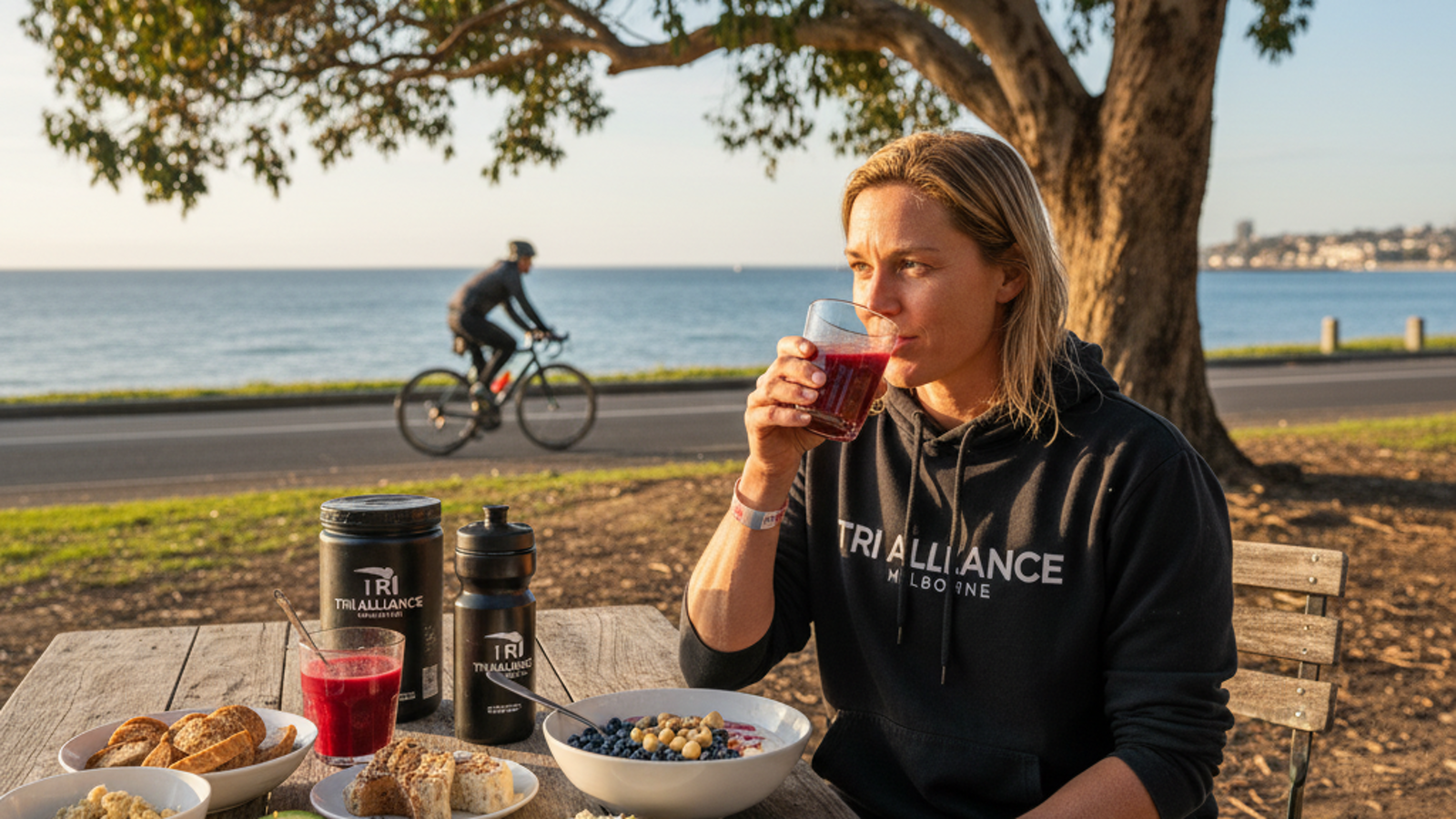
- Start eating at 20 to 30 minutes. Not when you feel empty. Set a reminder on your bike computer or your watch if you forget.
- Aim for 60 to 90 g of carbohydrate per hour on rides over two hours. That is roughly two gels, or a bar plus a gel, or a bottle of sports drink plus a banana, every hour. Practise it in training rather than discovering it on race day.
- Drink to a schedule. One bidon per hour is a sensible starting point in cool weather, more when it is warm. Include electrolytes on longer or hotter rides.
- Do not experiment on the long ride. Use the products your stomach already tolerates. The long ride is where you rehearse your plan, not where you audition new ones.
- Eat before the last hour, too. The temptation is to stop fuelling once the end is in sight. That is exactly when the wheels come off.
What a good step-up ride actually looks like
You arrive at the last 20 km still able to hold form and have a conversation. You are tired, not hollow. You finish thinking about the coffee rather than about survival.
That is a successful long ride, whatever the average speed says.
If you finish shattered, that is not proof that you were not ready for the distance. It is usually a pacing or fuelling signal — and both of those are fixable this weekend.
The mental side
Feeling nervous before a distance you have not ridden is normal, and it is not a sign that you are underprepared.
Break the ride into sections between regroups rather than staring at the total. Ride with the group. Ask questions at the stops — someone next to you has done this ride many times and will happily tell you what they eat and how they pace it.
The progression in your program exists so that the longest ride never arrives as a shock. Trust it, ride steady, eat early, and the distance takes care of itself.
If the fuelling side is where your long rides come apart, work through training your gut for race-day fuelling next — it turns the “eat early” rule above into a session-by-session plan.
Discover more from Tri Alliance Triathlon Community
Subscribe to get the latest posts sent to your email.