

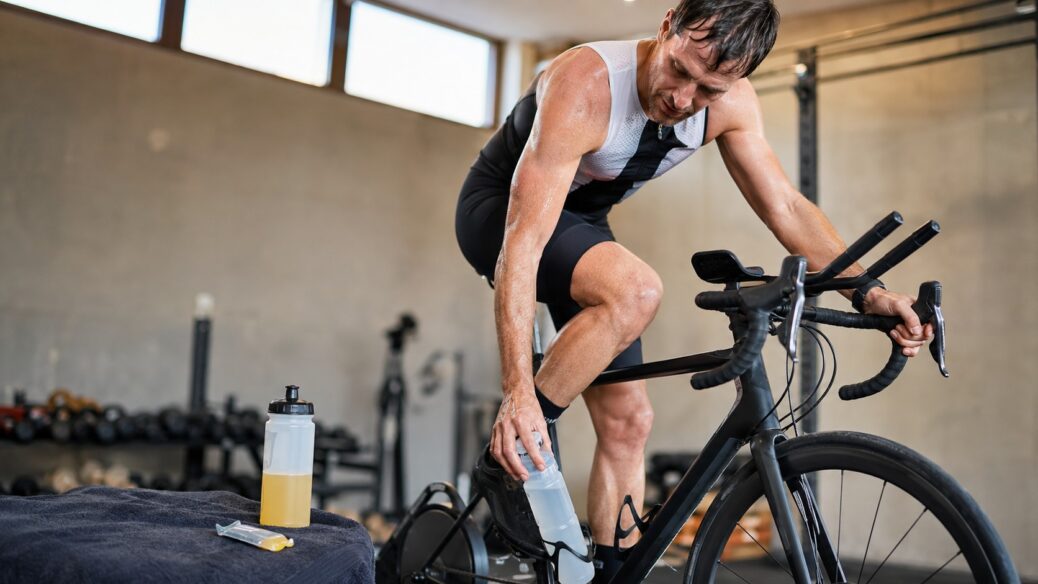
Coach’s quick read: Your stomach is part of your race system. Practise the carbohydrate, fluid, concentration and timing you plan to use on race day, then increase the challenge gradually. Start during controlled long sessions, record what happens and change one variable at a time.
Gut training is the repeated practice of eating and drinking while exercising so your race-day plan becomes familiar. It matters for every triathlete, but the cost of getting it wrong rises as racing gets longer. A gel strategy built with label maths and race-day logistics that looks perfect on paper is not race-ready until you can tolerate it while riding or running at the intended effort.
- Race what you train with. Use the products and bottle concentration you expect to race with.
- Start early. Begin fuelling before hunger or fading power, not after.
- Build gradually. Raise the hourly carbohydrate target over several key sessions.
- Write it down. Track intake, weather, intensity and gastrointestinal symptoms.
- Repeat before you progress. Bank what works before adding more.
| Session | Useful first practice | What to record |
|---|---|---|
| Wind trainer | Planned drink plus one familiar carbohydrate source | Carbohydrate per hour, fluid per hour, comfort |
| Long ride | Race breakfast, early fuel and regular reminders | Energy, appetite, gut symptoms, leftovers |
| Brick | Bike intake followed by a short race-effort run | How the stomach changes off the bike |
| Race rehearsal | Full timing, products and bottle setup | Execution gaps and final adjustments |
Why does the gut need training?
Exercise changes blood flow, movement and stress inside the gastrointestinal system. Heat and higher intensity can make the challenge harder. Repeated feeding practice can reduce symptoms and improve carbohydrate tolerance for some athletes. Research includes a two-week gut-training trial, a 2023 systematic review and newer feeding-challenge work examining how athletes respond to repeated carbohydrate intake.
Training truth: Race nutrition is not a shopping list. It is a skill that needs repetitions under realistic conditions.
When should triathletes start practising?
Start now if Noosa, Melbourne 70.3, Busselton or another endurance event is in your season. Waiting until the final long session leaves no room to solve problems. In our squad, the best early practices are controlled sessions where bottles and nutrition are easy to reach and the training purpose does not depend on improvising.
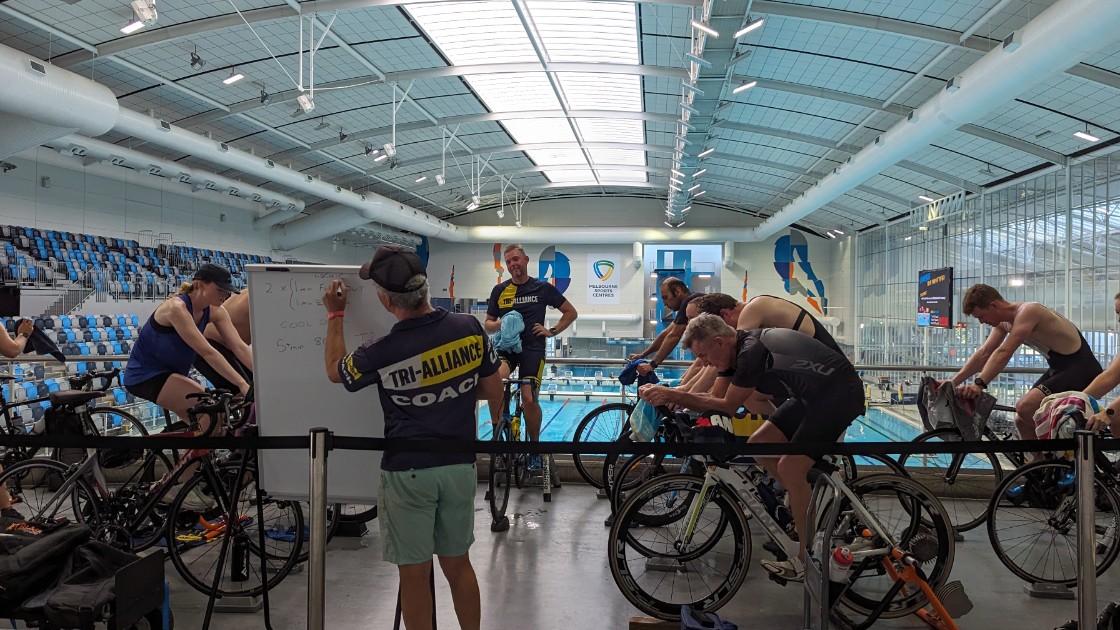
Wind trainer is especially useful. The environment is controlled, your food and bottles can sit beside you, and the heat and humidity create a realistic hydration challenge. That does not mean forcing fluid. It means measuring what you consume, noticing how you feel and learning a repeatable routine without the handling demands of riding outdoors.
What does that look like in real numbers?
Make it measurable, or you are guessing. On a 90-minute wind trainer, 45 grams of carbohydrate taken as three feeds at 30, 60 and 85 minutes, alongside one 750 millilitre bottle, is a realistic first target. On a three-hour long ride at 70.3 effort, 60 grams per hour is roughly two bottles of mix plus two gels, with the first feed before the 20-minute mark rather than at the first stop. On the 20-minute run off that ride, take nothing new: the only question is whether what is already in your stomach survives race-effort running. In the pool, practise the pre-session feed and the timing, not mid-set fuelling.
COACH’S TIP — One variable per session. Change the product, keep the grams the same. Raise the grams, keep the product the same. Move both and you learn nothing except that it went badly.
Write the numbers down before the session and record what you actually consumed afterwards. Grams per hour, millilitres per hour, and a one-to-ten comfort score is enough. Two or three sessions of that data tells you more than any generic fuelling chart.
How much carbohydrate should you practise?
The right target depends on duration, intensity, body size, normal diet and tolerance. A practical starting range for many endurance sessions is 30 to 60 grams of carbohydrate per hour. Longer racing may call for 60 to 90 grams per hour, but the upper end is not a starting point and is not necessary for every athlete or session.
Begin at a level you can already tolerate. If 30 grams per hour feels comfortable, repeat it before moving towards 40 or 50. Products using more than one carbohydrate type may help at higher intakes, but formulation still matters. A 2024 gel-development study illustrates why carbohydrate composition and gastrointestinal comfort need to be considered together.
The number that matters is not the biggest one in a study. It is the biggest one you can absorb without your stomach arguing about it.
How should you progress the plan?
Use this four-session protocol as a framework, not a prescription:
- Session 1: Establish a comfortable baseline with familiar products and record the actual grams and millilitres consumed.
- Session 2: Repeat the same plan. If comfort and energy are good, add a small amount of carbohydrate rather than changing products.
- Session 3: Practise at the intended race intensity or in a race-specific brick. Keep timing and bottle concentration unchanged.
- Session 4: Rehearse breakfast, start time, product carrying and fuelling reminders. Finish with a written plan you can execute under fatigue.
A 2025 repetitive feeding-challenge study reinforces the value of testing nutrition density and gastrointestinal responses during endurance exercise instead of assuming more is automatically better.
What should you do about hydration?
Hydration also needs rehearsal. Start with the expected conditions, your usual sweat response and a drink concentration you can reproduce. Weighing before and after a controlled session can help estimate fluid loss: a 1 kilogram change is roughly 1 litre, adjusted for anything you drank or passed during the session. The goal is useful information, not replacing every drop or drinking beyond comfort.
For evidence-based athlete nutrition resources, use the Australian Institute of Sport nutrition hub. The AIS also provides a broader athlete health and wellbeing pathway when nutrition concerns sit alongside health, recovery or wellbeing.
Gut training works best inside the larger race plan. Use our long-ride pacing and fuelling guide to connect intake with sustainable bike execution, then compare products and timing against the practical race-day nutrition guide. The goal is one joined-up plan, not separate experiments.
What are the common mistakes?
- Something new on race morning. A gel, drink or caffeine dose you have never rehearsed.
- Fuelling late. Nothing for the first half, then overloading the gut when it is already struggling.
- Guessing the mix. Bottles end up stronger than planned because the scoops were never measured.
- Changing everything at once. Carbohydrate, fluid, caffeine and intensity all moved together, so nothing is learned.
- Ignoring the pattern. Repeated symptoms brushed off because the session got finished anyway.
When should you stop and get individual advice?
⚠️ STOP AND GET ADVICE
Persistent vomiting. Severe abdominal pain. Blood in stool. Fainting or confusion. Repeated symptoms that are getting worse.
Gut training is a skill you build, not a discomfort you push through.
Stop the experiment and seek medical or accredited sports-dietitian advice if you have persistent vomiting, severe abdominal pain, blood in stool, fainting, confusion or repeated symptoms that are worsening. This article is general education, not a substitute for individual nutrition or medical care. Athletes with diabetes, gastrointestinal disease, food allergies, a history of disordered eating, pregnancy or medication considerations need an individual plan.
What should you do this week?
Your job this week, in one line: pick one session, pick one number, and write down what actually happened.
Choose one key session in this week’s Tri Alliance timetable. Wind trainer or a long ride is ideal. Bring the product you expect to race with, write down the target before the session and record what you actually consumed. Then compare the result with the demands in your September training phase. One clean repetition this week is more useful than a perfect plan you never test.
Want this dialled in before your next race?
Once you have begun gut training, use the Tri Alliance best energy gels for Ironman decision guide to test label facts, packaging and aid-station fit.
Discover more from Tri Alliance Triathlon Community
Subscribe to get the latest posts sent to your email.

You must be logged in to post a comment.