
Choosing your first Ironman race should begin with your real life, not the finish-line photo. The right event gives you enough training runway, matches the terrain and climate you can prepare for, and keeps race-week logistics simple enough that your energy stays focused on the 3.8km swim, 180km bike and 42.2km run.
The mistake we see is athletes choosing with one filter: the flattest course, the most exciting destination, the latest date or the race their friends entered. A strong first choice uses all of those factors together. Your goal is not to find an “easy” Ironman—there is no such thing. It is to remove avoidable unknowns so the challenge comes from the distance, not from a mismatch you could have spotted before paying the entry fee.
Coach’s quick read: When choosing your first Ironman race, score five things before you register: course fit, likely conditions, cut-off buffer, travel complexity and support. Then work backwards from race day to confirm you have a realistic 26–30 week build from a solid base.
In This Guide
- Define what a good first Ironman means for you.
- Score potential races with a decision matrix.
- Match the swim, bike and run course to trainable skills.
- Compare climate and every official cut-off.
- Map travel, accommodation and local support.
- Confirm a realistic training runway.
- Know when a full-distance race is not the right next step.
Choosing Your First Ironman Race: Start With the Goal
Choosing your first Ironman race becomes easier when you define what a good day means. A completion-first athlete needs a different event profile from an athlete chasing a time target, travelling with family or using the race as a destination holiday.
Write one primary goal and one secondary goal. For example:
- Primary: finish within the official cut-offs with steady pacing.
- Secondary: keep travel simple enough for family to attend.
- Primary: execute a controlled first full-distance race.
- Secondary: choose a course that resembles your normal training terrain.
If every goal is equally important, the decision gets noisy. Put “finish confidently”, “race for time”, “destination experience”, “squad event” or “family-friendly weekend” at the top. That priority becomes the tie-breaker when two races look equally attractive.
Use a First-Ironman Decision Matrix
A decision matrix turns race hype into a practical comparison. Score each candidate from 1 to 5, where 1 is a poor match and 5 is a strong match. Weight course fit and training runway twice; they affect months of preparation as well as race day.
| Factor | Weight | A score of 5 looks like | Warning sign |
|---|---|---|---|
| Course fit | x2 | Swim, bike and run resemble terrain you can train on | Technical, hilly or exposed conditions you rarely practise |
| Training runway | x2 | 26–30 weeks from a solid base, with key weekends protected | Build collides with work peaks, holidays or family commitments |
| Climate | x1 | Race conditions can be rehearsed during the build | Large heat, humidity, cold, wind or water-condition mismatch |
| Cut-off buffer | x1 | Conservative predicted splits leave margin at every checkpoint | Plan depends on using nearly all the published time |
| Travel and logistics | x1 | Direct travel, sensible accommodation and simple bike transport | Tight connections, split venues or late arrival |
| Local support | x1 | Coach, squad, family or friends can share the build or attend | The whole process depends on you solving everything alone |
Multiply each score by its weight and total the column. The highest number is not automatically the answer, but the gaps tell you what requires a plan. A destination race may still win; it simply needs a larger logistics budget and fewer assumptions.

Match the Course to the Skills You Can Train
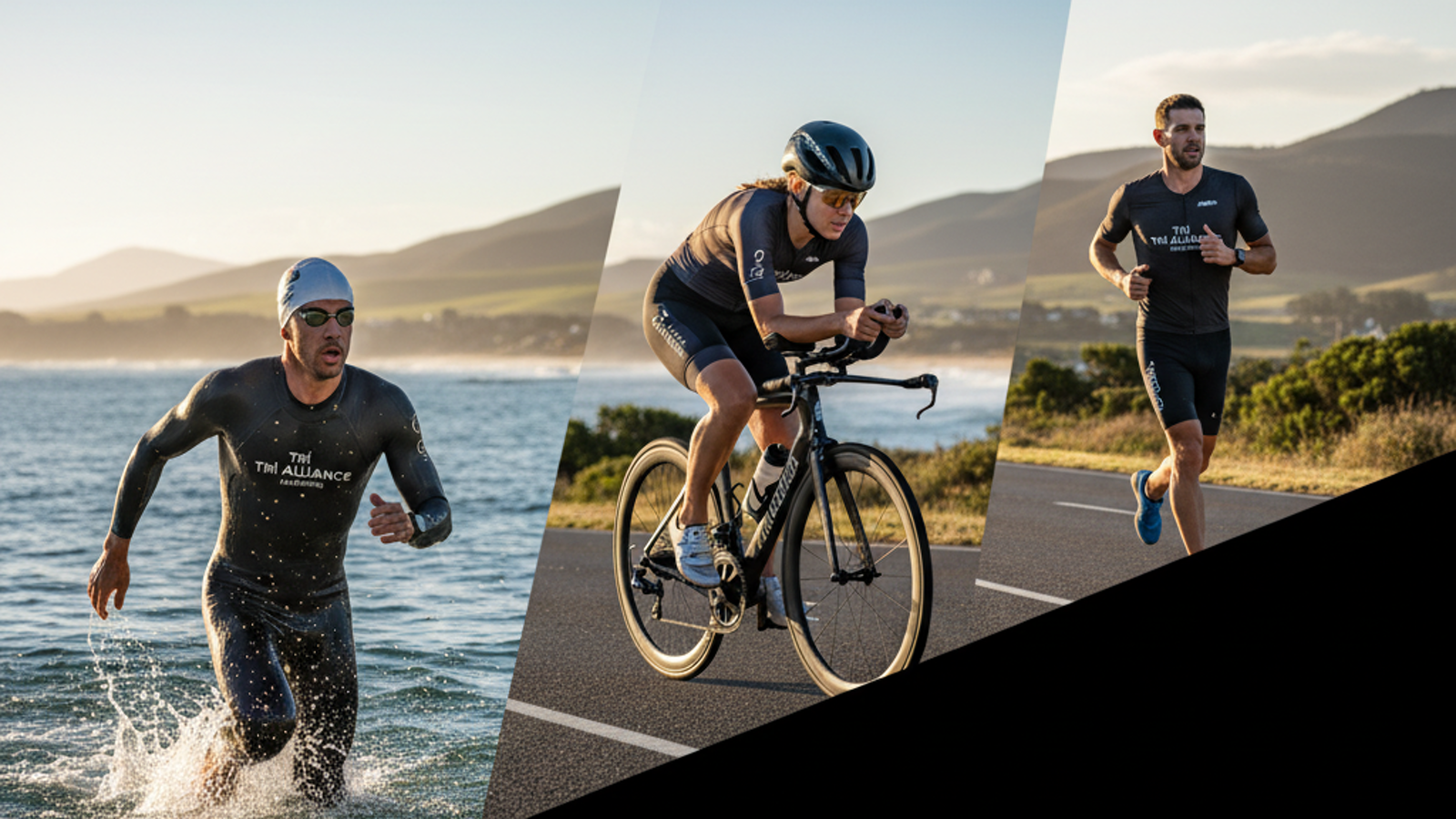
Course difficulty is more than elevation. Break each race into swim, bike and run demands, then compare those demands with what you can practise consistently.
Swim environment
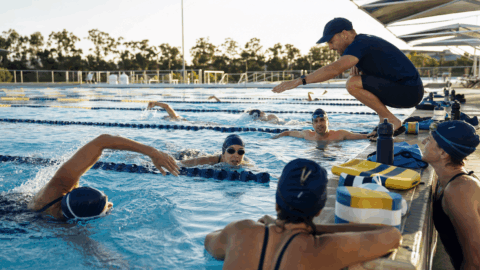
Check whether the swim is in a river, bay, lake or open ocean. Then look at the number of laps, rolling-start format, likely sighting demands, current or chop, water temperature and the distance from swim exit to transition. If most of your preparation will be in a pool, an exposed ocean swim adds a major skill gap. That does not rule it out; it means regular open-water practice must be available.
Bike terrain
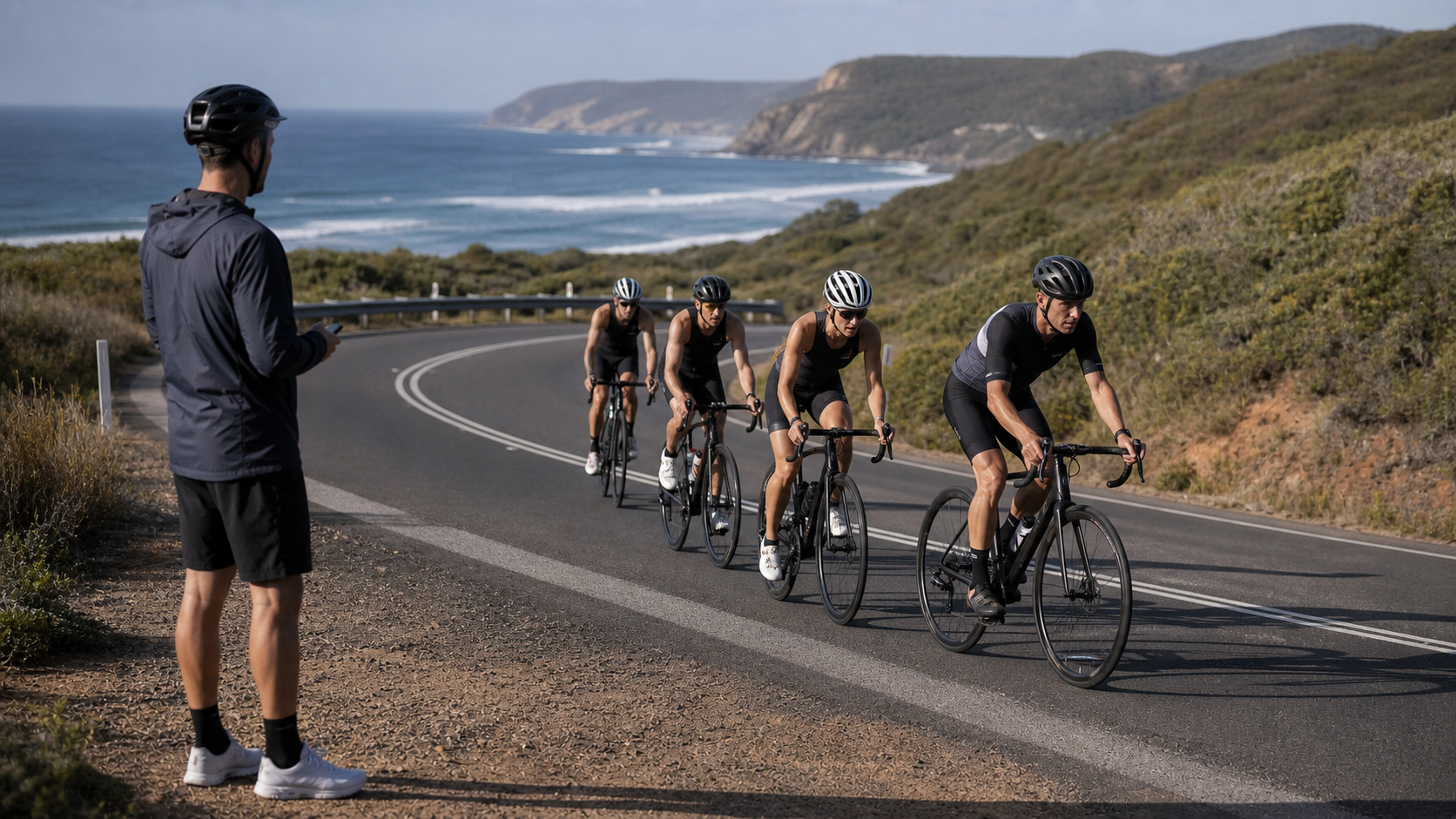
“Flat” does not mean free. A flat course may be exposed to wind and demand hours in an aerodynamic position without the natural breaks of climbing and descending. A rolling course asks for disciplined pacing over repeated rises. A technical course adds cornering, descending and decision-making under fatigue.
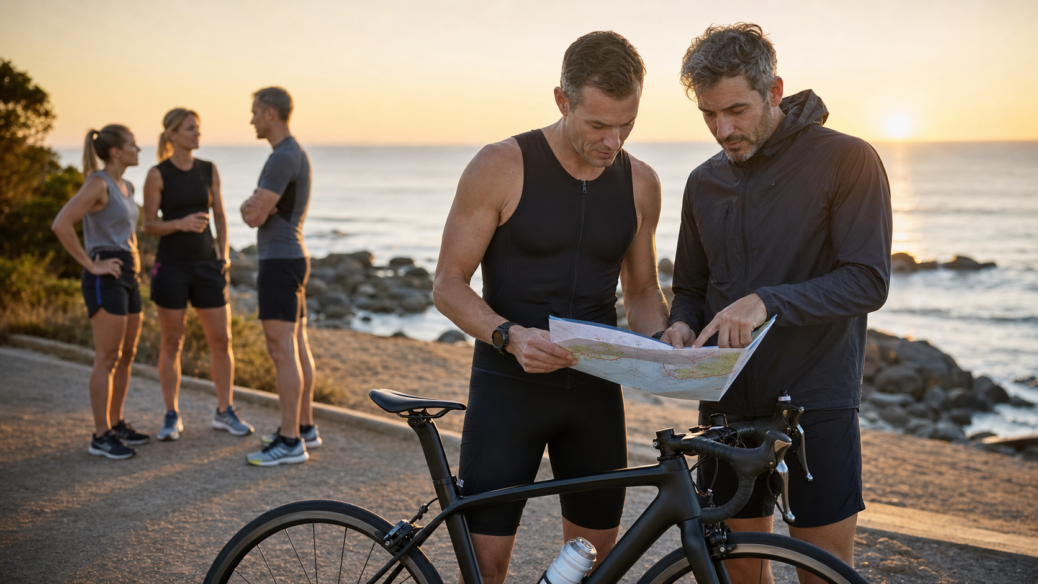
Look beyond total elevation. Read the current course map, download the GPX file when available and ask: can I reproduce the longest climbs, road surface, wind exposure and position demands in training?
Run layout
A flat marathon can suit a first-timer, but lap count, shade, surface and spectator access also matter. Multi-lap courses can make pacing and support simpler because you pass familiar landmarks repeatedly. They can also feel mentally repetitive. Choose the format that helps you stay controlled when the day gets long.
Choose a Climate You Can Rehearse
Climate should match both race day and the months that lead into it. A warm race is not automatically a bad first choice, and a mild race is not guaranteed to stay mild. The question is whether your normal training environment gives you enough opportunities to prepare for likely heat, humidity, cold, wind and water conditions.
For a Melbourne athlete, a June tropical race may place the warmest race-specific sessions inside a cool autumn build. A spring race may require the longest rides through winter. A December event gives you warmer preparation but can collide with end-of-year work and family commitments.
Use historical conditions as a planning range, not a forecast. Recheck the official event page and Athlete Information Guide as race day approaches because courses, start procedures and operational details can change.
Treat Cut-Off Times as Checkpoints, Not One Finish Time
Choosing your first Ironman race on the basis of a 17-hour finish cut-off alone is risky. Events can have separate swim, bike, run and intermediate course cut-offs, often measured from your individual rolling-start time. Road-closure checkpoints may matter before the final discipline deadline.
Current official pages show why the detail matters. IRONMAN Australia lists a 2-hour-20-minute swim cut-off, a 10-hour bike cut-off and a 17-hour final cut-off. IRONMAN Western Australia currently lists the same swim and final limits but a 10-hour-30-minute bike cut-off. Both direct athletes to current event information for full details, and IRONMAN Australia explicitly notes that intermediate cut-offs may apply.
Build a conservative split sheet before entering. Include swim, both transitions, bike, run and every published intermediate checkpoint. Add margin for queues, mechanical stops, toilets, weather and a slower-than-planned section. If the model only works on a perfect day, the race is not yet a strong completion-first match.
Always verify cut-offs in the latest Athlete Information Guide before registering and again in race week. Do not rely on an old race report, screenshot or forum post.
Compare Australian Race Profiles Without Calling One “Easy”
Australian full-distance events show how different first-race profiles can be. These are examples to investigate, not rankings or guarantees.
| Event profile | Current official course description | First-timer questions to answer |
|---|---|---|
| Port Macquarie | River swim, rolling bike, flat run; official page lists 24°C high, 15°C low and 23°C average water temperature | Can you train rolling terrain, manage the unique river layout and arrive early enough to inspect the course? |
| Cairns | Ocean swim, rolling bike, flat four-lap run; official page lists 28°C high, 18°C low and 23°C average water temperature | Can you prepare for tropical conditions, ocean skills and a split transition roughly 30km apart? |
| Busselton | Bay swim, flat two-lap bike and flat four-lap run; central precinct near the foreshore | Can you hold position on a flat course, prepare for coastal wind and manage travel from Perth to Busselton? |
The “best” profile depends on the athlete. A confident ocean swimmer with access to rolling roads may prefer Cairns. An athlete who can drive, inspect the course and bring a large support crew may value Port Macquarie. Someone seeking a flatter course may investigate Busselton, while still respecting wind exposure and the demands of uninterrupted aero riding.
Count Every Logistics Variable
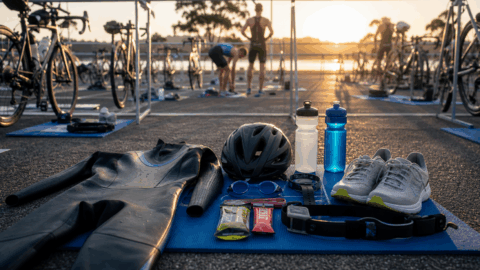
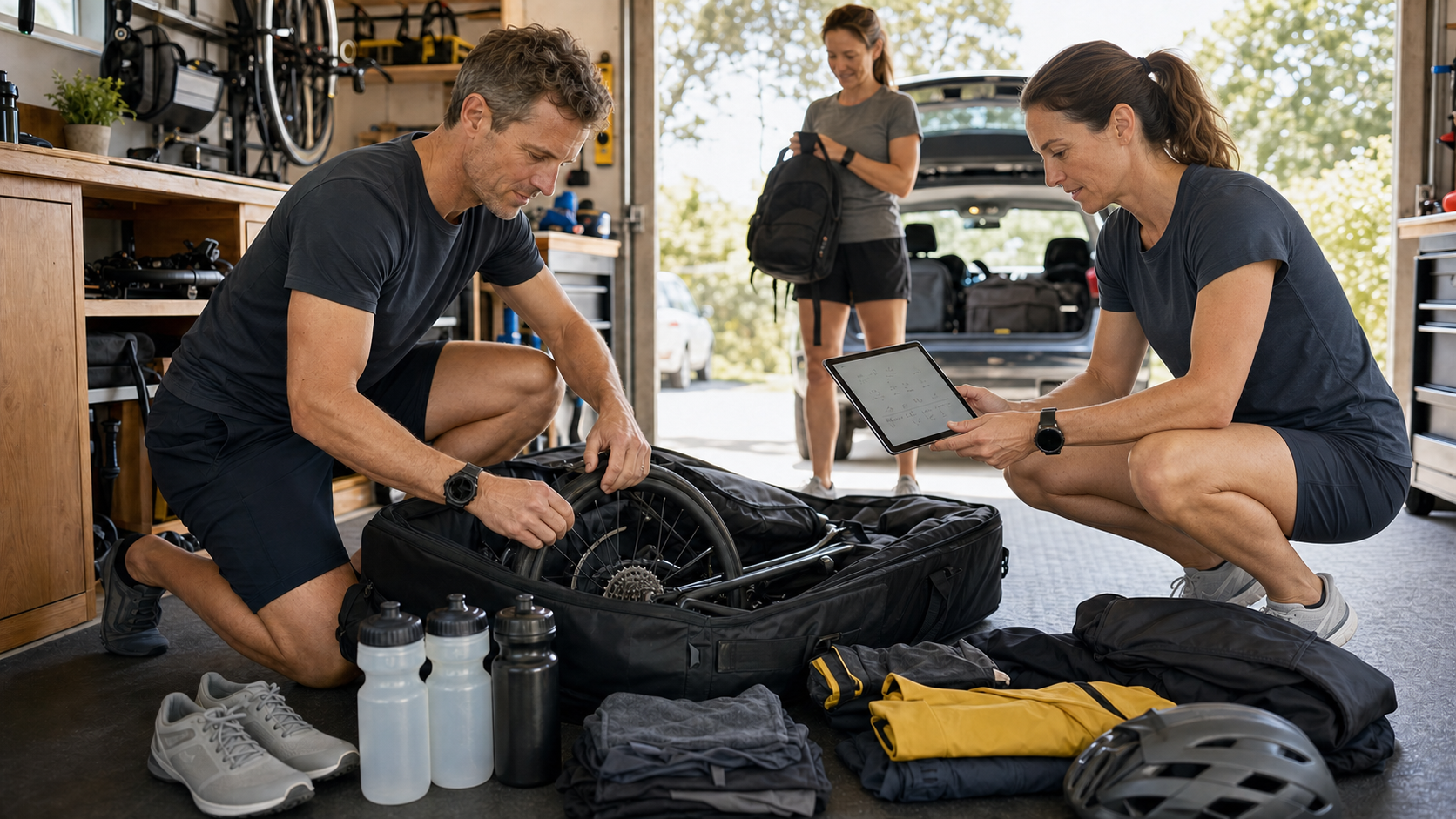
Travel becomes part of performance once a bike and race-week schedule are involved. Create a door-to-transition plan before entering:
- How many flights, drives or transfers are required?
- Will you take your own bike, use a transport service or hire one?
- Where are athlete check-in, bike racking, swim start, T1, T2 and finish?
- Can accommodation be booked within a practical distance of those venues?
- What happens if your bike or luggage arrives a day late?
- Can your support crew move between viewing points without disrupting your plan?
Arriving earlier costs more, but a same-day or late-night arrival can leave no recovery time for delayed luggage, bike assembly or course reconnaissance. Put entry, travel, accommodation, bike transport, local transfers and extra nights into one budget before deciding that the destination race is affordable.
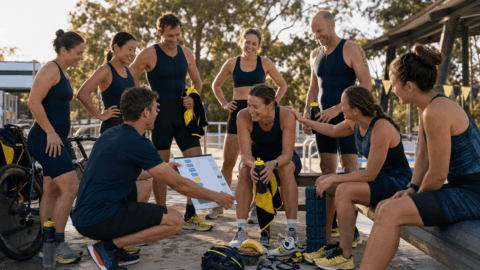
Local support is not just cheering. Training partners make long weekends more repeatable. A coach can align the build with your available hours. Family agreement matters because the heaviest weeks affect the household, not only the athlete. The right race fits the support system you actually have.
Confirm the Training Runway Before You Pay
Tri Alliance’s current triathlon training plan guidance uses a 26–30 week full-Ironman build from a solid base, with peak weeks commonly reaching 12–18 or more hours. That is a useful planning test, not a promise that every athlete needs the same week.
Work backwards from race day and mark:
- race week and taper;
- the biggest long-ride and brick weekends;
- recovery weeks;
- a rehearsal event or controlled race simulation;
- holidays, work deadlines and family events;
- weeks where outdoor conditions resemble the target race;
- time for open-water and course-specific skills.
Then compare the calendar with your current consistency. A 30-week gap is not automatically a 30-week runway if the first eight weeks are consumed by rebuilding basic frequency. Athletes stepping up from 70.3 with consistent swim, bike and run training may use the runway differently from someone returning after a long interruption.
Training truth: The race date must fit the life calendar. A perfect course with an impossible build is the wrong first race.
Tri Alliance long-course triathlon training and Melbourne squad training can give the build structure and shared long-session support that a first full-distance campaign needs.
When a Full Ironman Is Not the Right Next Race
Choosing your first Ironman race should also leave room for “not yet”. A full-distance entry is probably not the right next step if:
- you cannot protect a realistic build through your busiest life periods;
- open-water competence, cycling confidence or basic run durability still needs a foundation phase;
- your predicted cut-off plan has almost no buffer;
- the entry depends on travel or costs you have not mapped;
- your household or support team has not agreed to the training commitment;
- you are choosing the race mainly because registration urgency created pressure.
A 70.3, shorter event or another season of consistent training can be the more ambitious decision because it builds the skills that make the eventual full-distance experience better. Explore Tri Alliance training options and match the next event to your current starting point.
Frequently Asked Questions
What is the best first Ironman race?
The best first Ironman race is the one that matches your trainable terrain, likely climate, available runway, cut-off buffer, budget and support. A popular or flat event can still be a poor match if travel is complex or you cannot rehearse its key conditions.
Should my first Ironman have a flat bike course?
Not necessarily. Flat courses reduce climbing but can increase wind exposure and time spent continuously in position. Choose the course profile you can prepare for consistently and pace with control.
How much training time should I allow?
Tri Alliance’s general full-distance guidance is a 26–30 week build from a solid base, with peak weeks often reaching 12–18 or more hours. Your starting fitness, experience and life schedule determine whether you need more foundation time before that build.
How should I compare race cut-offs?
Use the latest official Athlete Information Guide. Compare the swim, bike, run, transition and intermediate checkpoints from your individual start time, then test conservative predicted splits with margin for normal disruptions.
Is it better to race close to home?
For many first-timers, close-to-home racing reduces transport, accommodation and bike-handling variables while making family and squad support easier. A destination race can still work when the extra time, cost and contingency plan are explicit.
Try Choosing Your First Ironman Race This Week
- Tonight—15 minutes: write your primary race goal and one secondary goal.
- Tomorrow—30 minutes: shortlist three events and score the six-factor matrix from 1 to 5.
- Within 48 hours: download each current course map and Athlete Information Guide; record swim type, bike profile, run laps and every cut-off.
- This weekend—20 minutes: work backwards 30 weeks from each race date and block work, travel and family conflicts.
- Before registering: review the shortlist with your support crew and a coach, then choose the event with the fewest untrainable unknowns.
Choosing your first Ironman race is the opening training decision, not an admin task. If you want a coach to pressure-test the course, cut-offs and training runway before you commit, book a triathlon coaching consultation with Tri Alliance. Pick the race your preparation can support, then build toward it with the squad around you.
Course details and cut-offs checked against the current official IRONMAN Australia, IRONMAN Cairns and IRONMAN Western Australia pages on 21 July 2026. Event information can change; use the latest Athlete Information Guide as the final authority.
Discover more from Tri Alliance Triathlon Community
Subscribe to get the latest posts sent to your email.