
Unleashing Your Potential: The Power of HIIT for Endurance Triathletes
For years, the conventional wisdom in endurance sports championed long, slow distance (LSD) as the cornerstone of training. While foundational, this approach often overlooks a powerful tool that can dramatically boost performance, improve efficiency, and make you a faster, stronger, and more resilient triathlete: High-Intensity Interval Training, or HIIT. If you’re an Australian triathlete aiming to shave minutes off your next Ironman Cairns, Melbourne, or Port Macquarie time, or simply looking for an edge in your local sprint, integrating HIIT endurance triathlon training into your regimen isn’t just a trend—it’s a strategic imperative.
At Tri Alliance Melbourne, we understand that modern triathletes are often time-crunched but performance-driven. The thought of adding more hours to an already packed schedule can be daunting. This is precisely where HIIT shines. By compressing significant physiological benefits into shorter, more intense sessions, HIIT offers a potent pathway to enhanced fitness, allowing you to achieve more with less. It’s about working smarter, not just harder, to unlock new levels of speed, power, and endurance.
This comprehensive guide will delve into the science, benefits, and practical application of HIIT for endurance athletes, particularly triathletes. We’ll explore how these powerful bursts of effort can transform your swim, bike, and run performance, making you more competitive, more efficient, and ultimately, more successful in your triathlon journey.
The Science Behind HIIT: Why It Works for Endurance
HIIT isn’t just about ‘going hard’; it’s a meticulously structured training methodology designed to elicit specific physiological adaptations that are highly beneficial for endurance performance. Unlike steady-state training, which primarily stresses the aerobic system, HIIT challenges both your aerobic and anaerobic systems, leading to a cascade of improvements that translate directly to faster race times and greater stamina.
VO2 Max Enhancement
One of the most significant benefits of HIIT is its ability to rapidly improve your VO2 max – the maximum amount of oxygen your body can utilise during intense exercise. Studies by researchers like Dr. Izumi Tabata and Professor Martin Gibala have repeatedly demonstrated that even short periods of high-intensity training can lead to substantial increases in VO2 max. For instance, a landmark study by Helgerud et al. (2007) showed that 4×4 minute intervals at 90-95% of maximum heart rate, performed three times a week for eight weeks, led to a 10% increase in VO2 max in well-trained endurance athletes. While beginners might see gains of 15-20% in 6-8 weeks, even seasoned triathletes can expect a 3-7% improvement, which is significant when chasing personal bests in events like the Husky Long Course.
Mitochondrial Biogenesis and Efficiency
Mitochondria are often called the “powerhouses of the cell,” responsible for producing ATP (adenosine triphosphate), the energy currency of your muscles. HIIT has been shown to stimulate mitochondrial biogenesis – the growth of new mitochondria – and improve the efficiency of existing ones. This means your muscles become better at producing energy aerobically, delaying fatigue and improving your ability to sustain high efforts. Research suggests that just two weeks of HIIT can increase mitochondrial enzyme activity by up to 50% in previously untrained individuals, and still provide notable benefits for trained athletes.
Improved Lactate Threshold and Clearance
Lactate threshold is the point at which lactate begins to accumulate in the blood faster than it can be cleared, leading to the burning sensation and fatigue associated with high-intensity efforts. HIIT effectively pushes this threshold higher, meaning you can sustain a faster pace for longer before ‘hitting the wall’. Furthermore, HIIT enhances your body’s ability to clear lactate more efficiently during and after exercise, allowing for quicker recovery between efforts and better sustained performance. This is crucial for triathletes who need to manage their energy output over multiple disciplines.
Enhanced Cardiovascular Efficiency
HIIT places significant stress on your cardiovascular system, leading to adaptations such as increased stroke volume (the amount of blood pumped with each heartbeat) and improved cardiac output (the total volume of blood pumped per minute). This translates to a more efficient delivery of oxygen-rich blood to your working muscles, enabling them to perform better under duress. Over time, your heart becomes a stronger, more efficient pump, a vital asset for any endurance athlete.
Muscle Fibre Recruitment
While endurance training primarily targets slow-twitch muscle fibres, HIIT activates and develops fast-twitch muscle fibres (Type IIa and even Type IIx). These fibres are crucial for generating power and speed. By recruiting these fibres, triathletes can develop a stronger kick on the run, more power on the bike for climbs or surges, and greater propulsion in the water. This broadens your physiological toolkit, making you a more versatile and powerful athlete.
Transformative Benefits of HIIT for Triathletes
Beyond the scientific jargon, what do these physiological adaptations mean for you, the triathlete competing in events from sprint distances to Ironman? The benefits are profound and directly impact your race day performance and overall training experience.
Time Efficiency: Maximize Your Limited Hours
One of the most compelling arguments for HIIT is its time efficiency. A high-quality HIIT session, including warm-up and cool-down, can be completed in 30-45 minutes. Compared to a 2-3 hour long ride or run, this allows busy individuals to achieve significant fitness gains without sacrificing family time, work, or other commitments. For the Melbourne triathlete juggling city life, this is invaluable.
Elevated Race Pace and Finish Stronger
By improving your VO2 max and lactate threshold, HIIT directly translates to a faster sustainable race pace. You’ll be able to hold higher speeds for longer periods, whether you’re pushing the pace in the swim, attacking a hill on the bike, or maintaining form in the final kilometres of the run. This means you won’t just finish; you’ll finish stronger, potentially overtaking competitors in the crucial late stages of a race.
Improved Pacing and Surging Capability
Triathlon races are rarely steady-state efforts. There are surges at the start of the swim, drafting opportunities and breakaways on the bike, and tactical moves on the run. HIIT trains your body to handle these fluctuations in intensity, improving your ability to surge, recover, and then settle back into a strong pace. This tactical flexibility can be a game-changer.
Enhanced Mental Toughness
Pushing yourself to your physiological limits during HIIT sessions builds incredible mental fortitude. Learning to embrace discomfort, maintain focus, and execute your intervals even when your body screams for a break develops the mental resilience crucial for enduring the challenges of long-distance triathlon. This “grit” translates directly to race day, helping you push through moments of doubt.
Reduced Risk of Overtraining (When Applied Correctly)
While intense, HIIT sessions are typically shorter in duration. This can actually reduce the overall training volume and chronic fatigue compared to an exclusive focus on very long, slow sessions. By strategically replacing some longer sessions with HIIT, you can stimulate adaptation with less wear and tear on your body, helping to prevent burnout and injury, provided adequate recovery is prioritised.
Discipline-Specific Advantages:
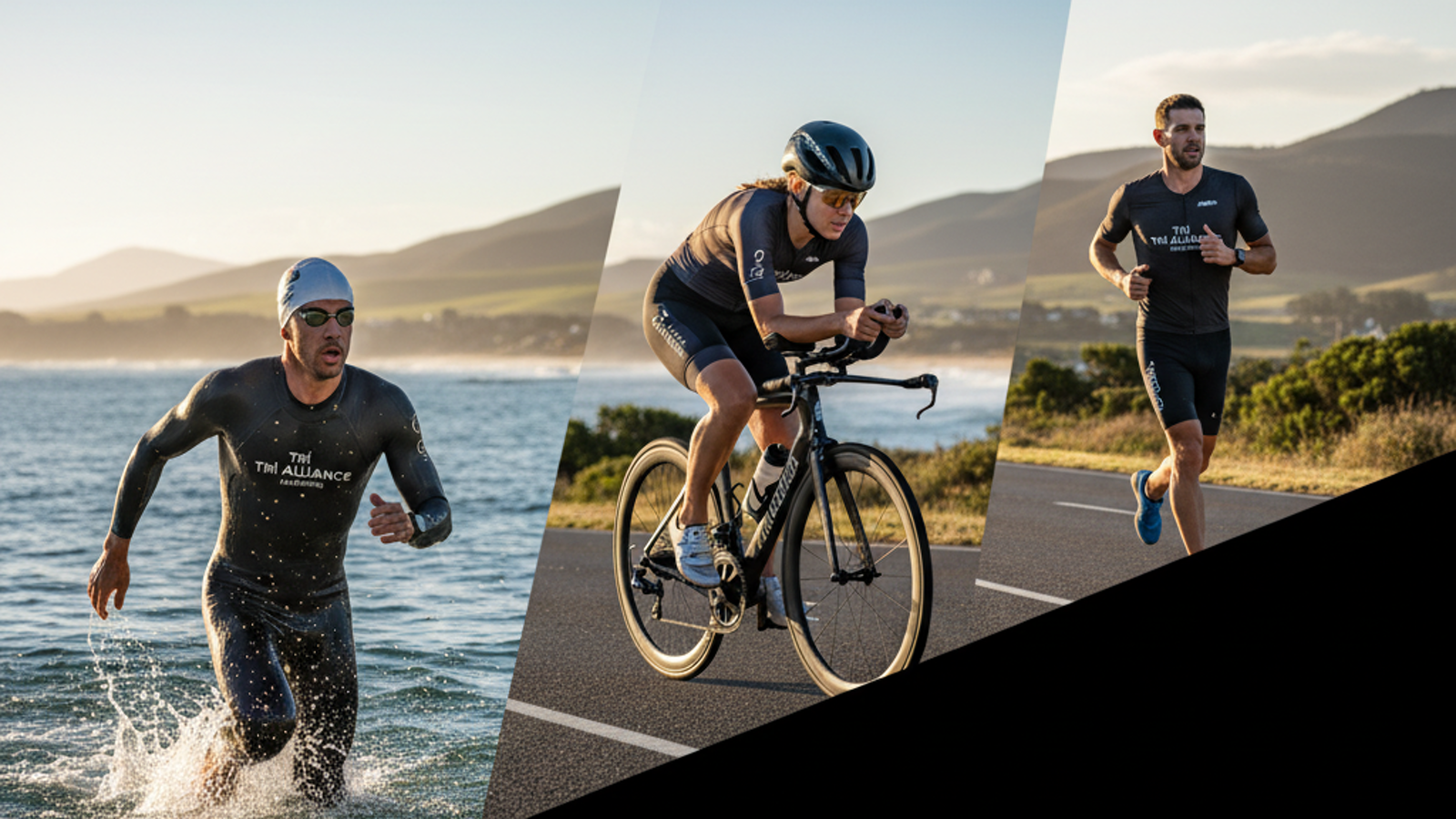
- Swim: HIIT in the pool develops powerful starts, the ability to surge and hold a fast pace to catch a draft, and improved turnover. Short, maximal efforts can significantly boost your swim speed and endurance in a pack.
- Bike: Hill repeats, short maximal sprints, and tempo intervals on the bike build power for climbs, improve your ability to bridge gaps, and enhance your sprint finish, crucial for non-drafting races.
- Run: Track intervals, hill sprints, and fartlek sessions improve leg speed, running economy, and your ability to maintain pace under fatigue, especially important in the final leg of a triathlon.
Implementing HIIT into Your Triathlon Training
Integrating HIIT effectively requires a thoughtful approach. It’s not about randomly going hard; it’s about structured intensity, proper recovery, and smart progression. Before diving into HIIT, ensure you have a solid aerobic base (typically 8-12 weeks of consistent, moderate-intensity training) to minimise injury risk and maximise benefit.
Warm-up and Cool-down: Non-Negotiable
A thorough warm-up is critical to prepare your muscles, cardiovascular system, and nervous system for the intense efforts of HIIT. This typically involves 10-15 minutes of light aerobic activity, gradually increasing in intensity, followed by dynamic stretches. A cool-down of 5-10 minutes of easy activity and static stretching is equally important for recovery and flexibility.
Frequency and Intensity
For most triathletes, 1-2 HIIT sessions per week across all three disciplines is optimal. More than two can lead to overtraining and burnout. The intensity during the ‘on’ intervals should be very high – typically 85-95% of your maximum heart rate (HRmax), or an RPE (Rate of Perceived Exertion) of 8-9 out of 10. The ‘off’ intervals should be active recovery (e.g., easy spinning, slow jog, gentle swimming) to allow partial recovery before the next hard effort.
Sample HIIT Workouts for Triathletes
Swim HIIT Session (45-60 min total)
- Warm-up: 400m easy swim, followed by 4x50m drill/swim with 15s rest.
- Main Set:
- Option 1 (Short & Fast): 8-12 x 50m maximal effort (RPE 9-10) with 30-45s rest. Focus on explosive starts and maintaining speed.
- Option 2 (Threshold Focus): 6-8 x 100m at 90% effort (RPE 8-9) with 45-60s rest. Maintain strong, consistent pace.
- Option 3 (Broken Swim): 4-6 x 200m (e.g., 50m fast, 50m moderate, 50m fast, 50m moderate) with 1-2 minutes rest.
- Cool-down: 200m easy swim.
Bike HIIT Session (45-60 min total)
<
ul>
- Option 1 (Tabata Style): 6-8 sets of (
Frequently Asked Questions (FAQ)
How often should I include HIIT sessions in my triathlon training?
For most age-group triathletes, one to two HIIT sessions per week is the sweet spot. That gives you the performance gains without eating into the recovery your long, aerobic sessions depend on. During a heavy base-building block you might sit at one session a week; as you sharpen towards race day you can lift it to two. The golden rule at Tri Alliance: quality over quantity — a focused 30-minute HIIT set beats an hour of half-hearted intervals every time.
Is HIIT safe for beginner triathletes?
Yes — with a couple of sensible caveats. If you’re new to structured training, spend your first 6–8 weeks building an aerobic base and getting comfortable with technique before adding maximal efforts. When you do start, ease in with shorter intervals and longer recoveries, and always warm up properly. HIIT is intensity, not chaos: done progressively it’s one of the safest ways to build fitness. If in doubt, check in with your Tri Alliance coach and we’ll scale it to where you’re at.
Can HIIT replace my long, slow distance (LSD) sessions?
No — think of them as partners, not rivals. Long, slow distance builds the aerobic engine, capillary density and fat-burning efficiency that carry you through a 70.3 or Ironman. HIIT sharpens your top-end power, lactate threshold and running economy. Drop your LSD work entirely and you’ll lose the endurance foundation that makes the hard efforts count. The winning formula is a smart blend of both across your training week.
When should I avoid HIIT in my training week?
Skip the high-intensity work when you’re carrying fatigue, fighting off illness, or heading into race week and need to be fresh. HIIT places real stress on the body, so it belongs on days when you’re rested and can hit the target efforts with good form. If your legs feel heavy, your resting heart rate is elevated, or motivation has tanked, swap the session for easy aerobic work or genuine recovery — that’s where the adaptation actually happens.
Discover more from Tri Alliance Triathlon Community
Subscribe to get the latest posts sent to your email.