
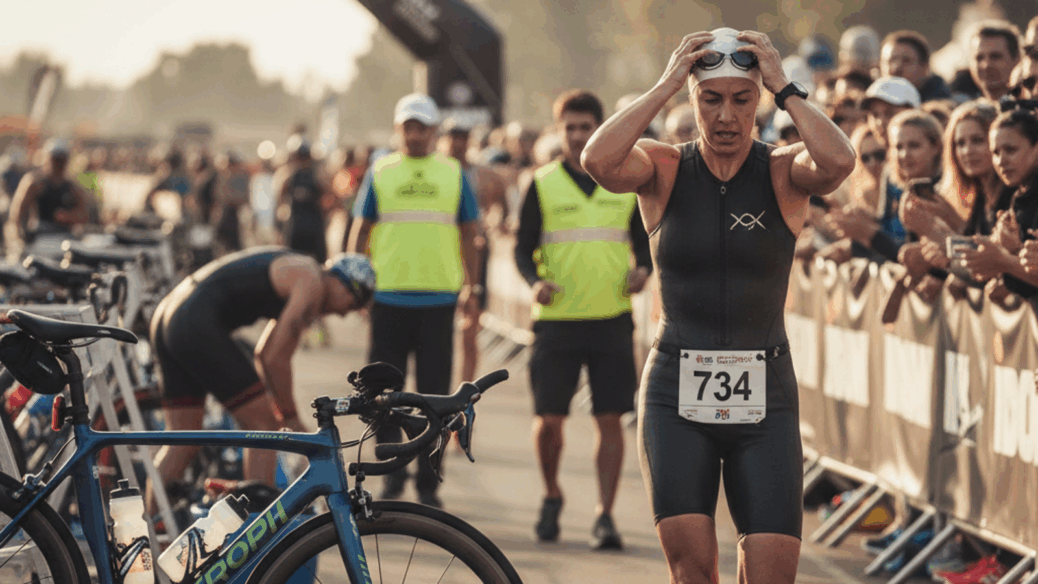
You used to set your alarm for 4:45 AM and feel excited. Now it goes off and you feel nothing. Or worse, dread. Your Garmin sits on the charger. Your bike is gathering dust. You scroll past race photos on Instagram and feel a twist in your gut that is not motivation — it is resentment.
This is triathlon burnout, and it is more common than the sport admits. Sport psychology research describes athlete burnout as a real syndrome, not laziness or a bad week. It can affect motivation, mood, identity, sleep, training consistency, and physical recovery, and ignoring it makes everything worse.
Here is what you need to know right now:
- Burnout is not overtraining. They overlap, but the fix is different.
- The emotional symptoms (guilt, identity loss, resentment) matter more than the physical ones.
- Scheduled rest is not enough. You need to address why you burned out, not just stop training for two weeks.
- Coming back is possible. Many athletes return better when they address the reasons they burned out, rather than just taking a short break and restarting the same pattern.
| If You Feel… | It Might Be… | First Step |
|---|---|---|
| Tired but still enjoy training some days | Overreaching / bad periodisation | Deload week, sleep audit, nutrition check |
| Flat, unmotivated, dreading sessions for 3+ weeks | Early-stage burnout | Talk to your coach. Reduce volume 40-50%. Reintroduce fun. |
| Resentful toward the sport, questioning your identity, guilt about not training | Full burnout syndrome | Complete break (2-4 weeks minimum). Professional support. Read on. |
| Physical symptoms: elevated resting HR, insomnia, recurring illness, hormonal disruption | Overtraining syndrome (OTS) with burnout | Medical evaluation. Training cessation. Blood work. This is not optional. |
What Is Triathlon Burnout (And Why Does No One Talk About It Honestly)?
Burnout in triathlon is a syndrome of emotional exhaustion, detachment from the sport, and a reduced sense of accomplishment despite continued effort. That framing is consistent with the athlete burnout model used in sport psychology. It is distinct from a bad training block, a post-race low, or seasonal fatigue.
The triathlon community has a silence problem around burnout. The culture rewards volume, consistency, and the "embrace the suck" mentality. Athletes post their suffering on Strava like medals. Admitting you hate swimming right now feels like weakness in a sport that idolises toughness.
But burnout is not a character deficiency. It is a predictable response to sustained physical and psychological demand without adequate recovery, variety, or meaning. It often overlaps with stress and overtraining patterns: poor sleep, altered mood, disrupted appetite, reduced heart-rate variability, and changes in normal hormonal or menstrual function can all be warning signs.
The sport's three-discipline structure makes it particularly burnout-prone. You are not managing one training load — you are managing three, plus transitions, plus strength work, plus life. A runner who burns out can stop running. A triathlete who burns out has three sports they now resent.
How Is Burnout Different From Overtraining?
This distinction matters because the treatments are different. Overtraining syndrome (OTS) is primarily physical. Burnout is primarily psychological, though the two frequently overlap.
| Dimension | Overtraining Syndrome | Burnout |
|---|---|---|
| Root cause | Training load exceeds recovery capacity | Sustained psychological demand without meaning or control |
| Primary symptom | Performance decline despite maintained effort | Emotional exhaustion and loss of motivation |
| Key biomarker | Suppressed HRV, elevated resting HR, poor CK clearance | Elevated cortisol, disrupted sleep, emotional flatness |
| How it feels | “My body won’t respond” — you want to train but physically cannot | “I don’t want to do this anymore” — physically capable but emotionally empty |
| Recovery | Structured rest, nutrition optimisation, gradual return (weeks to months) | Complete mental break, identity work, reintroduction of play and autonomy |
| Timeline | 4-12 weeks to baseline with proper rest | Variable — some athletes need months; others recover in weeks with the right approach |
| The trap | Athletes rest physically but stay mentally obsessed (checking Strava, planning comeback) | Athletes take a “break” that is just lower-volume training, never actually disconnecting |
The overlap zone is real. Many burned-out triathletes also have overtraining symptoms. If you have both, address the physical first (you cannot do psychological recovery work when your cortisol is through the roof) and the psychological second.
What Actually Causes Triathlon Burnout?
Burnout is rarely caused by one thing. It is almost always a combination of training, life, and identity factors that accumulate over months or years.
Year-round training culture. The triathlon season in Australia effectively runs from October to April, but most age-groupers train year-round with no real off-season. You finish an Ironman in March and by April you are building base for the next season. The body might recover. The mind does not.
Social media comparison. You are exposed daily to athletes doing more volume, racing more often, and appearing to love every minute. That comparison can turn training from a personal pursuit into a constant feeling that you are behind. You are not only exhausted by your own training; you are exhausted by the gap between your reality and everyone else's highlight reel.
Lifestyle squeeze. The 12-15 hours per week a competitive age-grouper trains is not just 12-15 hours. It is the alarm at 4:45 AM, the weekend long rides that consume Saturday morning, the meal prep, the foam rolling, the missed social events, the strain on relationships. When this becomes obligation rather than choice, burnout accelerates.
Loss of autonomy. Athletes on rigid training plans who feel they cannot deviate, even when exhausted, are at higher risk than athletes who have some control over their schedule. Autonomy matters because training has to feel chosen, not imposed.
Identity enmeshment. This is the one nobody talks about. When "I am a triathlete" becomes the foundation of your identity — when you cannot describe yourself without referencing the sport — burnout becomes an existential crisis, not just a training problem. You are not just tired of triathlon. You are losing yourself.
The Sunday Morning Test: How to Know If It Is Burnout
Before you self-diagnose, try this simple thought experiment.
Imagine it is Sunday morning. You have nothing on. No sessions scheduled, no race prep, no obligations. A friend invites you to go for a casual ocean swim and then grab coffee. No watch, no pace, no structure.
- If you feel a spark of interest: You are probably overtrained or under-recovered, not burned out. You still love movement; you just need rest.
- If you feel nothing, or mild dread: This is burnout territory. The spark is gone, and rest alone will not bring it back.
- If you feel relief at the idea of never swimming again: You are deep in burnout. You need a full reset, and you should talk to someone — a coach, a sports psychologist, or a trusted friend who will not tell you to "just push through."
Other signs that are specifically burnout (not just fatigue):
- You feel guilty about rest days — but also guilty about training days
- You have stopped telling people about races or results
- Training feels performative — you do it for the Strava upload, not for yourself
- You fantasise about injury as an "acceptable" reason to stop
- You have started to resent athletes around you who still seem enthusiastic
How to Recover From Triathlon Burnout: A Structured Approach
Recovery from burnout is not "take two weeks off and come back fresh." That works for overreaching. Burnout requires a deliberate, phased approach.
Phase 1: Full Stop (2-4 Weeks)
No structured training. Zero. Do not "stay active" with easy runs. Do not swim because "it does not count." The point is to break the obligation loop entirely.
What you do instead: walk, garden, play with your kids, surf, hike, dance — anything that involves movement for joy rather than performance. If nothing sounds appealing, that is data. Sit with it.
Cancel your training plan. Tell your coach. If your coach responds with anything other than "OK, I support you," you need a different coach.
Phase 2: Identity Diversification (Weeks 2-6)
This is the part most recovery plans skip, and it is why athletes relapse.
Deliberately invest time in non-triathlon activities. Reconnect with hobbies you abandoned when training took over. Have dinner with friends on a Friday night instead of going to bed at 8:30 PM. Read a book that has nothing to do with endurance sport.
The goal is to rebuild proof that you are a whole person, not just an athlete. When "triathlete" is one of five things you are rather than the only thing, burnout loses its existential edge.
Phase 3: Joy-Based Reintroduction (Weeks 4-8)
When you start to feel a pull — not an obligation, a genuine pull — reintroduce one discipline at a time. Choose the one you miss most. Zero structure, zero metrics. Leave the watch at home.
Rules for this phase:
- If the session is not fun, stop immediately. No "just finish the set."
- No Strava uploads. This is private.
- No race planning. Not yet.
- Maximum 3 sessions per week. If that feels like too many, do 2. Or 1. Or 0.
Phase 4: Structured Return (Weeks 8-12+)
Only after you have confirmed that you actually want to train — not that you think you should — begin adding structure. Start at 50% of your pre-burnout volume. Build by no more than 10% per week.
This is where a coach who understands burnout is essential. The right coach will:
- Ask how you feel before asking about your numbers
- Build in "free choice" sessions where you pick the activity
- Protect your off-season aggressively
- Never use guilt, comparison, or accountability pressure as motivation
The Coach's Role: Preventing the Next Burnout
If you are a coach reading this, burnout is partly your responsibility. Not because you caused it, but because you are the person best positioned to catch it early.
Screen for it. Ask your athletes about motivation, not just fitness. A simple weekly question — "Rate your enthusiasm for training this week, 1-10" — catches burnout months before performance data does.
Protect the off-season. Mandate 4-6 weeks of unstructured time after the season. Not "active recovery." Unstructured. Athletes who take a real off-season usually return with more motivation, fewer niggles, and a healthier relationship with training.
Watch for identity enmeshment. If an athlete's entire social life, self-worth, and daily routine revolves around triathlon, they are at risk. Encourage outside interests, even if it means slightly less training availability.
Model vulnerability. Talk openly about your own burnout experiences, or about athletes you've coached through it. Normalise the conversation.
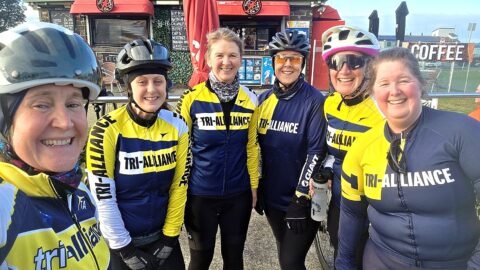
At Tri Alliance, we build burnout prevention into our coaching methodology. Every athlete gets a structured off-season. Every program includes flexibility. If you are struggling, the first step is a conversation — not a harder training block.
When Burnout Means It Is Time to Walk Away
This section is the one no triathlon website will write. So here it is.
Sometimes burnout is not a phase. Sometimes it is your brain telling you that this chapter of your life is finished. And that is not failure. That is growth.
This is not for you if:
- You have been through burnout recovery before and it worked. You know the drill. Do it again.
- You are mid-season and panicking. Talk to your coach before making permanent decisions.
But consider walking away if:
- You have taken a proper break (2+ months), done the identity work, and still feel nothing when you think about racing.
- Triathlon has cost you a relationship, your physical health, or your mental health, and you would make the same trade again to keep training. That is addiction, not passion.
- You only train because you are afraid of who you are without the sport.
Walking away from triathlon does not mean walking away from fitness, from community, or from challenge. Some of the most fulfilled former triathletes discovered climbing, trail running, CrossFit, sailing, martial arts, or coaching after they stopped racing. The identity you built in triathlon — discipline, resilience, pain tolerance — translates to everything.
FAQ
What are the 7 signs of burnout in triathlon?
The most commonly reported signs are: (1) persistent fatigue that does not respond to rest, (2) loss of motivation or emotional flatness toward training, (3) increased irritability or emotional volatility, (4) decline in performance despite maintained training load, (5) sleep disruption (especially difficulty falling asleep despite physical exhaustion), (6) withdrawal from training partners and the triathlon community, and (7) recurring minor illness or injury. If you have 3 or more for longer than 3 weeks, talk to your coach or a sports psychologist.
What are the 3 R's of burnout recovery?
The 3 R's framework for athlete burnout recovery is Recognise (acknowledge the burnout without denial or guilt), Rest (complete cessation of structured training, not just reduced volume), and Rebuild (phased return with emphasis on autonomy, enjoyment, and identity diversification). The critical mistake most athletes make is jumping from Recognise straight to Rebuild without adequate Rest.
How long does it take to recover from triathlon burnout?
Many athletes who follow a structured recovery approach notice meaningful improvement within 6-12 weeks. Severe burnout with identity enmeshment can take several months. The key variable is not only time off from training; it is the quality of the psychological work done during that time. Athletes who stop training without addressing the underlying causes (identity, autonomy, lifestyle) often relapse into the same pattern.
Is triathlon burnout different from depression?
They share symptoms: fatigue, loss of interest, sleep disruption, and social withdrawal. Burnout is usually context-specific to the sport. If removing the training demand meaningfully improves your symptoms within 2-3 weeks, burnout is a likely contributor. If symptoms persist regardless of training status, or extend into non-sport areas of life (work, relationships, general enjoyment), consult a mental health professional.
Can a coach help with burnout or do I need a psychologist?
A good triathlon coach can catch burnout early, adjust your programme, and support your recovery. But if burnout has progressed to identity crisis, persistent mood disturbance, or disordered behaviours around food and exercise, a sports psychologist is the appropriate next step. The two are not mutually exclusive — the best outcomes often involve both working together.
Your Next Step
If anything in this article resonated, the worst thing you can do is bookmark it and go back to your training plan unchanged.
Talk to a coach who understands this. Not one who will tell you to push through. One who will ask how you feel, protect your rest, and help you find the version of triathlon that works for your life right now.
Book a free 20-minute call with a Tri Alliance coach →
No pitch. No pressure. Just a conversation about where you are and what might help.
Related Pages
- Training Plans for Age-Group Triathletes — periodised programmes with built-in recovery and off-season structure
- Mental Performance in Triathlon — building psychological resilience alongside physical fitness
- Find a Tri Alliance Coach — coaches trained in burnout prevention and athlete-centred programming
- Tri Alliance Off-Season Guide — what to do (and not do) in your annual reset
Discover more from Tri Alliance Triathlon Community
Subscribe to get the latest posts sent to your email.