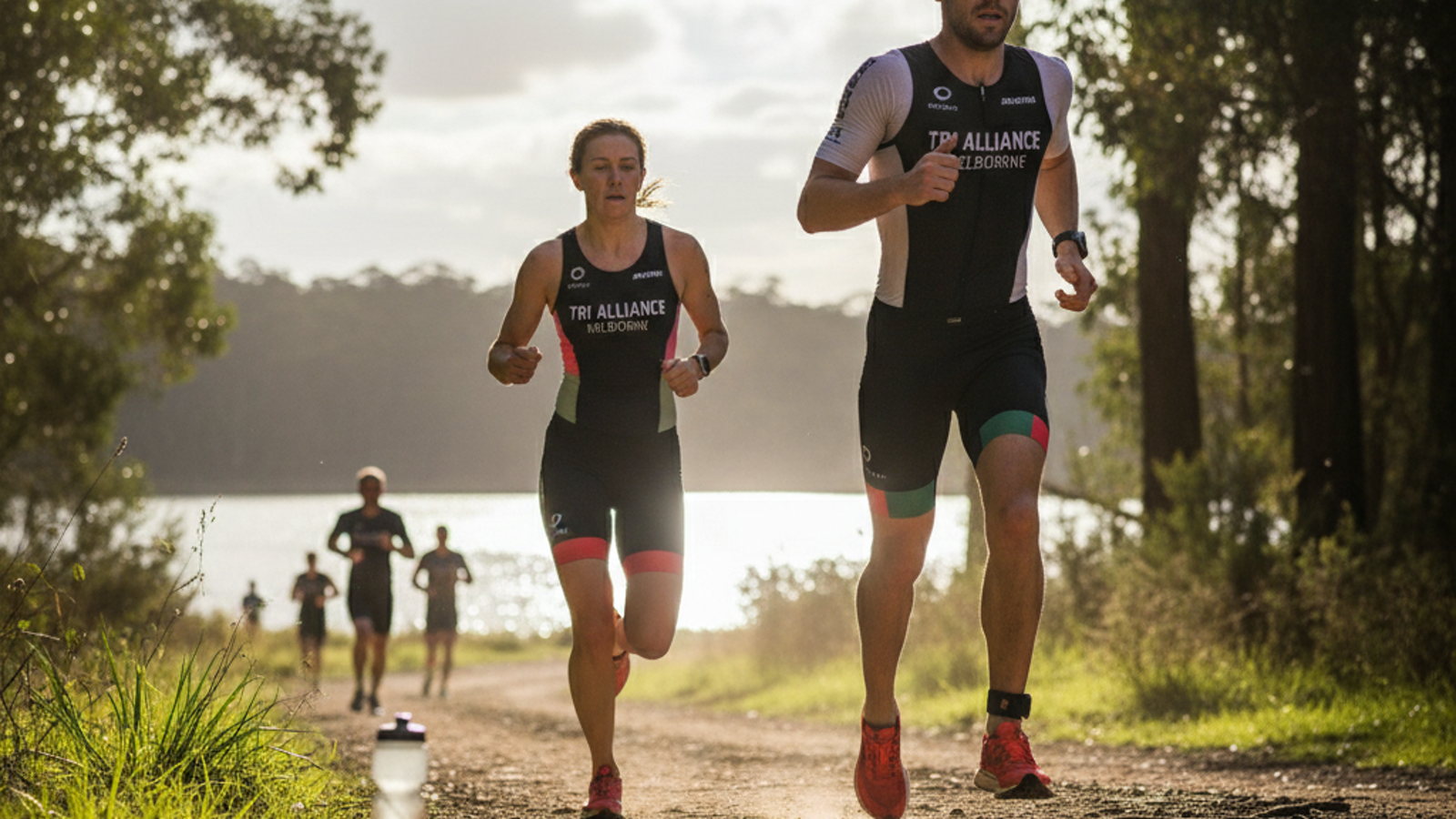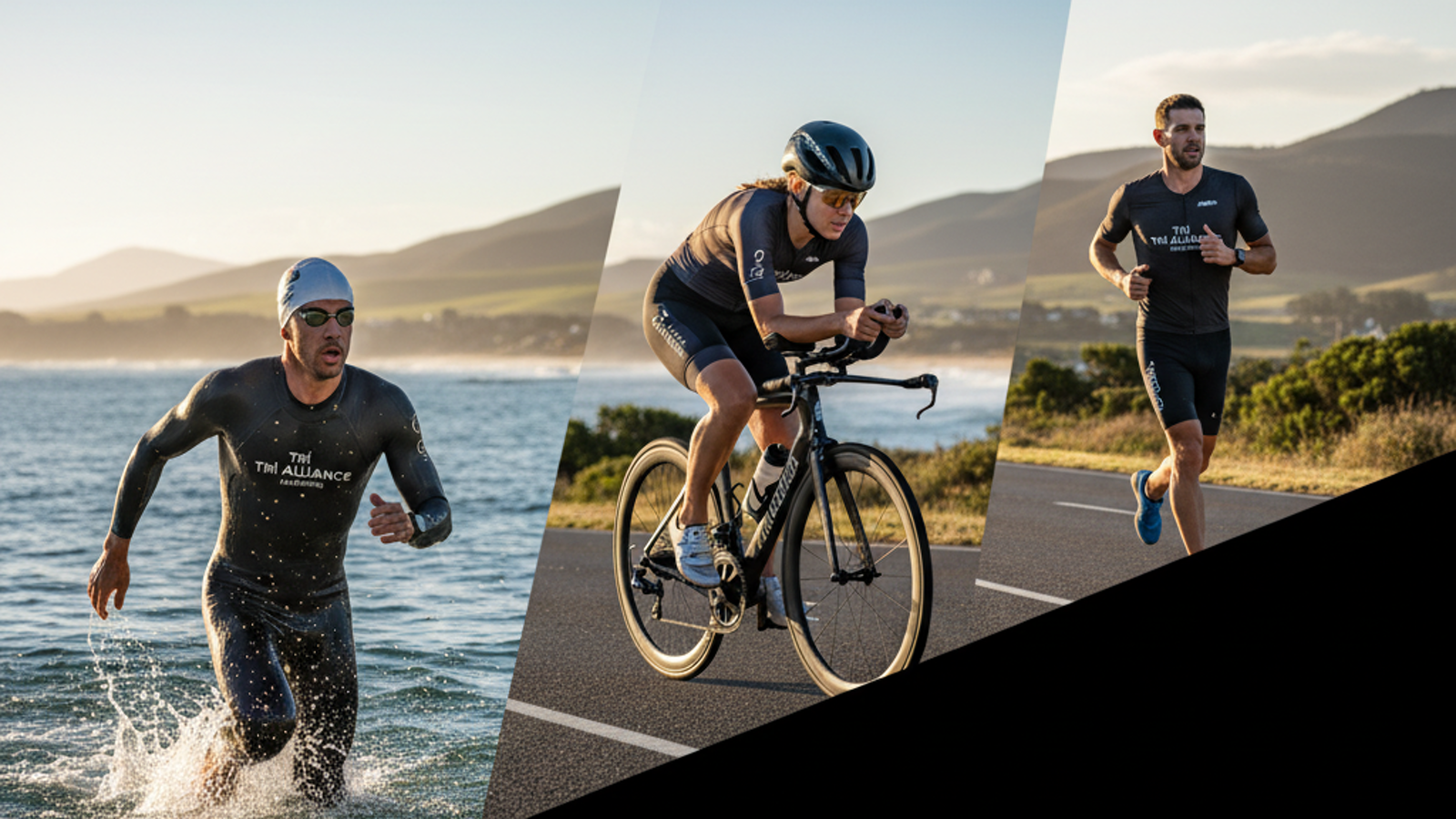

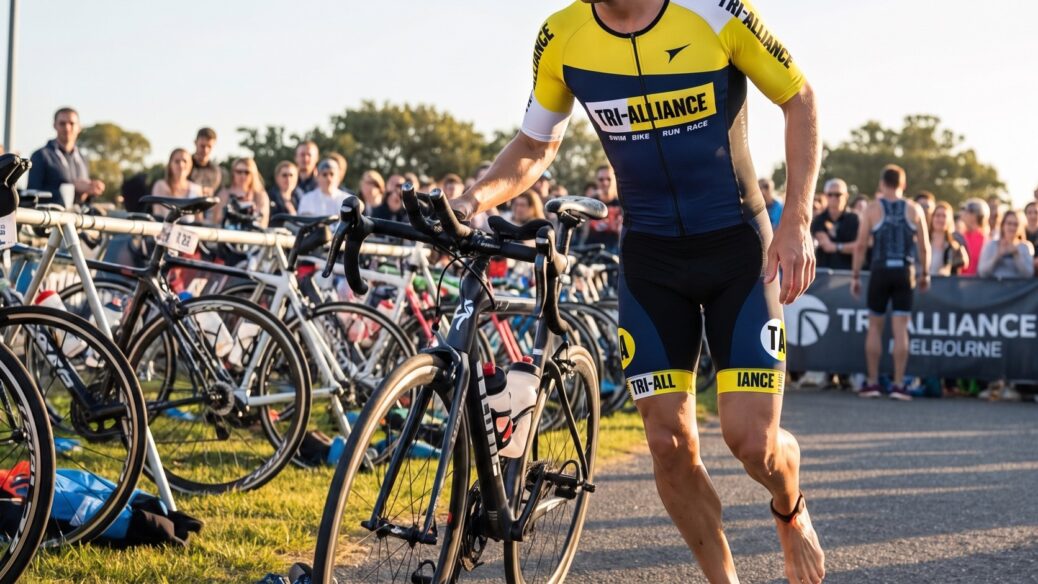
A brick workout is two triathlon disciplines done back to back with minimal rest, most often a bike followed straight away by a run. It trains your body to handle the shift from cycling to running, so the heavy-legs feeling passes sooner, your early run pace holds up and your transitions become calm, quick and mistake-free on race day.
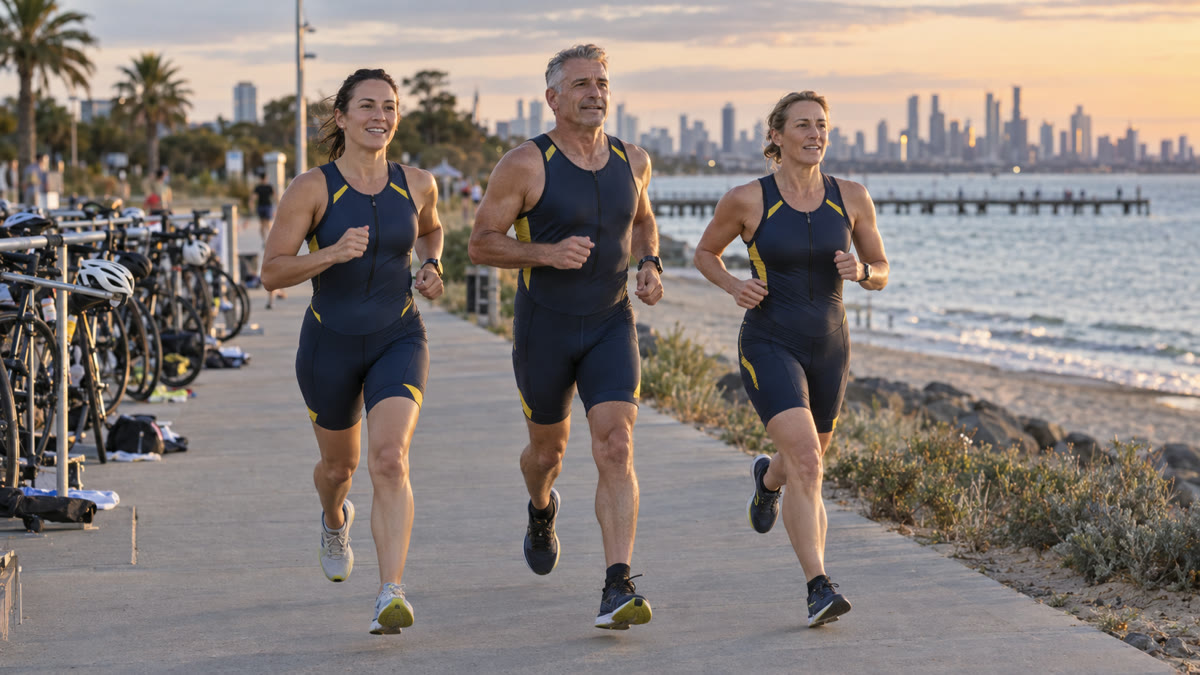
For any triathlete, the feeling of leaden legs as you get off the bike and start to run is a familiar one. Most of us called it jelly legs the first time. It is one of the main reasons athletes struggle to hold their pace in the final leg of a triathlon, and it is exactly what brick training is built to fix.
At Tri Alliance we see mastering the transition as more than speed. It is about joining your efforts together, executing smartly, and building the mental strength to push through the discomfort. Whether your next race is Ironman Cairns, Geelong 70.3 or a local sprint, this guide covers the why, the how and the progression.
In this guide
- What a brick is, and why your legs feel heavy
- Swim-bike and bike-run bricks, with a progression table
- Duration, intensity and how often to do them
- Advanced strategies: mini-transitions, nutrition, equipment and mental rehearsal
- Common mistakes and a quick FAQ
What are brick workouts and why are they critical for triathletes?
A brick workout, in its simplest form, is two disciplines of triathlon performed back to back with minimal rest, simulating race conditions. The most common brick is a bike followed immediately by a run, but swim-bike bricks are just as valuable and often overlooked. The name is thought to come from the feeling of having “bricks” for legs on the run, which is exactly the sensation these sessions aim to reduce.
The one-line version
Triathlon is not three sports added together. It is three sports joined together, and the joins need training too.
The physiological rationale: “heavy legs”
The main challenge in the bike-to-run change is a shift in muscle recruitment and blood flow. On the bike your quads and glutes do most of the work in a seated, non-weight-bearing, rotational movement. The moment you start running, your hamstrings, calves and core become more prominent and your body has to adapt to weight-bearing, impact-driven motion.
That sudden change needs a rapid redistribution of blood from the cycling muscles to the running muscles, plus a neurological recalibration of the movement. Without specific training this adaptation period can be significant, leading to a noticeable drop in run pace and a higher perceived effort. Regular brick training reduces that shock: athletes who practise bricks consistently find the heart rate spike smaller, their perceived effort steadier in the first part of the run, and their opening run pace off the bike stronger.
The research backs up what we see at the lake. A 2026 scoping review of bike-to-run studies found that a shortened, altered stride and a higher perceived effort were the most consistent findings when athletes run straight off the bike (Tsutsumi, Machida and Naito, Sports, 2026), and a review of elite short-course racing recommends specific cycle-run sessions at race intensity to train exactly this change (Walsh, Sports, 2019).
The psychological edge: building confidence
Beyond the physical benefits, bricks build mental resilience. Getting through jelly legs again and again in training gives you the confidence that you can do it on race day. You know what is coming, you know it passes, and you stay focused on your race plan instead of panicking. This matters most in longer events like Ironman Western Australia or Ironman Port Macquarie, where mental strength can be as important as physical fitness.
Why does transition practice matter so much?
Transitions (T1 and T2) are often called the “fourth discipline” of triathlon. They usually account for only a small share of total race time, around 1 to 3% in an Olympic distance and 0.5 to 1% in an Ironman, but inefficient transitions can still add minutes to your finish. More importantly, a rushed or fumbled transition leads to costly mistakes: forgotten nutrition, fighting with equipment, or losing focus. For a deeper look at T1 and T2 themselves, read The four minutes that decide your triathlon.
Transition skills to rehearse in every brick
- Bike mount and dismount: practise flying mounts and dismounts safely and efficiently.
- Shoe changes: in and out of cycling shoes and running shoes quickly.
- Helmet management: on and off without fumbling. Your helmet must be fastened before you take your bike off the rack and stay on until it is racked again, so check the current World Triathlon Competition Rules for the transition-area details.
- Nutrition and hydration setup: have your fuel ready for the next leg.
- Mental checklist: run through it so nothing is forgotten.
Shaving just 30 seconds off each transition in a 70.3 saves a full minute, which can be the difference between a podium and just missing out. At Tri Alliance we emphasise that transition practice is not just about raw speed. It is about calm, deliberate, mistake-free execution while you are tired.
How do you design an effective brick workout?
Effective bricks are not two disciplines randomly slapped together. They need thoughtful planning, progressive overload and a clear link to your race goals. The structure should evolve through your training cycle, becoming more specific and race-like as your event gets closer.
Swim to bike
Going from horizontal to upright can leave you dizzy and fumbling. Practise climbing out, getting the wetsuit off and settling on the bike calmly.
Bike to run
The classic. A ride followed straight away by a run, where you learn to find a relaxed, useful stride while the legs catch up.
Mini bricks
Short repeats, such as a few minutes riding then a few minutes running, done several times. Great for rehearsing the change itself.
Swim-bike bricks: the often-overlooked foundation
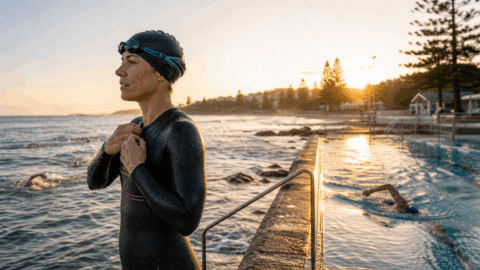
The bike-run brick gets most of the attention, but the swim-bike brick is just as important, especially if you feel very fatigued or dizzy after the swim. Moving from horizontal, non-weight-bearing swimming to an upright cycling position can be disorienting. Practising it helps your body adapt to the change in posture, blood flow and muscle activation.
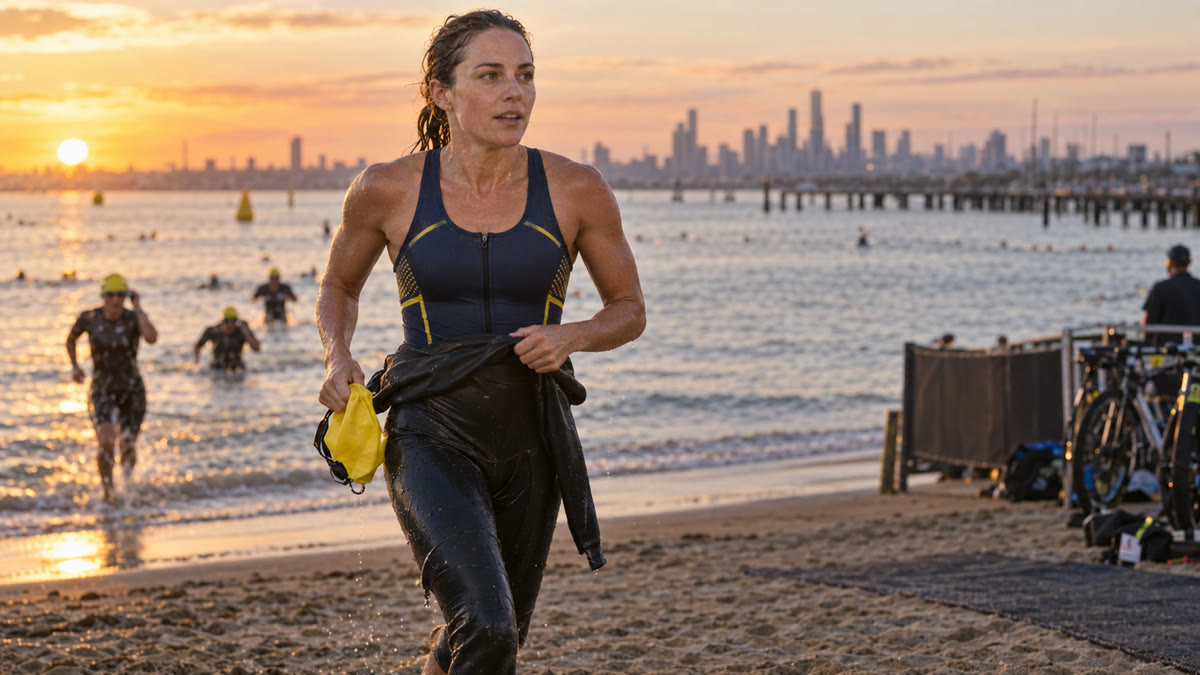
| Phase | Swim-bike brick | Focus |
|---|---|---|
| Early season | 1000m easy swim, straight into 30 to 45 minutes of easy cycling | A smooth change from pool deck to bike |
| Mid season | 1500 to 2000m at race pace, then 60 to 90 minutes of moderate cycling | Wetsuit on, run to the bike, quick mount |
| Late season (race specific) | 30 to 60 minutes open water (or a long pool swim simulating it) at race pace, then 1.5 to 2 hours at race-pace cycling | Full transition practice, including wetsuit removal |
For triathletes training for events like the Husky Long Course or Mooloolaba Triathlon, an open water swim simulation is critical, because it mimics the ocean conditions you will face.
Bike-run bricks: the classic transition challenge
The bike-run brick is where heavy legs are most pronounced and where the biggest gains in transition efficiency are made. These sessions should progressively increase in duration and intensity, mirroring your target race distance and effort.
| Phase | Bike-run brick | Focus |
|---|---|---|
| Beginner / early season | 30 to 45 minutes easy cycling, straight into 10 to 15 minutes easy running | Form, and feeling the transition |
| Intermediate / mid season | 60 to 90 minutes moderate cycling, straight into 20 to 30 minutes moderate running | Begin adding race-pace efforts |
| Advanced / late season | 2 to 4 hours at race-pace cycling (70.3 or Ironman pace), straight into 30 to 60 minutes at target race run pace | Full T2 practice, including nutrition setup |
For an Ironman Port Macquarie athlete, the advanced session might simulate the hilly bike course before an undulating run. For Olympic distance athletes preparing for events like the Gold Coast Triathlon, a shorter, higher intensity bike (for example 40km at target race wattage) followed immediately by a 10km run at race pace is highly effective.
Key variables: duration, intensity and repetition
Three dials to adjust
- Duration: gradually lengthen both the bike and run segments to build endurance and specific adaptation. For the marathon in an Ironman, extend your brick runs to 60 to 90 minutes off the bike in the later stages of training.
- Intensity: vary it. Some bricks are easy and aerobic, to build endurance and practise technique. Others include race-specific efforts in your target heart rate zones or power outputs. A common strategy is to finish the bike strong, with the last 15 to 20 minutes at a higher intensity, to really challenge the legs before the run.
- Repetition: it depends on your race distance and training phase. An Olympic distance triathlete might do 1 to 2 bike-run bricks per week in the build phase. An Ironman athlete might do one long bike-run brick every 1 to 2 weeks, supplemented by shorter, sharper bricks.
Incorporating race-specific simulation
For races where you know the course, such as Ironman Cairns or Challenge Roth, simulate the terrain and conditions. If the bike has significant climbs, find similar ascents for your bricks. If the run is known to be hot, practise running in similar conditions. That specificity reduces race-day surprises and sharpens both your physical and mental readiness.
How do you start your first brick?
Your first brick should feel encouraging, not heroic. Start with a comfortable 30 to 45 minute ride followed straight away by an easy 10 to 15 minute run. The aim is simply to feel what running on tired legs is like and to change over smoothly. No pace targets. If this is your first season in the sport, Your First Triathlon Starts Here is a good companion read.
Your next three weeks
- This week: one easy 30 to 45 minute ride straight into a 10 to 15 minute easy run.
- Next week: repeat it, and add a deliberate shoe change and racked bike between the two.
- Week three: add 5 minutes to the run, or try a swim-bike brick if you can get to open water.
Advanced strategies for maximising transition efficiency
Beyond the basic structure, these techniques fine-tune your bricks and unlock even more transition efficiency and race performance.
The “mini-transition” practice
Do not just practise full transitions once a week. Build mini-transitions into regular training. During a long ride, stop for 2 to 3 minutes, simulate racking your bike, changing shoes and grabbing a bottle, then get back on. After a run, change quickly into your cycling gear, even if you are not riding, to rehearse the movements. Tri Alliance coaches often recommend setting up a small transition zone in your garage or backyard for 5 to 10 minute drills.
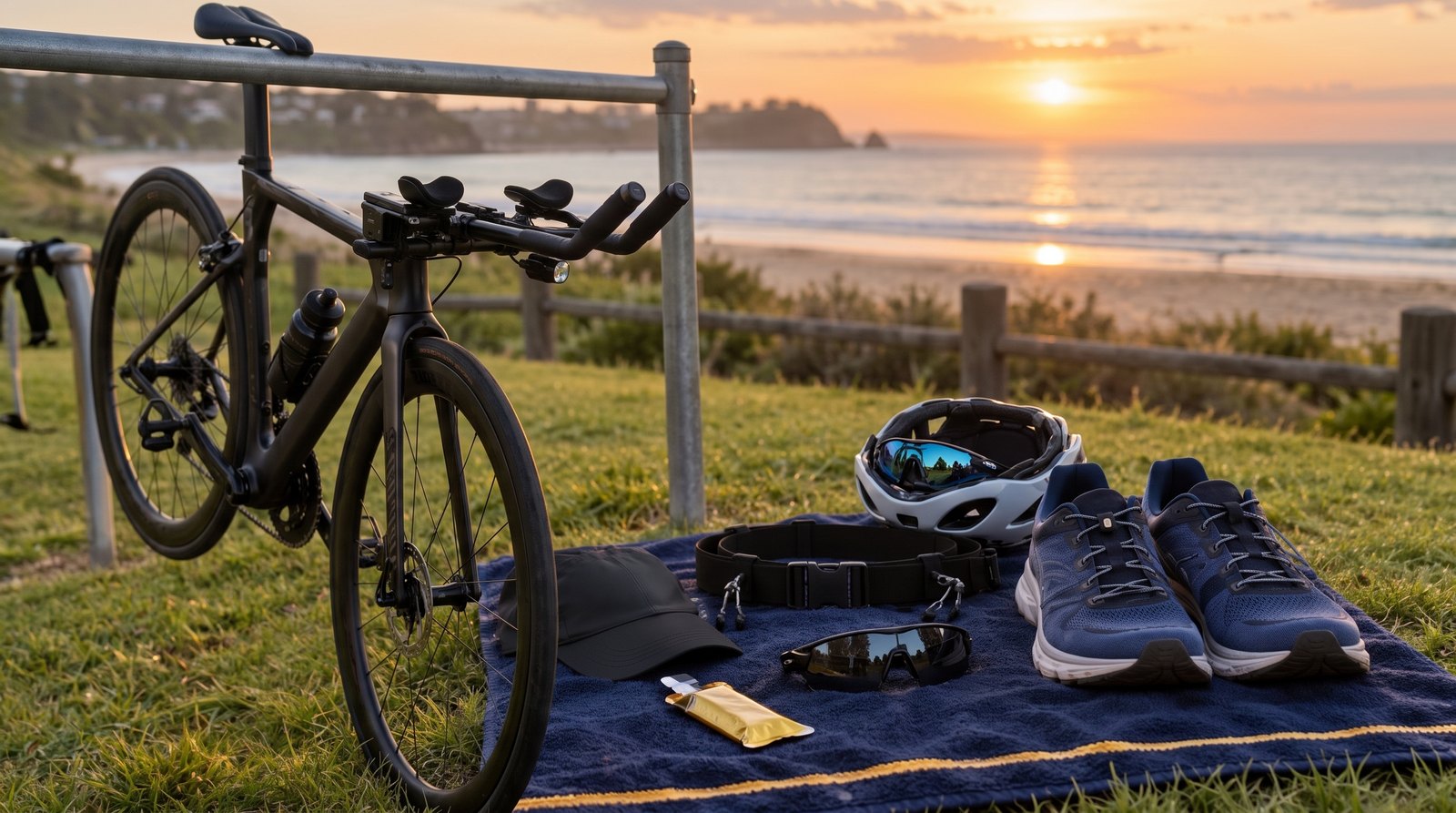
Nutrition and hydration during bricks
Race-day nutrition is critical, and bricks are the ideal time to practise it. Test your planned gels, bars and fluids on the bike and immediately before or during the run, and notice how your stomach handles the change from cycling to running. For the full plan, see Race Day Nutrition: What to Eat and When.
Key considerations
- Fluid intake: drink consistently on the bike, especially in warmer Australian conditions. Aim for 500 to 750ml per hour depending on sweat rate.
- Carbohydrate intake: for longer events, consume 60 to 90g of carbohydrate per hour on the bike.
- Pre-run fuel: experiment with a gel or easily digested calories in the final minutes of the bike, or in T2, to top up before the run.
This practice helps prevent gastrointestinal distress, a common race-day problem that can derail even the best-trained athlete. Knowing how your body reacts to a specific gel when you are already tired from a 90km ride, before a 21.1km run, is invaluable.
Equipment familiarity and setup
Use your race-day equipment in your bricks: race bike, wheels, shoes, helmet and kit. That way everything fits, works and feels familiar under race conditions.
- Bike fit: comfortable for long durations and allows an efficient run off the bike.
- Shoe comfort: test your run shoes after long bike efforts so no hot spots appear on race day.
- Nutrition storage: practise reaching your food and fluids from your bike’s storage.
A surprising number of athletes try new equipment on race day and end up with mechanical problems or discomfort. Your bricks are the proving ground for all your gear, and our race day checklist makes sure nothing gets left behind.
Mental rehearsal and pacing strategy
Before each brick, mentally rehearse the transition. Picture yourself dismounting smoothly, changing gear quickly and starting the run confidently at your target pace. During the session, pay attention to perceived effort and aim for a consistent pace.
First five minutes off the bike
- Short, quick steps.
- Tall posture, relaxed shoulders.
- Breathing settles before pace goes up.
- Then, and only then, find your target pace.
What are the most common brick mistakes?
- Sprinting the first kilometre. The legs feel strange and the adrenaline is up, but a fast start almost always costs you later. Settle into your planned pace instead, which is vital in hot, long events like Ironman Cairns.
- Random bricks with no progression. Build duration and intensity through the season rather than repeating the same session.
- Skipping swim-bike bricks. The swim-to-bike change needs rehearsal too.
- Untested nutrition. Race day is not the day to discover how your stomach handles a gel off the bike.
- New gear on race day. Shoes, kit and helmet should all have been through a brick first.
When should you skip or shorten a brick?
Know your limits: when to stop or skip a brick
- You are unwell, carrying a niggle, or the run leg would be painful rather than just uncomfortable. Stop, and talk to your coach before the next one. If it persists, seek professional advice from a physio or GP. healthdirect has a free guide to sprains and strains and when to get them checked.
- It is a recovery week in your program. Let the week do its job.
- You are short on sleep or very fatigued. A shorter, easier brick, or none at all, is the smarter choice.
- Your program says otherwise. Your coach matches the length and intensity of each brick to your event, so follow what is written rather than adding extra.
Are bricks better together?
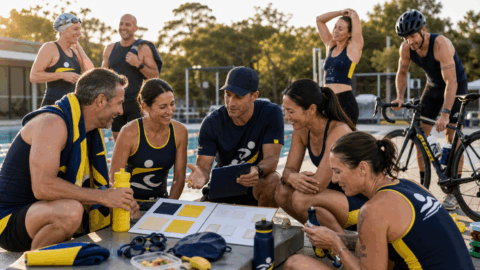
There is a reason combo sessions are some of the best mornings in the squad. Racks lined up, run shoes waiting, coaches watching the changeover and everyone heading out on the same heavy legs. It is a lot easier to laugh at jelly legs when the person next to you has them too.
So whether you are building to your first sprint or your next long-course race, bring the full kit, trust the session and practise the join. The legs will come back. They always do.
Train with us
Combo sessions are part of the Tri Alliance squad program, coached and scaled to where you are right now. See the training timetable.
Sources and further reading
- Tsutsumi Y, Machida S, Naito H. Running Performance Decline in IRONMAN-Distance Triathlon: A Scoping Review of Existing Evidence and Research Gaps. Sports, 2026.
- Walsh JA. The Rise of Elite Short-Course Triathlon Re-Emphasises the Necessity to Transition Efficiently from Cycling to Running. Sports, 2019.
- World Triathlon. World Triathlon Competition Rules 2026.
Frequently asked questions
Tap a question to open the answer.
Discover more from Tri Alliance Triathlon Community
Subscribe to get the latest posts sent to your email.