
A good triathlon race day checklist does more than stop you forgetting goggles or a race belt. It lowers stress, protects your pacing plan and gives you a simple system to follow when race morning feels busy.
The best checklist is not the longest one. It is the one you have rehearsed. Race day is not the time to test new socks, new gels, a different breakfast, unfamiliar tyre pressure, a changed bike fit or a transition layout you copied the night before. Pack what you know, set it up the way you have practised, and remove as many decisions as possible before the start.
This guide covers what to pack and prepare for the swim, bike, run, transition, nutrition and admin parts of race day. Use it early in race week, then do a final check the night before.
Coach’s quick read
Pack in race order, not cupboard order. Walk through arrival, swim, T1, bike, T2, run and finish. Every item should have a moment and a purpose.
The golden rule: nothing new on race day. Familiar gear and a calm setup beat a clever last-minute idea.
What Should Be on a Triathlon Race Day Checklist?
A triathlon race day checklist should include swim gear, bike gear, run gear, transition items, nutrition, hydration, race documents, identification, weather protection, spares and post-race clothing. It should also include timing: when to arrive, when transition closes and when you will warm up.
Many athletes pack by category but forget to mentally walk through the race. That is the better method. Imagine arriving, checking in, setting up transition, warming up, starting the swim, entering T1, riding, entering T2, running and finishing. Every item should belong to one of those moments.
If an item does not fit into that walk-through, ask whether you really need it. Extra gear can be comforting, but too much clutter in transition slows you down and increases the chance of missing the one thing that matters.
For first-time athletes, the core list is simple: tri suit or race clothing, goggles, swim cap, towel, bike, helmet, bike shoes or runners, water bottles, repair kit, race number, race belt or pins, running shoes, hat or visor, nutrition, sunscreen, ID and warm clothes for before and after. The exact details change by distance and weather.
What Should You Prepare the Night Before a Triathlon?
The three-bag test
- Swim: race kit, goggles, spare goggles, cap and wetsuit if required.
- Bike: helmet, shoes, bottles, nutrition and a repair kit you know how to use.
- Run: shoes, race belt, hat or visor and familiar fuel.
The night before a triathlon, prepare your bike, pack your transition bag, check race documents, lay out breakfast, confirm travel time and review the athlete guide. Do not leave mechanical checks or gear decisions until the morning.
Start with the bike. Check tyres, brakes, gears, bottle cages, computer mount and any repair kit you plan to carry. If something feels wrong, solve it before race morning. Do not assume you can “just fix it there” while transition is crowded and time is tight.
Next, pack in race order. Put swim gear together, bike gear together and run gear together. Some athletes use separate bags or packing cubes. Others use one transition bag but group items clearly. Either method works if you can find everything quickly.
Then confirm admin. Know your wave start, parking plan, transition opening time, transition closing time, body marking or race tattoo requirements, bag drop rules and whether you need photo ID. Read the athlete guide even if you have raced before; small local rules can change.
Finally, set up breakfast and bottles. If you plan to eat porridge, toast, banana, rice, sports drink or coffee, make sure it is available and familiar. Race morning should feel boring. Boring is good.
What Swim Gear Do You Need for Race Day?
For the swim, pack your tri suit or swimwear, goggles, spare goggles, event swim cap, wetsuit if required or allowed, anti-fog, lubricant for chafing, towel and warm footwear for standing around before the start. Open-water events may also require extra warmth before and after the swim.
Goggles deserve more attention than most athletes give them. Bring the pair you trust and a spare pair that also fits. A broken strap or leaking seal should not derail the day. If the event starts into low sun, tinted or mirrored goggles may help; if conditions are dark, clear lenses may be better.
If using a wetsuit, practise in it before race day. A wetsuit changes body position, shoulder feel and breathing rhythm. It can help buoyancy, but only if you are calm and comfortable in it. Use lubricant around the neck, underarms and any rubbing points you already know are sensitive.
Do not rely on race morning to test anything. New goggles, a brand-new wetsuit or a different tri suit can all create problems that should have been found in training.
What Bike Gear Should You Pack?
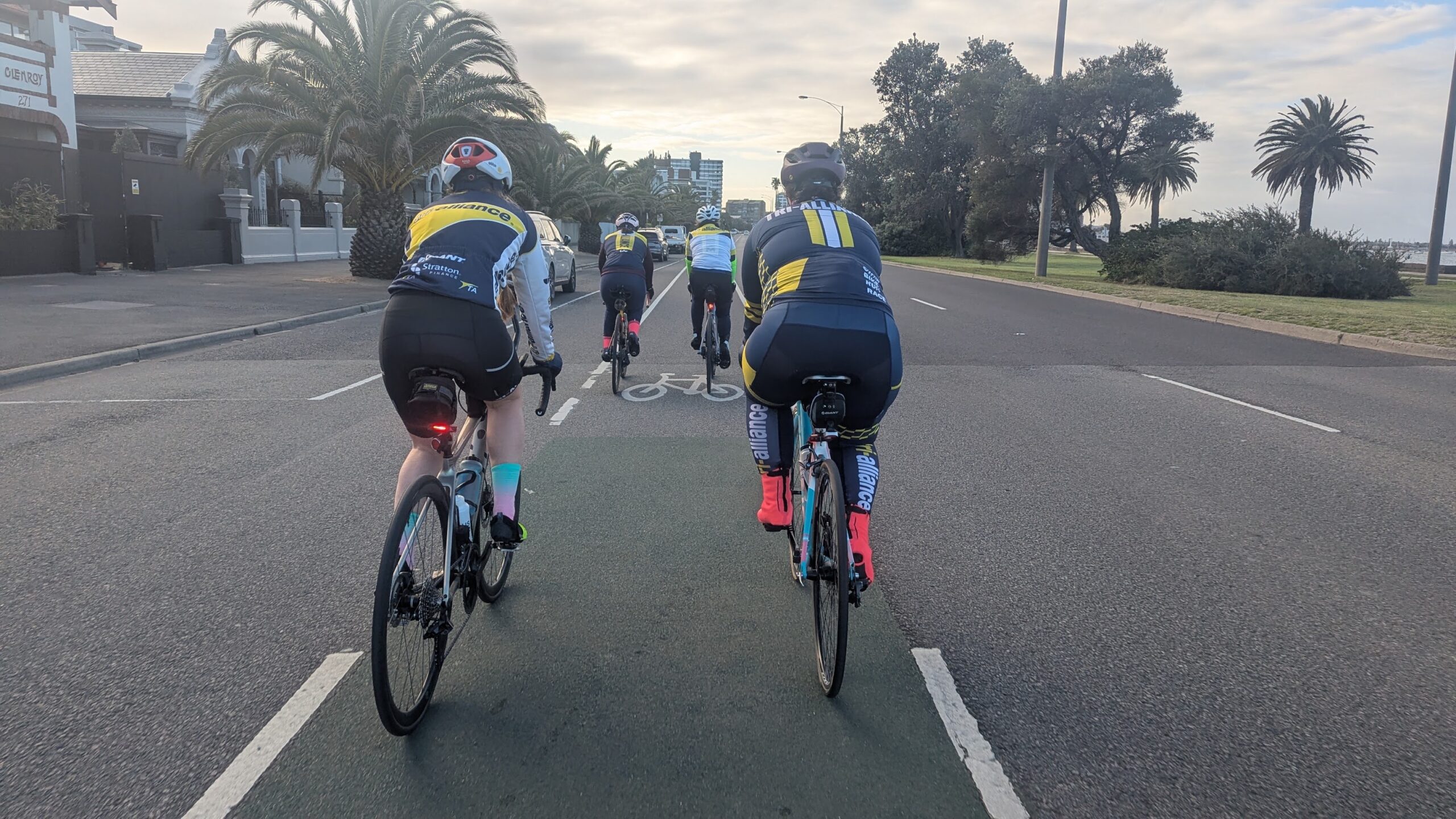
For the bike leg, pack your bike, helmet, bike shoes if used, sunglasses or clear lenses, water bottles, nutrition, flat repair kit, spare tube or plugs, tyre levers, CO2 or mini pump, multitool and any race-required number stickers. Your helmet must be ready before you leave transition.
The bike is where forgotten items can end a race early. A missing helmet usually means no start. A loose bottle cage can cost hydration. A flat kit you do not know how to use is mostly decoration. Check these items before the final sleep.
Tyre pressure should match your tyres, roads and conditions, not a random number from someone else in transition. If you are unsure, ask a coach or mechanic before race week. Make the decision early and write it down.
Keep transition simple. If you are not experienced with flying mounts, shoes clipped into pedals or advanced transition tricks, do not introduce them on race day. A clean, calm T1 beats a rushed mistake.
What Run Gear Should You Pack?
For the run, pack running shoes, socks if you wear them, cap or visor, sunglasses if needed, race belt, run nutrition, anti-chafe product and any weather-specific item such as arm warmers. Elastic laces can help, but only if you have already trained with them.
The run often exposes decisions made earlier. If you ride too hard, underfuel or choose gear that rubs, the run becomes damage control. Your checklist should therefore include not only run gear, but the plan that gets you to T2 in shape to use it.
Lay out run items in the order you will put them on. Shoes open, socks ready if used, race belt accessible, hat or visor visible, nutrition where your hand naturally reaches. Small details reduce mental load when your heart rate is high.
Do not pack a new shoe because it feels faster in the shop. Use what you have tested. Race day rewards familiar systems.
How Should You Set Up Transition?
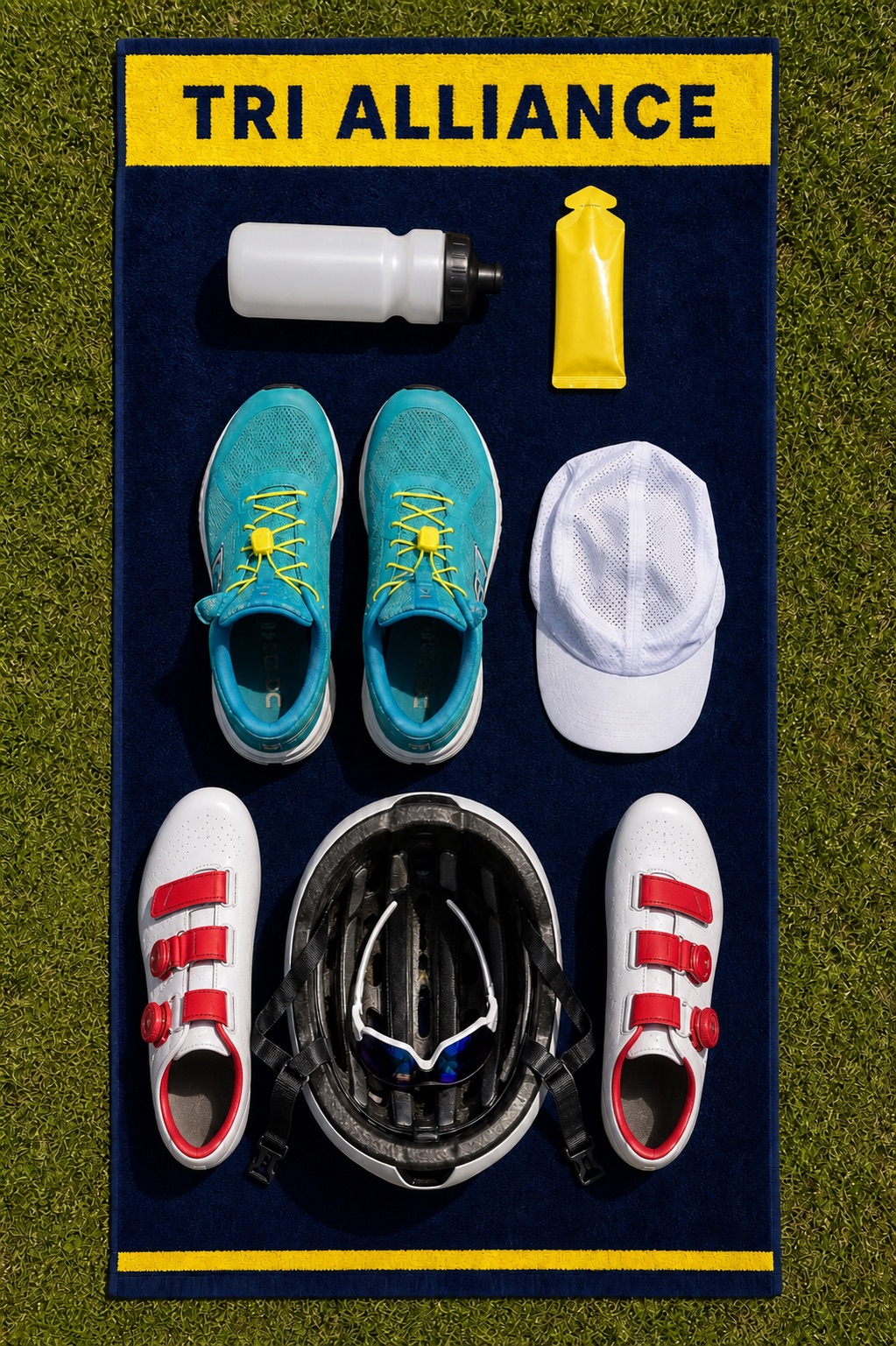
Set up transition by walking through T1 and T2 in order, placing only the items you need, and keeping the space tidy. Know swim-in, bike-out, bike-in and run-out before the race starts.
When you arrive, rack your bike as instructed and check your landmarks. Count rows, note nearby signs and walk from swim-in to your bike. In a busy transition area, every rack can look similar once you are wet and breathing hard.
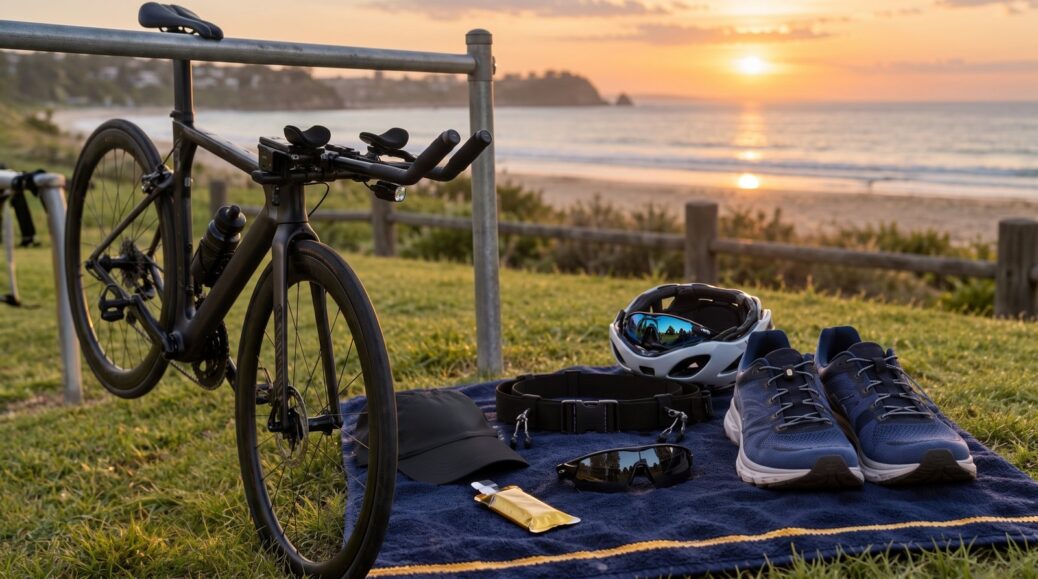
A simple setup might have towel down, helmet open on or near the bike, sunglasses inside the helmet, bike shoes ready, run shoes visible, race belt ready and nutrition placed deliberately. Keep spare items tucked away so they do not cover the essentials.
Before leaving transition, rehearse the sequence: “Swim in, goggles and cap off, helmet on, bike gear, take bike. Bike in, rack bike, helmet off, run shoes, race belt, hat, go.” That mental rehearsal catches gaps better than staring at a pile of gear.
If you are unsure how to structure your training and race rehearsal, review the Tri Alliance training options and choose support that includes race-specific preparation.
What Nutrition and Hydration Should You Bring?
Bring the nutrition and hydration you have practised: pre-race breakfast, sports drink, gels, chews, bars, salt if used, water bottles and recovery food. Do not copy another athlete’s fuelling plan at the expo or on the morning of the race.
Write your fuelling plan by time or course marker. For example, you might drink early on the bike, take fuel at set intervals, and know what you will use in the final third of the run. The exact numbers depend on distance, conditions, body size and gut tolerance, but the principle is the same: decide before fatigue arrives.
For sprint races, simple may be enough. For Olympic-distance, long-course and Ironman racing, nutrition becomes a performance limiter. Practise it in brick sessions and long sessions. If your stomach rejects a product in training, it will not become trustworthy because the event is important.
Melbourne weather can shift quickly, so have a hot-day and cool-day adjustment. More fluid may be needed in heat; extra warmth may be needed before the start. Make those decisions based on the forecast, not panic.
What Should You Avoid on Race Day?
Avoid anything new on race day: new shoes, new goggles, new nutrition, new bike position, new breakfast, new caffeine dose, new transition technique or a new pacing strategy. Race day is for executing, not experimenting.
Also avoid overpacking transition. Extra gear can make you feel prepared, but it can hide the few items you actually need. If you bring spares, keep them separate from the race sequence.
Do not arrive with no time buffer. Parking, registration, toilet queues, body marking, mechanical checks and transition closure can all take longer than expected. Being early is not wasted time; it is part of the plan.
Finally, avoid chasing people in the first ten minutes of each leg. The checklist gets you organised, but pacing gets you to the finish line well.
Try This Triathlon Race Day Checklist This Week
- Pack your full race kit at home, then unpack it in race order: arrival, swim, T1, bike, T2, run and finish.
- Practise one transition walk-through after a short swim or run so the order feels natural.
- Write your nutrition timing on one note and check that every item has been tested in training.
- Read your next race athlete guide and highlight transition times, parking, wave start and equipment rules.
- Remove one unnecessary item from your transition setup so the essentials are easier to see.
If you want race-day systems built into your preparation, Tri Alliance coaches can help you practise transitions, pacing and fuelling before the pressure arrives. Book a free consultation and get your next race plan sorted.
Before race week, use a controlled Melbourne triathlon race simulation to test pacing, transitions and equipment in a repeatable sequence.
Racing in South Australia? Add our Adelaide triathlon planning guide to your checklist for current West Lakes references, travel rehearsals and a course-specific pacing protocol.
Racing in Huskisson? Use our Husky triathlon race-day guide to confirm the current course, start windows and travel-specific preparation.
Discover more from Tri Alliance Triathlon Community
Subscribe to get the latest posts sent to your email.