
Triathlon swim training open water vs pool is one of the biggest gaps in race preparation. You can be fit in the pool and still lose time, confidence and energy in open water if you have not practised the skills that racing demands.
The pool gives you control: clear lanes, a black line, stable water, walls, pace clocks and repeatable sets. Open water gives you the race: sighting, chop, currents, colder water, wetsuits, drafting, contact, crowded starts and no wall every 25 or 50 metres. A complete triathlon swim plan uses both.
The goal is not to choose one environment forever. The goal is to know what each environment teaches, then combine them so your swim fitness transfers to race day.
Is Pool Swimming Enough for Triathlon Training?
Pool swimming is enough to build fitness and technique, but it is not enough to fully prepare for most triathlon races. If your event has an open-water swim, you need open-water skills before race day.
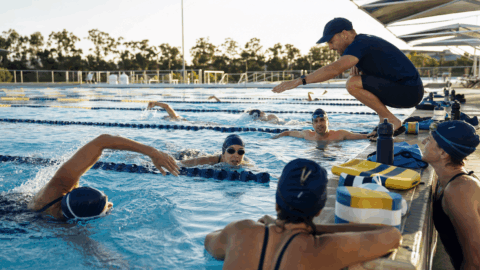
The pool is still essential. It is the best place to refine body position, breathing, catch, kick timing and repeatable pacing. A coach can watch your stroke, set intervals, measure progress and correct habits before they become ingrained. You can also complete quality work safely when weather, daylight or water conditions make open water unsuitable.
The limitation is that pool swimming removes many race variables. The lane line keeps people away. The black line guides direction. The wall gives regular rest and speed. The water is predictable. The pace clock tells you exactly how fast you are going.
In open water, those supports disappear. You must hold direction, manage anxiety, swim around people, breathe in rougher water, stay relaxed in a wetsuit and pace by feel. If you only discover those skills at the start line, you are asking your nervous system to learn too much at once.
What Does Open Water Teach That the Pool Cannot?
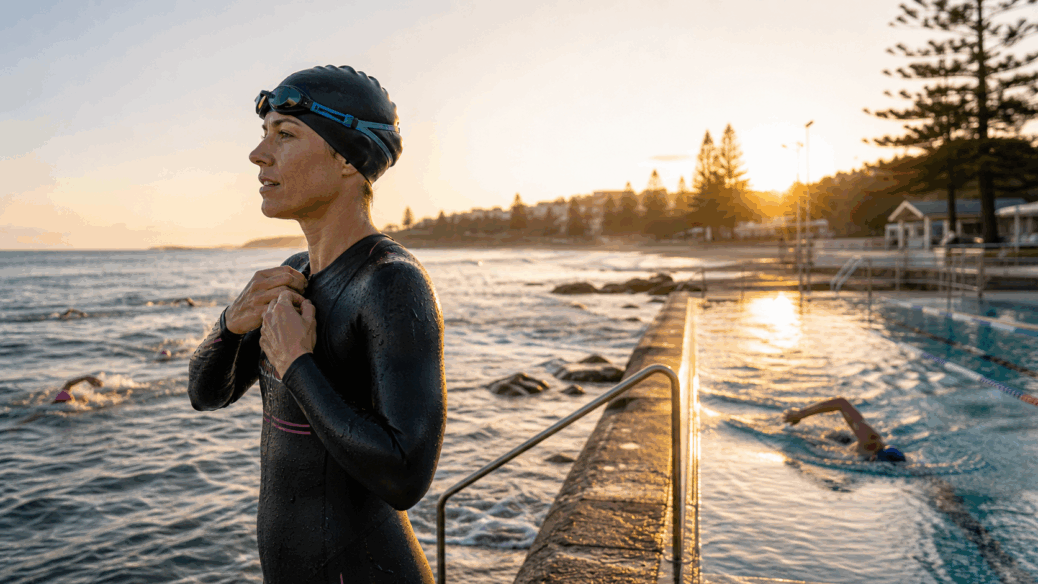
Open water teaches sighting, navigation, pack swimming, drafting, cold-water control, starts, exits and pacing without a clock. These are race skills, not just swim skills.
Sighting is the obvious difference. In the pool, the line on the bottom does the navigation for you. In open water, you need to lift your eyes briefly, find a buoy or landmark, and return to your stroke without dropping your hips or disrupting breathing. Poor sighting can add distance even when fitness is good.
Open water also teaches comfort around other athletes. Race starts can involve arms, bubbles, feet, changes of direction and people swimming across your line. You do not need to enjoy contact, but you do need to stay calm enough to keep breathing and make smart choices.
Drafting is another skill. Sitting on feet or near a hip can reduce effort when done legally and safely, but it takes practice to hold position without touching feet or losing rhythm. In a pool, you can simulate some of this with lane mates, but true open-water drafting feels different.
Melbourne athletes also need to respect conditions. Bay swims, lake swims and river swims can all feel different from a heated pool. Water temperature, chop, glare, wind and visibility change how the swim feels.
What Does the Pool Teach Better Than Open Water?
The pool teaches technique, repeatable pacing, controlled intensity, stroke changes and measurable progress better than open water. It is where most triathletes should do the bulk of their structured swim development.
If your catch is weak, your head lifts too high, your legs sink or your breathing is rushed, open water will usually hide the problem rather than solve it. The pool lets a coach isolate the issue. You can use drills, short repeats, pull buoy work, band work, paddles where appropriate and clear rest intervals.
The pool also lets you compare efforts. A set such as 10 x 100 metres on a fixed send-off shows whether you can hold form under fatigue. A threshold set shows whether pacing is improving. Technique work can be repeated in a way that open-water conditions rarely allow.
For time-poor athletes, pool sessions are efficient. You can train before or after work, avoid travel to suitable open water and get a known training dose. That consistency matters more than occasional heroic sessions.
Tri Alliance squad swimming is useful because it combines this controlled environment with coaching feedback. If swim technique is your limiter, start with Melbourne squad training rather than adding more unstructured metres.
Why Do Pool Times Often Not Match Open-Water Race Times?
Pool times often do not match open-water race times because open water adds navigation, contact, variable conditions, no push-offs, wetsuit effects and pacing uncertainty. The athlete may be fit, but the skill transfer is incomplete.
A swimmer who holds a steady pool pace benefits from walls, lane guidance and calm water. In a race, that same swimmer may zigzag, sight too often, lift the head too high, start too hard, get boxed in, swallow water or lose rhythm in chop. Each small disruption costs energy.
There is also a psychological load. In the pool, you can stop at the wall. In open water, you may feel exposed. If breathing becomes rushed in the first 200 metres, the athlete can spend the rest of the swim recovering from panic rather than executing the plan.
The fix is not simply “swim more open water”. It is to identify which transfer skill is missing. If direction is poor, practise sighting. If starts create anxiety, practise group starts. If pacing fades, use longer continuous swims. If the wetsuit feels restrictive, train in it before race week.
How Often Should Triathletes Swim in Open Water?
Triathletes should swim in open water often enough that race conditions feel familiar, not surprising. For many age-group athletes, one open-water session every one to two weeks in the race-specific phase is useful, with more frequent exposure before an open-water goal race.
The exact frequency depends on experience. A confident open-water swimmer may need occasional maintenance. A beginner or anxious swimmer should build exposure gradually, preferably with supervision, a buddy or a coached group. Safety matters more than bravado.
Open-water sessions do not all need to be long. A focused 30 to 45 minutes practising entries, sighting, turns, drafting and relaxed breathing can be more valuable than a random long swim. Quality of exposure beats distance.
In colder months or poor conditions, use the pool to rehearse open-water skills. You can practise sighting every six to eight strokes, swimming without touching the wall, drafting behind a lane mate, or doing short hard starts into relaxed pacing. It is not identical, but it keeps the skill alive.
What Open-Water Skills Can You Practise in the Pool?
You can practise sighting, drafting, starts, turns, variable breathing, pacing changes and no-wall swimming in the pool. These drills make open-water sessions less intimidating and more productive.
For sighting, swim repeats where every sixth or eighth breath includes a quick forward look. The aim is to keep the lift small and return the face smoothly. If your legs drop every time, slow down and refine the movement.
For drafting, swim behind another athlete at a respectful distance and learn how the water feels. Practise holding position without tapping feet. You can also swim side by side to learn how rhythm changes when someone is close.
For no-wall practice, turn before the wall or swim continuous loops around lane markers where allowed. The aim is to remove the regular push-off and make the effort feel closer to race swimming.
For starts, do short bursts of 25 to 50 metres hard, then settle immediately into controlled breathing. Many athletes lose their race in the first few minutes because they cannot downshift after adrenaline. Practise that downshift.
When Is Open Water a Bad Fit?
Open water is a bad fit when conditions are unsafe, visibility is poor, weather is unstable, water quality is questionable, or you are swimming alone without support. No training benefit is worth unnecessary risk.
It may also be a poor choice when the goal of the session is precise technique correction. If a coach needs to change your catch, breathing timing or body position, the pool is usually better. Open water is excellent for applying skills; the pool is better for rebuilding them.
Do not use open water to prove toughness. Use it to build race competence. That means choosing suitable venues, swimming with others, using bright caps or tow floats where appropriate, checking local conditions and respecting your current ability.
If you are anxious in open water, start small. Waist-deep acclimatisation, short parallel-to-shore swims, controlled breathing and coached support can build confidence without forcing a panic experience.
What Is the Best Swim Training Mix for Race Preparation?
The best swim training mix is usually two or three pool sessions for technique and fitness, plus regular open-water exposure as the race approaches. Beginners should prioritise coached feedback; experienced athletes should target whichever skill is limiting race execution.
A sprint or Olympic-distance athlete might complete two pool sessions and one open-water skill session in a race-specific week. A long-course athlete may need more total volume, but the principle stays the same: controlled pool work for development, open water for transfer.
The mix should change through the season. Early preparation can be pool-heavy while technique and aerobic capacity build. Race-specific blocks should add open-water practice, wetsuit rehearsal and starts. Taper weeks should keep confidence high without creating fatigue.
If you want a plan that balances swim technique, open-water confidence and the bike/run load around it, Tri Alliance coaches can build that through triathlon training plans or squad coaching.
Try Open Water vs Pool Swim Training This Week
- In your next pool session, add 8 x 50 metres with one small sighting lift every six to eight strokes.
- Practise 4 x 100 metres where the first 25 metres is firm, then settle into relaxed race rhythm.
- If conditions are safe, complete one short open-water session focused only on calm breathing and straight swimming.
- After the session, write down the main limiter: direction, breathing, contact, cold, wetsuit feel or pacing.
- Choose next week’s pool drill based on that limiter instead of adding random metres.
If your pool fitness is not translating to race day, do not wait until the next start line to fix it. Book a free consultation and get a swim plan that connects technique, confidence and race execution.
Before your next bay session, use our wetsuit temperature guide to match the rules, water temperature and the body-position support you need.
Next skill: Once you have chosen the right mix of pool and open-water work, use these race-pace triathlon swim kick drills for Melbourne to connect body position, wetsuit rhythm and short race surges.
Discover more from Tri Alliance Triathlon Community
Subscribe to get the latest posts sent to your email.