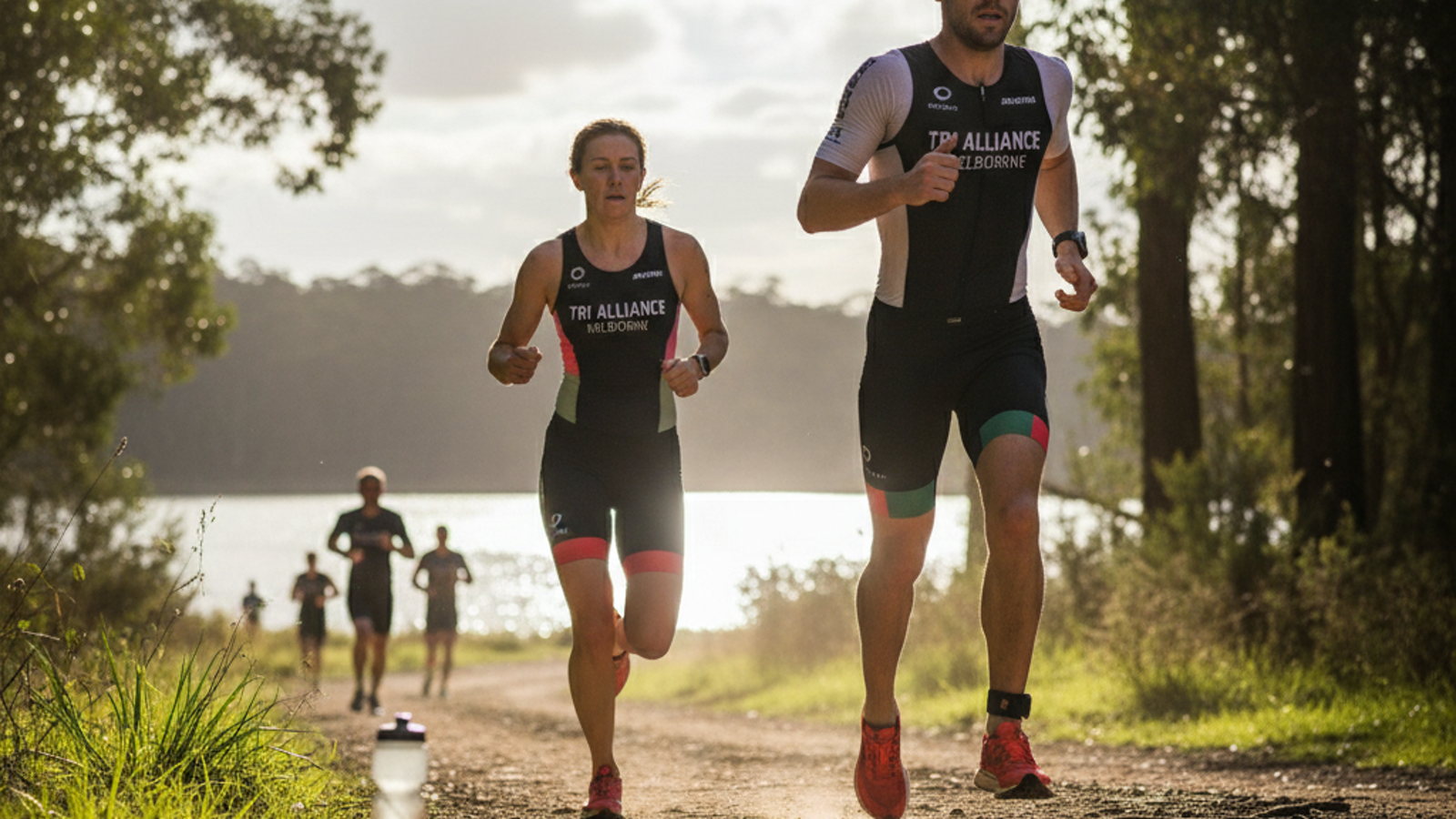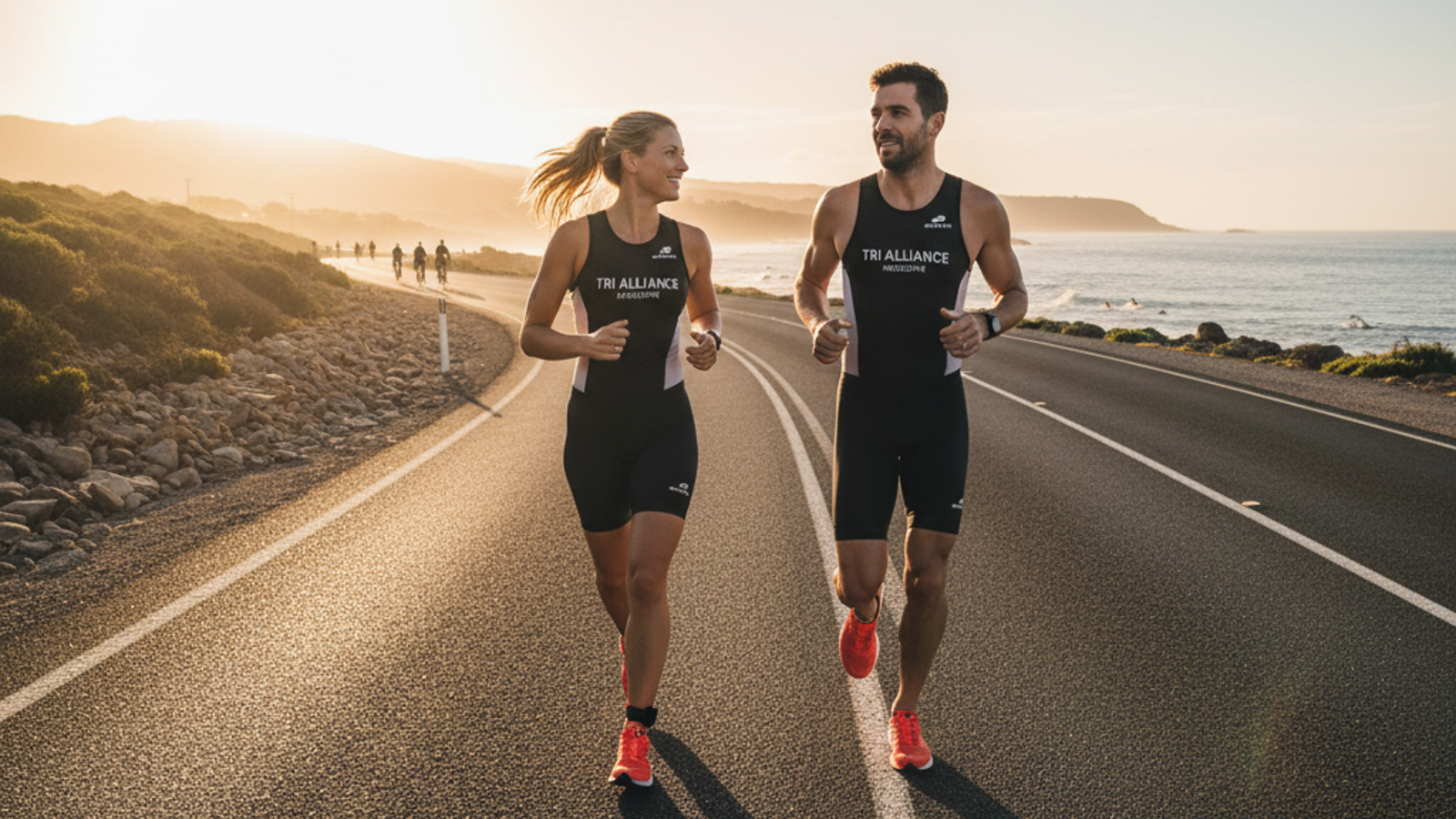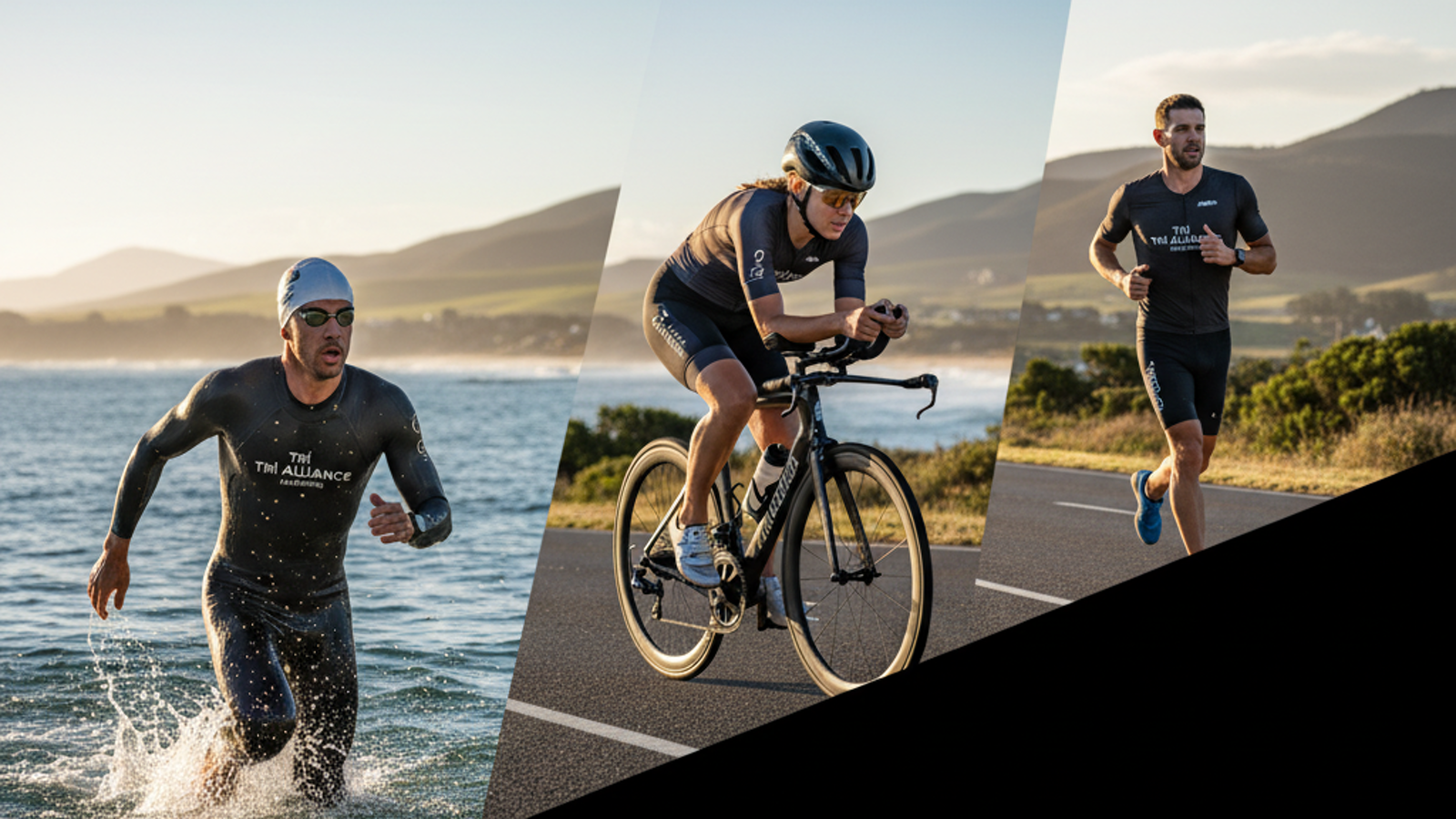

Triathlon club vs solo training is not really a question of which option is “better”. It is a question of which setup makes you train consistently, safely and honestly when work, family, Melbourne weather and race nerves all start pulling at the plan.
Some athletes thrive alone. They like quiet long rides, flexible run times and the ability to move a session without checking a squad calendar. Others improve faster in a club because they get coached swim feedback, safer group rides, harder track sessions and a social reason to turn up when motivation is thin. Most successful age-group triathletes use a mix: key sessions with a squad, easier aerobic work alone, and coaching oversight to stop the plan drifting.
This guide compares the pros and cons of triathlon club training and solo training so you can choose the model that fits your season, your personality and your race goal.
Is Triathlon Club Training Better Than Solo Training?
Triathlon club training is better if you need structure, coaching feedback, accountability and safer group practice. Solo training is better if your schedule changes often, you already know how to train, or you need quiet control over pace and recovery.
The mistake is treating this as a moral choice. Training with a club does not make you more committed. Training alone does not make you more disciplined. The useful question is: which environment removes the most friction from the next eight to twelve weeks?
For many Melbourne athletes, the highest-value club sessions are swim technique, open-water practice, group rides and interval run sessions. These are the places where feedback, safety and controlled intensity matter. Solo sessions are often best for easy runs, endurance rides, recovery spins and strength work, because they need to fit around life and should not become accidental races.
If you are new to triathlon, a club also reduces decision fatigue. You do not have to guess what a suitable swim set looks like, where to ride, how to pace a brick session or what is normal before your first race. You can borrow experience from coaches and athletes who have already made the common mistakes.
What Are the Main Benefits of Joining a Triathlon Club?
The main benefits of joining a triathlon club are coaching feedback, accountability, safer training environments, race-specific skills and a community that makes consistency easier. These benefits matter most in the sessions where technique and confidence affect performance.
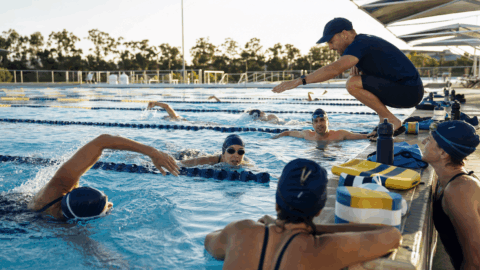
Swimming is the clearest example. A solo athlete can complete laps, but they cannot easily see their own dropped elbow, crossover, poor body position or breathing timing. A coached squad can correct those problems before they become thousands of repeated metres. That matters because swim fitness without better mechanics often just makes you tired at a faster rate.
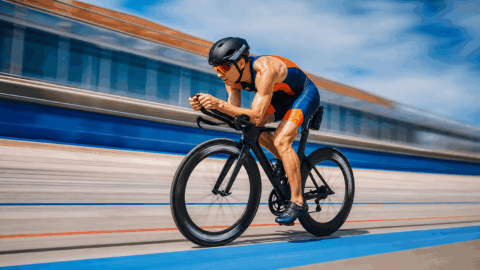
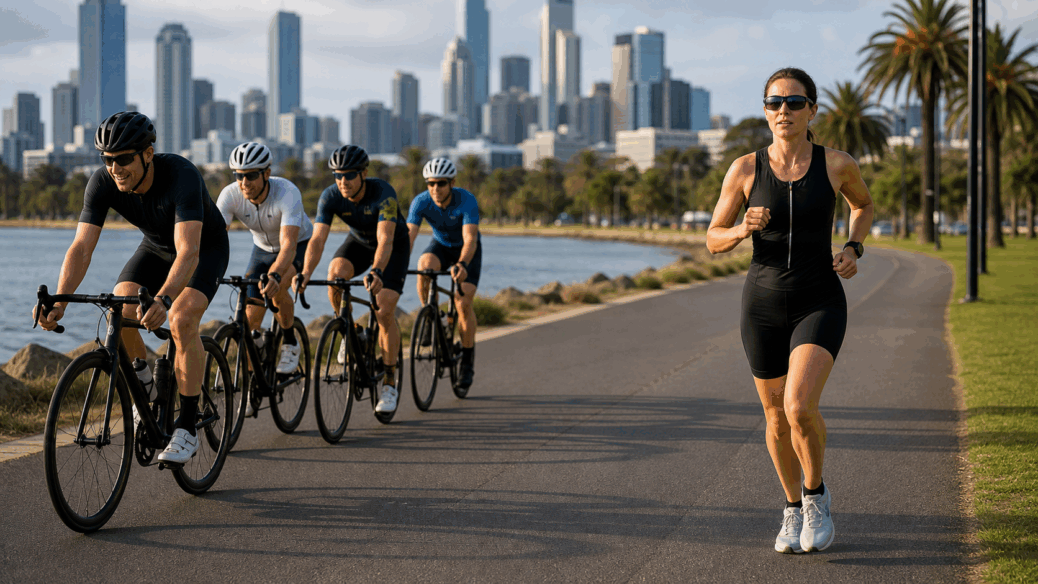
Bike training is another strong case for club work. Riding with others teaches spacing, communication, cornering, passing, fuelling on the move and staying calm when the pace changes. Those skills are hard to learn safely alone. They are also part of race readiness, even in non-drafting events, because you still need to manage other athletes, aid stations and traffic around transition.
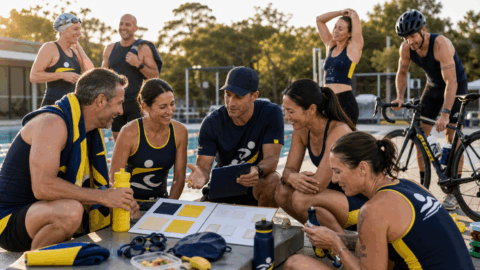
A club also gives you accountability without needing constant willpower. If you know a squad is meeting for a Tuesday morning run or a Saturday ride, there is less negotiation with yourself. The session becomes an appointment, not a vague intention.
For local athletes, Tri Alliance squad training in Melbourne is designed around this practical benefit: coached sessions, race preparation and athlete support in the same environment. If you want that structure, start with the Tri Alliance triathlon coaching options and choose the level of support that matches your goal.
What Are the Downsides of Club Training?
The downsides of club training are fixed session times, possible mismatch between the group and your personal training load, cost, travel time and the temptation to race sessions that should be controlled. A club helps only when it supports the plan rather than replacing your judgement.
Group energy is useful, but it can also pull athletes into poor decisions. An easy aerobic ride can become a threshold session if the wrong people are pushing the front. A recovery swim can become a lane battle. A runner coming back from injury can chase the group instead of respecting the build.
This is where coaching matters. A good squad environment still gives athletes permission to modify. If your plan says aerobic, you should be able to sit out a rep, change lanes, reduce the run volume or ride a steadier group without feeling like you have failed. If the culture rewards every session being hard, it is not the right environment for long-course preparation.
There is also the practical cost. Club membership, coaching fees, travel and time away from home all count. If those costs create stress, the training model is not sustainable. The best setup is the one you can repeat for months, not the one that looks most impressive in week one.
When Is Solo Triathlon Training the Better Choice?
Solo triathlon training is the better choice when you need schedule flexibility, precise pacing, quiet recovery, or a plan built around irregular work and family commitments. It can work very well if you are honest with intensity and have enough knowledge to avoid blind spots.
Solo training is strongest for easy endurance work. A Zone 2 run before work, a controlled indoor bike session, a recovery spin or a steady long ride can all be done without a group. In fact, doing them alone may make the session better because nobody drags the pace too high.
It is also valuable for athletes who become overstimulated by group settings. Some people train better when they can focus, think and regulate effort without conversation or comparison. That does not make them antisocial; it means their best training environment is quieter.
The risk is that solo athletes often miss two things: feedback and accountability. You may not notice that your swim technique is limiting you, your bike position is uncomfortable, your run cadence collapses late in long runs, or your “easy” sessions are actually moderate every day. A personalised coaching plan can solve much of that without requiring every session to be with a squad. Tri Alliance’s personalised coaching is useful for athletes who need structure but cannot always attend group sessions.
How Should Beginners Choose Between a Club and Solo Training?
Beginners should lean toward club or coached support for the technical and logistical parts of triathlon, then use solo training for simple aerobic sessions. The first season is not just about fitness; it is about learning how the sport works.
New triathletes usually underestimate the number of small decisions involved. What gear do you actually need? How do transitions work? How do you swim around people? When should you practise open water? What does a brick session feel like? How hard should an easy ride be? A club answers these questions faster than trial and error.
The beginner trap is trying to learn all three sports alone at the same time. That can work for a naturally organised athlete, but it often creates gaps. The athlete becomes fit enough to finish sessions but still arrives at race day unsure about pacing, transition setup, open-water confidence or fuelling.
If you are preparing for your first sprint or Olympic-distance race, use club sessions for swim technique, bike handling, open-water practice and race simulation. Keep simple aerobic runs and some bike trainer sessions solo. That gives you support where it matters without making the whole week rigid.
What Is the Best Hybrid Approach?
The best hybrid approach is to do two or three key sessions with a club or coach each week, then complete the lower-risk endurance and recovery sessions solo. This gives you feedback and accountability without losing flexibility.
A practical week might look like this:
- One coached swim session for technique and threshold work.
- One squad run or track session for controlled intensity.
- One group ride or coached brick for race-specific practice.
- Two to four solo sessions for aerobic volume, recovery and strength.
This model works because it protects the sessions that are easiest to get wrong. Technique, intensity and race skills happen with support. Volume and recovery happen on your own timetable. It also reduces the social pressure to turn every session into a group event.
Long-course athletes can use the same model with more solo endurance. The key is not to disappear completely from feedback. A monthly technique check, coached long ride, squad swim block or training-plan review can stop small errors from becoming major problems.
How Much Does Personality Matter?
Personality matters because the best training plan is the one you can repeat under stress. Some athletes need people around them to stay engaged; others need solitude to stay consistent. Neither is wrong.
If you are energised by people, a club can lift your training. You will probably enjoy shared goals, familiar faces and the feeling that someone expects you to be there. That social connection is not soft; it is a real adherence tool.
If you are drained by busy groups, solo training may protect your consistency. You can still use coaching, but you may prefer fewer squad sessions and more independent work. The important thing is to avoid using “I train better alone” as cover for avoiding feedback, and avoid using “I need the group” as cover for ignoring recovery.
Ask yourself three questions: Do I miss sessions because nobody is expecting me? Do I overtrain when I am around faster athletes? Do I avoid technical work because it feels awkward alone? Your answers will tell you which training environment should carry more of the load.
Who Should Not Join a Triathlon Club Yet?
A triathlon club may be a bad fit right now if the fixed times create more stress than support, if you are managing an injury that needs tight control, or if you know you will turn every group session into a race. In those cases, start with individual coaching or a smaller number of selected sessions.
It is also worth waiting if your immediate goal is simply to rebuild basic consistency. If you have been inactive, returning from illness or juggling a difficult work period, adding a full squad schedule can be too much too soon. Build a repeatable rhythm first, then add club sessions where they solve a specific problem.
The point is not to avoid community. It is to enter it with a plan. A club should make training clearer and safer, not add guilt or noise.
Try Triathlon Club vs Solo Training This Week
- Choose one session this week that would clearly benefit from feedback, such as swim technique, run intervals or a group ride.
- Choose one session that should stay solo and easy, then keep it genuinely controlled.
- Write down the training friction you feel most: motivation, schedule, technique, safety or pacing discipline.
- Match that friction to a solution: squad session, personalised coaching, solo plan adjustment or recovery.
- After seven days, review which environment made you more consistent, not just which felt harder.
If you want help choosing the right mix, Tri Alliance can map your week around your goal, experience and real-life constraints. Start with a free consultation and build a training structure you can actually repeat.
Discover more from Tri Alliance Triathlon Community
Subscribe to get the latest posts sent to your email.