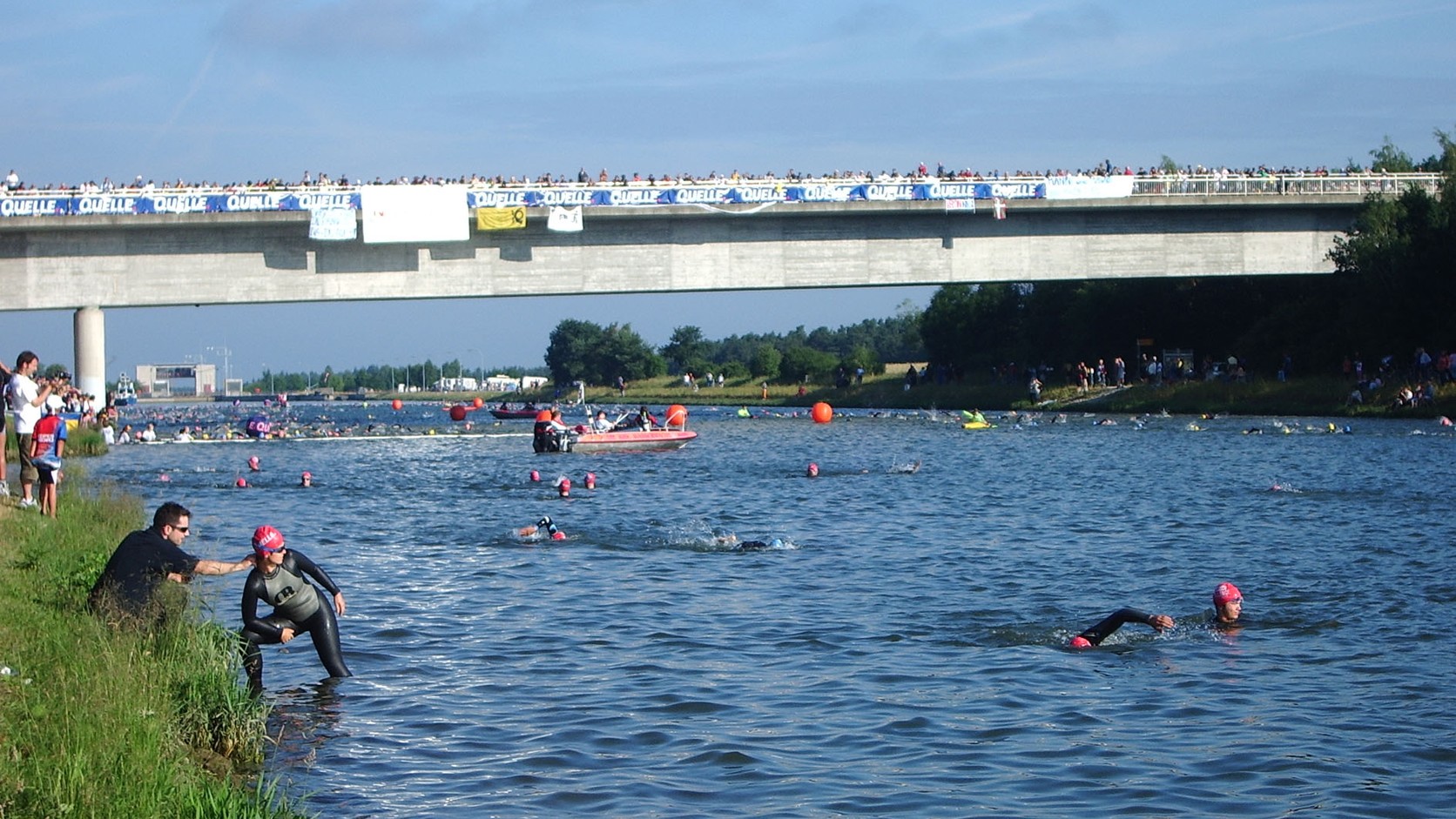

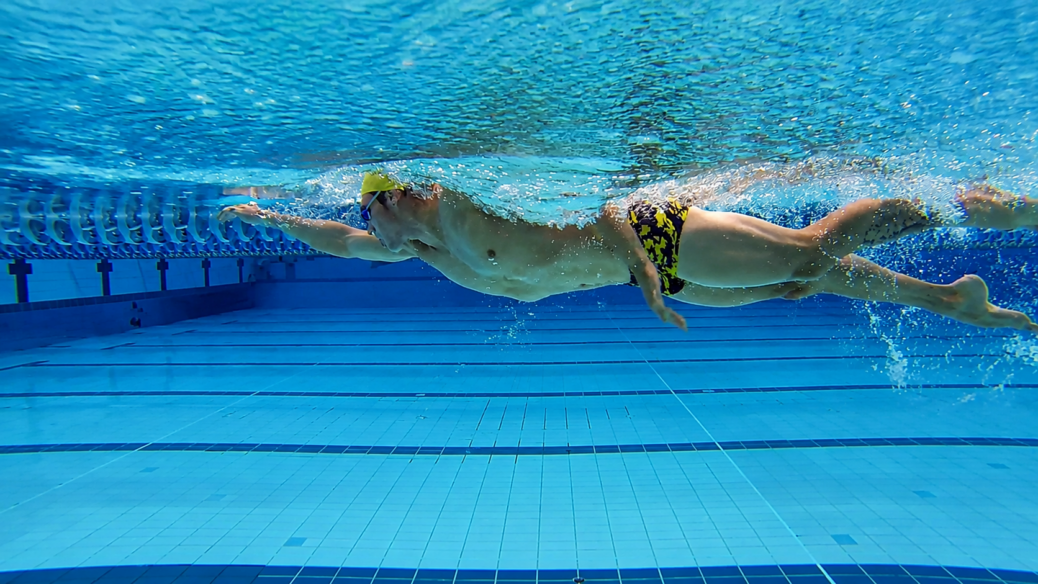
A useful triathlon swim kick is compact, continuous and adjustable: light enough to protect your bike and run, but ready to lift for the start, a buoy turn or the final run to shore. For Melbourne athletes, the safest progression is to make that rhythm repeatable in a measured 50 m pool at MSAC, test it in your wetsuit, then take it to a coached open-water session. The goal is not to win a kickboard race. It is to hold your body position and stroke rhythm at race pace without your legs taking over the effort.
In this guide
- What your kick actually does in a triathlon swim
- A 3 × 200 m test to find your real race pace
- Four race-pace drills for the MSAC 50 m pool
- Settle–Switch–Surge: our three-gear kick protocol
- Making the kick wetsuit-ready, then moving to Elwood
- A simple plan for this week
The whole session at a glance. Pick the column that matches you and use the cue on every rep.
| Drill | Beginner | Intermediate | Race-use cue |
|---|---|---|---|
| Side-kick balance | 6 × 25 m, 20 sec rest | 8 × 25 m, 15 sec rest | Small kick, quiet knees |
| Kick-to-swim | 6 × 50 m (25 kick / 25 swim) | 8 × 50 m (12.5 kick / 37.5 swim) | Same leg rhythm when the arms join |
| Race-pace 100s | 4 × 100 m, 25 sec rest | 6 × 100 m, 20 sec rest | First 15 m firm, then settle |
| Wetsuit switch set | 4 × 100 m, every second rep in suit | 6 × 100 m, alternate suit / no suit | Don't let buoyancy switch the kick off |
| Start–turn–finish | 4 × 50 m | 6 × 75 m | Surge 10–15 m, settle, surge again |
What should a triathlon swim kick actually do?
Your kick has three race jobs: hold your hips close to the surface, steady your rotation, and give you short bursts of speed when position matters. That is very different from driving every metre with a hard six-beat kick. An efficient distance kick supports the stroke. It doesn't compete with it.
The one-line version
Your legs are the stabilisers, not the engine. Save the engine for the bike and run.
In freestyle, one arm cycle runs from a right-hand entry to the next right-hand entry. A two-beat kick puts one downbeat with each arm stroke; a six-beat kick fits three. Both can work. Either can be economical when the action stays gentle, and a kick still helps steady the stroke when a wetsuit lifts your body position. Triathlete has a practical explanation of how to save your legs without switching them off.
Two-beat kick
One kick per arm stroke. Very economical over distance and the natural fit for most age-group triathletes once a wetsuit is on.
Six-beat kick
Three kicks per arm stroke. More propulsion and stability, more cost. Useful in short bursts: starts, turns and the final approach.
What good looks like from the pool deck
- The movement starts at the hip, with a soft bend at the knee.
- The foot sends water back rather than the knee pushing down.
- Light white water behind the feet, not both knees cycling under the body.
- The feet stay inside the width of the hips, even when you breathe.
If your feet split wide every time you breathe, fix the balance problem before you add any speed.
How do you find race pace in the pool?
Race pace is a pace you can repeat, not the fastest 100 m you can produce. Find yours with one simple test.
The 3 × 200 m baseline test
- Warm up fully.
- Swim 3 × 200 m at the effort you expect to hold in your target race, with 30 seconds rest.
- Record each 200 m time and your stroke count on the middle 50 m.
- Give each rep a kick-control score from 1 to 5: 1 means the legs were barely organised, 5 means they dominated the effort.
Target: repeat times within 5 seconds of each other and a kick score of 2 or 3.
Worked example
Repeats of 4:04, 4:06 and 4:08 put your race-pace work at 2:03–2:04 per 100 m. Don't set it from the 4:04 alone.
Your usable training pace is the rhythm you can reproduce while keeping the kick compact and your stroke count steady.
Equipment changes that rhythm. A 2023 peer-reviewed study found that fins altered stroke length, kick amplitude, coordination and estimated energy cost during all-out front crawl. That doesn't make fins bad; it means they need a clear purpose. Use short fins to feel a streamlined leg line, then take them off and prove the pattern holds. Here is the study summary on fins, paddles and front-crawl mechanics.
Which race-pace drills work best at MSAC?
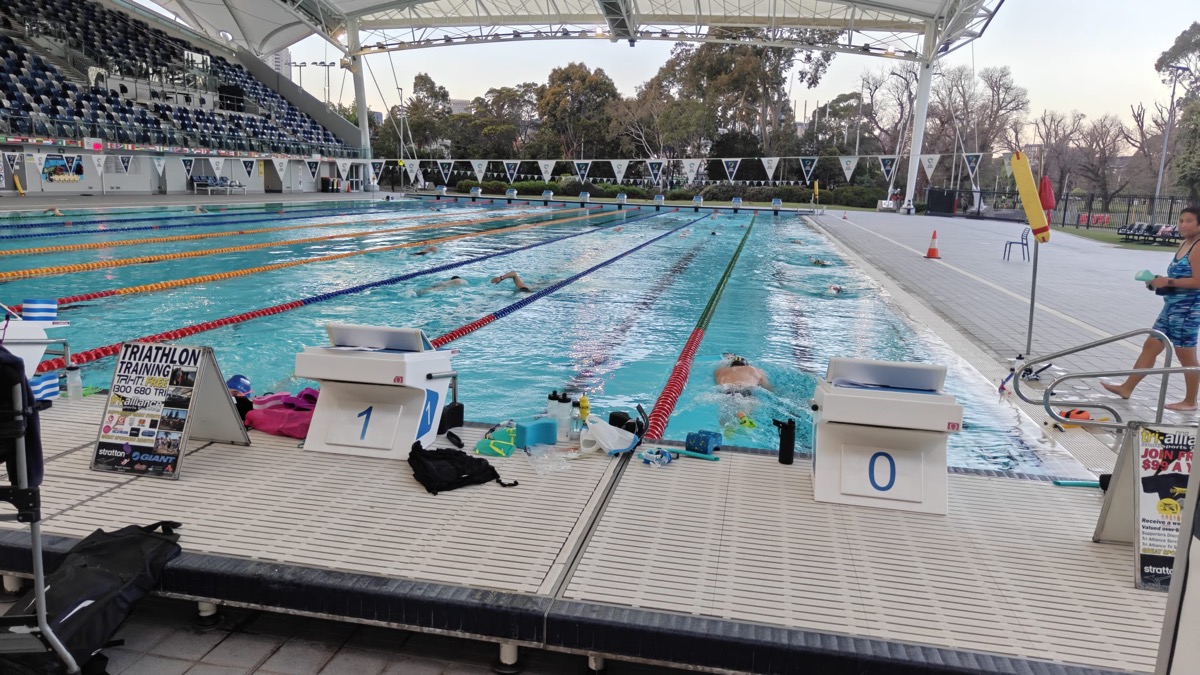
MSAC suits this work because its outdoor competition pool is 50 m, and the indoor competition pool can be set up as 50 m or 25 m. Check the lane set-up on the day. A 1:50 per 100 m target means a 55-second 50 m, or roughly 27–28 seconds per 25 m, so the pool length changes how often you get timing feedback. Melbourne Sports Centres lists the MSAC pool specifications.
1. Side-kick balance
6–8 × 25 m on your side, lower arm extended, upper arm resting on your thigh. Swap sides each rep. Head in line with the spine, kick inside hip width. Rest 15–20 seconds so technique, not survival, decides the rep.
2. Kick-to-swim
6–8 × 50 m. Beginners: 25 m side kick, 25 m freestyle. Intermediate: 12.5 m kick, 37.5 m swim. The test is whether the leg rhythm stays the same when the arms join. If the kick suddenly grows, slow the first three strokes.
3. Race-pace 100s
4–6 × 100 m at your baseline pace, 20–25 seconds rest. First 15 m firm, then settle straight away. Keep the second 50 m within 2 seconds of the first. That's more race-specific than blasting the first length and fading home.
4. Sighting without a scissor kick
6 × 50 m at race pace, sighting forward twice a length. Lift just enough for the eyes to clear, then return the head before breathing to the side. If your legs split when you sight, lift less and make the next four kicks smaller and quicker.
Want a coach on deck?
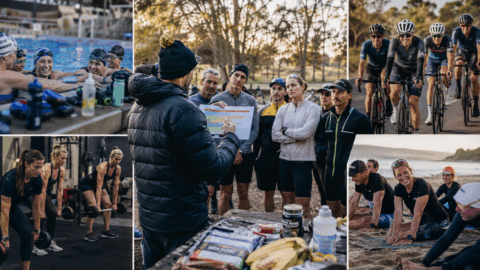
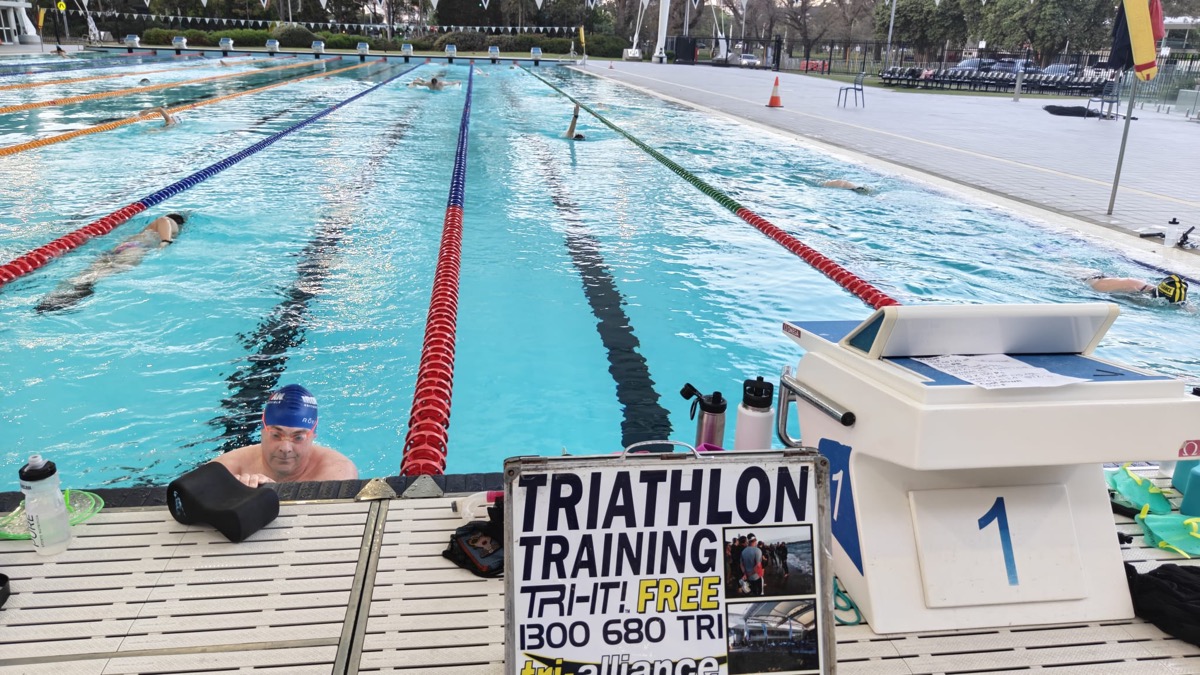
Tri Alliance runs coached pool sessions at MSAC for a range of abilities. Check the current Melbourne training timetable for session times, or compare our swim coaching options if you want technique feedback.
How does the Settle–Switch–Surge protocol work?
Settle–Switch–Surge is Tri Alliance's three-gear protocol for turning one pool kick into a race-ready system. We see athletes in our squad waste energy when they only have two settings: off and frantic. This protocol gives every change a purpose and a measurable distance.
Settle
A light two-beat or relaxed continuous kick for 50–100 m at race pace. Kick-control score stays at 2 or 3 out of 5.
Switch
Keep the kick light while you change something else: sight twice, breathe to your weaker side, or move onto a lane-mate's feet for 25 m.
Surge
Lift the kick rate for 10–15 m while keeping it small, then return to Settle within three arm strokes.
The session
- Intermediate: 6 × 100 m with 20 seconds rest, as 50 m Settle, 25 m Switch, 10–15 m Surge, then settle to the wall.
- Beginner: 4 × 75 m with 30 seconds rest.
- Pass condition: the surge creates speed without leaving the next rep more than 3 seconds slower.
The coaching question
Not “did you kick harder?” but “could you change gears and get control back?”
That is the skill you need after contact at the start, around a turn buoy, or while moving onto a useful set of feet.
How should you make the kick wetsuit-ready?
A wetsuit lifts your legs, but it doesn't remove the need for timing and stability. Start with fit and familiarity rather than a long continuous set.
Wetsuit switch set
- If the venue allows suits in the lane, swim 4–6 × 100 m, alternating one rep in the wetsuit and one without.
- Hold the same target time, stroke count and Settle kick on both.
- Notice whether the suit changes shoulder freedom, hip position, or how easily you come back from Surge to Settle.
- Finish with 4 × 50 m easy without the suit to check the wetsuit didn't hide an oversized or disconnected kick.
Wetsuit rules come from race officials, not the forecast
Event officials measure the water temperature and apply the rules for the race and athlete category. A 2026 World Triathlon age-group guide lists different upper limits by swim length and age category, with the official temperature taken one hour before the first wave. Treat the event guide and current competition rules as the authority, then read your own race information.
When are you ready to move from MSAC to Elwood?
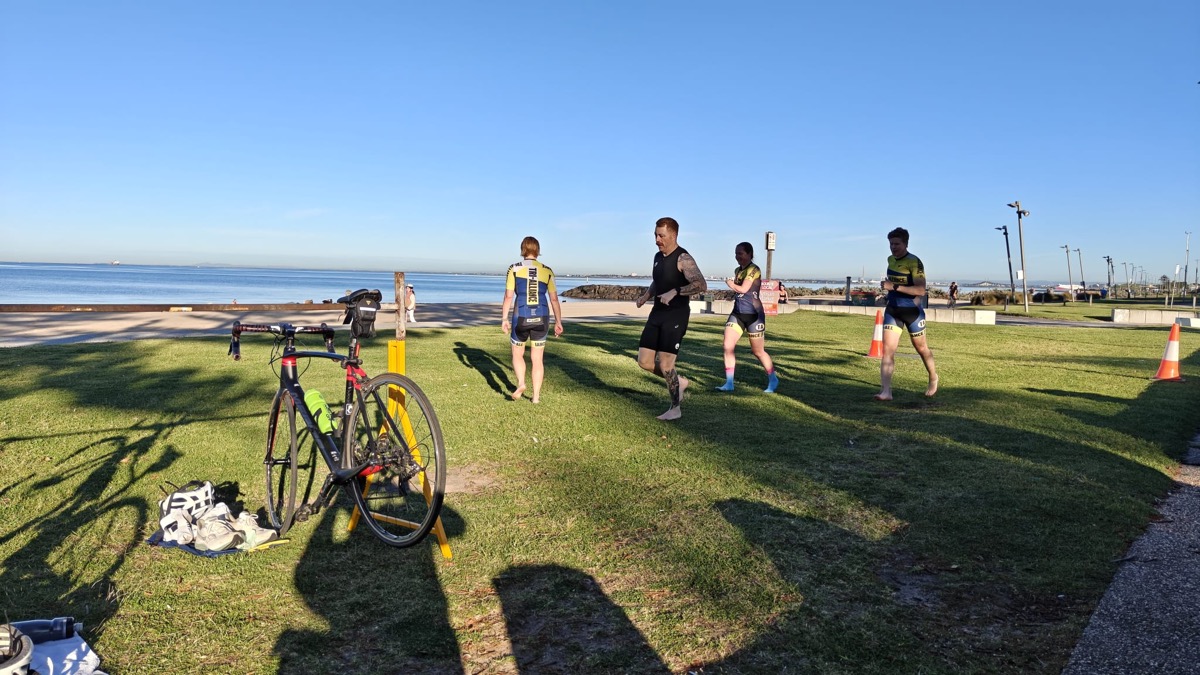
Move to open water only once you can complete the pool set with control. That marker doesn't guarantee open-water confidence. It simply shows the basic skill is stable enough to add waves, navigation, other swimmers and colder water.
Ready for open water? Tick all three
- 6 × 100 m at race pace, every rep within 3 seconds.
- Two sights per 100 m without your legs splitting.
- You can return from a Surge to Settle within three strokes.
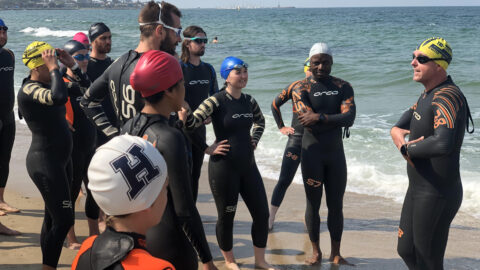
Your first open-water session should be coached or done with an organised group, never alone. Stay close to shore and use short, repeatable blocks such as 6 × 2 minutes: 20 seconds firm, 80 seconds Settle, 20 seconds sight-and-Switch. Get out, regroup and get feedback between blocks. Tri Alliance lists MSAC and Elwood Beach among its Melbourne training locations, including open-water sessions at Elwood.
Conditions decide, every time
Life Saving Victoria advises swimmers to check signs, tides, weather and water conditions, swim at patrolled locations, follow lifeguard directions and never swim alone. Read its current Victorian water-safety guidance before any independent beach visit. If the location is unpatrolled or the conditions don't match your ability, stay out and go back to the pool.
Who is this protocol not for?
Know your limits
- You can't yet swim 200 m of relaxed, continuous freestyle. Start with learn-to-swim or one-on-one technique coaching instead.
- You can't yet sight and breathe safely in open water.
- You're trying to rebuild your whole stroke in the final seven days before a race.
- You want to copy an elite swimmer's kick rate. Your pattern depends on your body position, timing, race distance and equipment.
Stop a drill when the movement gets less controlled with each rep. Quality ends the set before the printed distance does.
New to all of it? Our Try the Tri beginner program combines technique, open-water confidence and race preparation in a coached group.
What should you try this week?
One pool session and one skills check is plenty. Keep the race-pace work modest so every rep teaches the same movement.
Monday
Baseline: 3 × 200 m with 30 seconds rest. Note time, middle-50 stroke count and kick score.
Wednesday
Skills: 6 × 25 m side kick, then 6 × 50 m kick-to-swim, resting 15–20 seconds.
Friday
Gears: 6 × 100 m Settle–Switch–Surge, 20 seconds rest, no more than 3 seconds between reps.
Weekend
Check the next coached MSAC or Elwood session and confirm venue, conditions and gear before you leave home.
Get a coach's eye on your kick
Train free with Tri Alliance for a week
Swim with our squad at MSAC and Elwood and we'll tell you whether your kick is helping or holding back your stroke. Bring your three baseline times and we'll take it from there.
Or see the training timetable · call 1300 680 874
What do Melbourne triathletes ask about swim kick?
Tap a question to open the answer.
Sources and further reading
- The right way to save your legs on the swim, Triathlete.
- Fins, paddles and front-crawl mechanics, PubMed, 2023.
- State Sport Centres Trust strategic plan (MSAC pools), Melbourne Sports Centres.
- Age-group athletes guide, World Triathlon, 2026.
- Staying water safe, Life Saving Victoria.
Discover more from Tri Alliance Triathlon Community
Subscribe to get the latest posts sent to your email.