Mindfulness Practices for Triathletes: Train Your Mind Like You Train Your Body
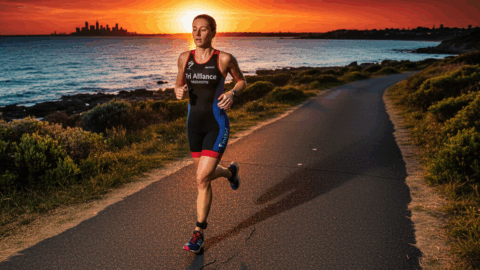
Every Saturday morning, hundreds of triathletes circle Albert Park Lake before the sun fully rises. Their legs are turning, their breath is measured — but for many, the mind is already racing ahead to race day anxieties, missed training sessions, and whether they’ve done enough. Learning to quieten that mental noise is not a soft skill. It is a competitive edge.
Mindfulness — the practice of focused, non-judgmental present-moment awareness — is now a standard tool in the performance toolkit of elite endurance athletes. For Melbourne triathletes training on Beach Road, The Tan, or Port Phillip Bay, applying mindfulness techniques to your swim, bike, and run sessions can meaningfully improve race execution, reduce pre-competition anxiety, and accelerate recovery.
What Mindfulness Actually Means for a Triathlete
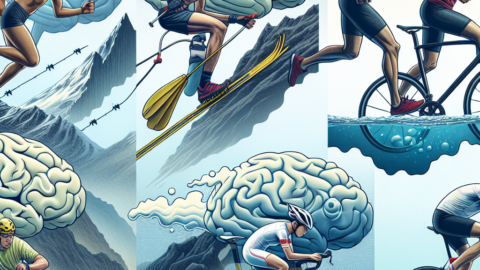
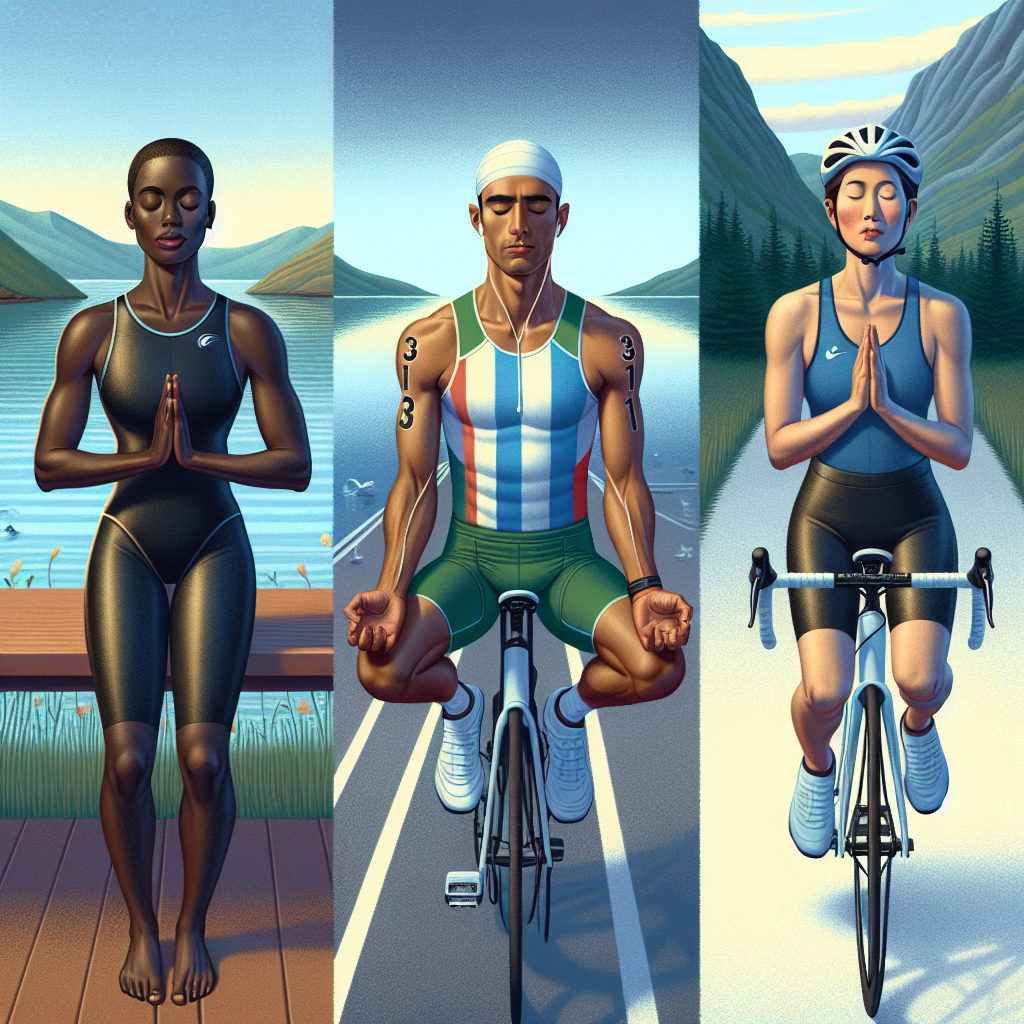
Mindfulness in a triathlon context is not about emptying your mind or sitting cross-legged after a session. It means directing your attention with intention — to your stroke rate in the water, your cadence on the bike, your breathing rhythm on a run. It means noticing discomfort without immediately reacting to it.
Research published in the Journal of Applied Sport Psychology consistently shows that athletes who practise mindfulness demonstrate better attentional control, lower pre-race cortisol, and improved ability to return to optimal effort after setbacks during competition. These are not abstract benefits. They show up as faster transitions, more consistent pacing, and the ability to hold race pace when it starts to hurt.
Mindful Breathing: The Anchor You Already Have
The breath is the most accessible mindfulness tool a triathlete has — it’s present in every session, in every discipline. The following breathing techniques can be applied before and during training:
Box Breathing for Pre-Race Calm
Used by Navy SEALs and Olympic athletes, box breathing involves inhaling for 4 counts, holding for 4, exhaling for 4, and holding for 4. Practised for 5 minutes before entering the water at Port Phillip Bay on race morning, this technique activates the parasympathetic nervous system and reduces the adrenaline spike that causes athletes to go out too hard in the swim.
Diaphragmatic Breathing on the Bike
Most amateur triathletes breathe shallowly under effort. On Beach Road tempo rides, practise breathing into the belly rather than the chest. Place one hand on your abdomen and focus on expanding it on the inhale. Deeper breaths increase oxygen efficiency and reduce perceived exertion at the same power output.
Rhythmic Breathing for Open Water
In Port Phillip Bay, chop and swell can disrupt breathing rhythm and trigger panic. Practise bilateral breathing in training — alternating breath sides every 3 strokes. This builds composure and provides a focal point that prevents the mind from catastrophising when conditions deteriorate.
Meditation Practices That Fit a Triathlete’s Schedule
Many triathletes dismiss meditation as time they don’t have. The reality is that a 10-minute practice three times per week produces measurable results. Here are formats that work around heavy training loads:
Body Scan After Hard Sessions
After a hard run on The Tan, lie down and systematically bring attention from your feet to your head, noticing sensations without trying to change them. This activates recovery physiology and builds the body awareness that helps you distinguish productive training discomfort from warning signs of injury.
Focused Attention Meditation
Set a timer for 10 minutes. Focus on a single point — your breath, a fixed object, or a sound. When your mind wanders (it will), gently return your focus. This is the mental equivalent of interval training — each return from distraction strengthens attentional control. Over weeks, this translates directly to the ability to refocus after a rough patch in a race.
Open Monitoring During Easy Sessions
On your easy recovery rides or Zone 1 runs through Albert Park, practise open monitoring — simply observe everything you notice (sounds, sensations, thoughts) without engaging with any of it. This builds the meta-awareness that allows you to notice “I’m starting to spiral” during a race and choose not to follow that spiral.
Incorporating Yoga for Focus and Race-Day Body Awareness
Yoga sits at the intersection of physical flexibility and mindful body awareness. For triathletes, a targeted 20-30 minute yoga routine two to three times per week delivers dual benefits: improved range of motion for more efficient movement patterns, and practiced attentional focus that carries into training and racing.
Key poses for triathletes include:
- Pigeon pose — releases hip flexors compressed by long hours in the aero position
- Supine spinal twist — addresses the rotational demands of the freestyle swim stroke
- Legs-up-the-wall — promotes venous return after long rides or runs
- Child’s pose with focused breathing — a direct transition between physical recovery and mindful breath awareness
Tri Alliance Victoria run structured recovery sessions that integrate yoga principles into post-training protocols. Learn more at vic.tri-alliance.com/training-programs.
Applying Mindfulness on Race Day
Race day is not the time to introduce new mental strategies. They need to be trained, just like your swim stroke or run economy. Here is a practical race-day mindfulness framework:
| Phase | Mindfulness Technique | Duration |
|---|---|---|
| Transition area setup | Box breathing, grounding (name 5 things you can see/hear/feel) | 5 minutes |
| Pre-swim warm-up | Body scan, rhythmic breathing focus | 10 minutes |
| Swim leg | Stroke count as anchor, bilateral breath rhythm | Throughout |
| Bike leg | Cadence as focal point, power-not-pace attention | Throughout |
| Run leg | Footfall rhythm, 1km-at-a-time segmentation | Throughout |
| Low point in race | Return to breath, process focus cue (“smooth”, “strong”) | As needed |
Building a Consistent Mindfulness Habit
Consistency matters more than duration. Ten minutes of daily mindfulness practice, maintained over 8 weeks, produces structural changes in the prefrontal cortex — the brain region responsible for attention regulation, emotional control, and decision-making under pressure. These are exactly the faculties that determine whether you hold race pace when it gets hard.
The most effective way to build the habit is to anchor it to an existing behaviour. Meditate immediately after your morning alarm, or run a body scan every time you complete a training session. The habit cue removes the friction of remembering to practise.
Tri Alliance Victoria offer mental performance coaching integrated with structured triathlon training. Visit vic.tri-alliance.com/coaching to explore coaching options that address both physical and mental preparation.
Frequently Asked Questions
How long before I notice the benefits of mindfulness training?
Most athletes report improved focus and reduced pre-race anxiety within 4-6 weeks of consistent daily practice. Performance benefits in racing typically become evident after 8-12 weeks, particularly in the ability to maintain composure during the run leg when fatigue is highest.
Can I practise mindfulness while I’m actually training?
Yes — in fact, training sessions are ideal mindfulness opportunities. Focus your attention on a single performance variable (stroke rate, cadence, breathing rhythm) rather than letting the mind wander. This is called “associative focus” and research shows it improves pacing accuracy and race execution compared to dissociative focus (distracting yourself from the effort).
What is the difference between mindfulness and visualisation?
Mindfulness is present-moment awareness — attending to what is actually happening right now. Visualisation is mentally rehearsing a future scenario. Both are valuable for triathletes and complement each other. Mindfulness builds the foundational attention skills that make visualisation more vivid and effective.
I have a busy life and struggle to find 10 minutes. What should I prioritise?
Box breathing (4 minutes before each training session) delivers the highest return for the least time investment. If you can add one 10-minute body scan per week after your hardest session, that combination covers the most critical applications for racing performance.
Are there Melbourne-based resources for learning these techniques?
Tri Alliance Victoria integrate mental performance strategies into their coached programs. Apps such as Headspace and Insight Timer provide guided meditations with sport-specific content. Some sports psychologists in Melbourne offer one-off mindfulness workshops tailored to endurance athletes — check with your club for recommendations.
Discover more from Tri Alliance Triathlon Community
Subscribe to get the latest posts sent to your email.