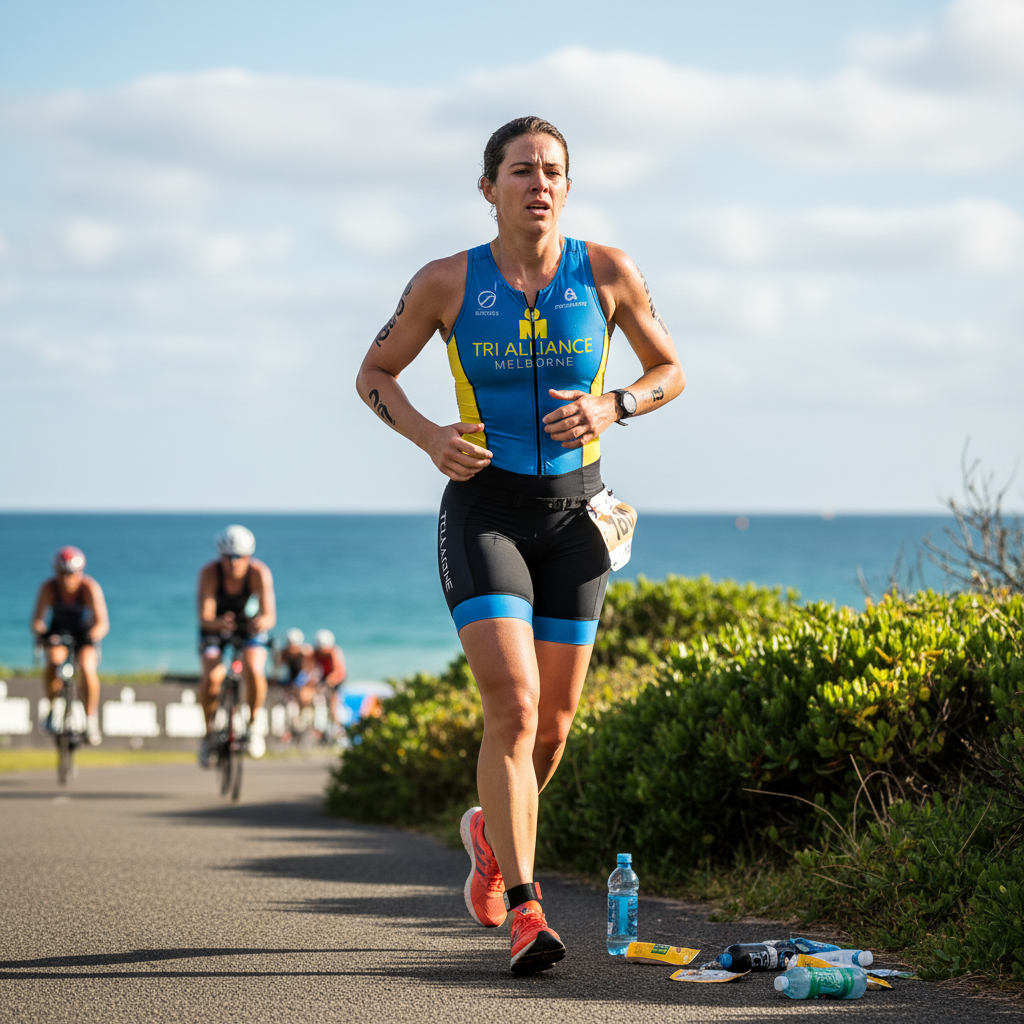
Managing Gastrointestinal Issues During an Ironman
GI distress is the single most common race-ending issue for Ironman athletes. Studies of Ironman finishers and DNFs consistently show that 30–50% of athletes experience significant gastrointestinal problems — nausea, vomiting, cramping, or diarrhoea — during the race. The good news: most GI problems in Ironman are predictable, trainable, and preventable. This guide gives you the exact protocols to protect your gut on race day.
Why GI Distress Happens in Ironman
Understanding the mechanisms helps you target the right prevention strategies:
- Splanchnic vasoconstriction: During intense exercise, the body redirects blood from the gut to working muscles. At high intensities, gut blood flow drops by up to 80%, severely impairing digestion and absorption.
- Gut motility changes: Running (not cycling or swimming) dramatically increases gut motility due to mechanical impact — a primary trigger for the urgent need to defecate during the Ironman run.
- Osmotic overload: Taking high-concentration gels or sports drinks without adequate water creates an osmotic gradient in the gut that draws fluid in — causing bloating, cramping, and diarrhoea.
- Dehydration: Impairs gastric emptying and exacerbates all other GI symptoms.
- Stress response: Cortisol and adrenaline on race day increase gut permeability (“leaky gut”) and stimulate bowel urgency.
Common GI Food Triggers to Identify Before Race Day
| Trigger | Why it causes problems | Risk level |
|---|---|---|
| High-fibre foods (pre-race) | Slow gastric emptying, fermentation, gas | High |
| High-fat meals (pre-race) | Delays gastric emptying by 1–2 hours | High |
| Fructose-only gels without glucose | Exceeds fructose transporter capacity — osmotic diarrhoea | High |
| Gels taken without water | Hyperosmotic solution causes gut to draw fluid in | High |
| NSAIDs (ibuprofen) during race | Increases gut permeability — multiplies GI risk | Very high |
| Caffeine overdose | Stimulates gut motility — urgency, loose stools | Moderate |
| Novel race-day nutrition | Untrained gut reaction — unpredictable | Very high |
| Over-hydration (plain water only) | Hyponatraemia — nausea, headache, confusion | High |
The Gut Training Protocol
Your gut, like your cardiovascular system, adapts to training stress. A systematic gut training protocol in the 8–12 weeks before your Ironman significantly reduces race-day GI risk.
Phase 1: Weeks 8–6 Before Race (High Carbohydrate Training)
- Consume 60g of carbohydrates per hour during all long training sessions (4+ hours)
- Use your exact race-day gels and sports drink from the first session
- Practice drinking 500–750ml per hour during long rides
- Goal: Identify any tolerance issues well before race day
Phase 2: Weeks 5–3 Before Race (Load Progression)
- Increase to 80–90g of carbohydrates per hour during the bike segment of long sessions
- Practice the run-off-bike sequence with fuelling (eat during the brick run)
- Simulate your race-morning meal timing (wake at race-day time, eat 3 hours before)
- Practice the exact volume and timing of pre-race meal
Phase 3: Weeks 2–1 Before Race (Specificity)
- Full race-day nutrition rehearsal on your longest brick session
- Test electrolytes (same brand and concentration as race-day)
- No new products — if it hasn’t been tested, it doesn’t get used
Race-Day GI Management: Timing and Targets
| Segment | Carbs target | Fluid target | Sodium target | Key rules |
|---|---|---|---|---|
| Swim (3.8km) | 0g (not possible) | 0ml | 0mg | Pre-race gel if swim > 70 min |
| T1 | 25g (1 gel or banana) | 200ml | — | Eat immediately after T1 is complete |
| Bike (180km) | 60–90g/hr | 500–750ml/hr | 500–1,000mg/hr | Start fuelling at km 20, not before |
| T2 | 25g (gel + cola) | 200ml | — | Settle stomach before running |
| Run (42.2km) | 30–60g/hr | 400–600ml/hr | 500–800mg/hr | Reduce gel frequency if nauseated — switch to cola |
Nausea Rescue Protocols During the Race
If nausea hits during your Ironman run:
- Slow your pace immediately — reduce run intensity by 30–40 seconds per km. Your gut needs blood flow restored.
- Switch to cola — Coca-Cola is available at most Ironman aid stations from km 20. It contains glucose, sodium, caffeine, and phosphoric acid (which settles the stomach). It’s the single best nausea rescue food in Ironman racing.
- Stop gels temporarily — wait for nausea to pass before resuming. Sip water only for 1–2km.
- Salt rescue: If you’re overloaded on water and feeling bloated, a salt stick tablet or two (500mg sodium) helps restore osmolality.
- Chicken broth (available at some Ironman aid stations): warm sodium + fluid without carbohydrate load — excellent late-race nausea relief.
Pre-Race Gut Preparation
The 3 Days Before Race Day
- Reduce dietary fibre to under 20g per day (normal intake is 25–35g)
- Avoid raw vegetables, legumes, bran, and seeds
- White rice, white pasta, white bread, banana, potato — these are your carbohydrate staples
- Avoid alcohol entirely (disrupts sleep and increases gut permeability)
- Stay well hydrated — urine should be pale yellow
The Morning Before Race
- Wake up 3.5–4 hours before race start
- Main meal: 80–120g carbohydrates, under 15g fat, under 5g fibre
- Example: 100g oats (dry weight) cooked in water + 1 banana + 1 tbsp honey = 82g carbs, 390 kcal
- 1 coffee (if coffee is your normal routine — don’t start caffeine on race day if you don’t normally use it)
- Allow time for a full bowel movement before heading to transition — do not rush this
Melbourne Ironman Race Day Context
Melbourne Ironman events (Ironman Melbourne, Challenge Melbourne, Port Macquarie within drive distance) typically have race starts between 6:00–7:00am. Summer race day heat (January–March in Victoria) significantly increases sweat rate and amplifies GI risk — dehydration and electrolyte losses compound gut blood flow issues. In heat above 25°C, increase sodium intake by 200–300mg/hr above baseline targets and reduce gel frequency slightly to maintain GI comfort.
For structured Ironman preparation in Melbourne including gut training integration, visit Tri Alliance Victoria.
Frequently Asked Questions
Why do I always need to go to the toilet at the start of a run during an Ironman?
Running’s mechanical impact stimulates colonic motility (the “gastrocolic reflex”) far more than cycling or swimming. This is a physiological reality for many athletes, not a sign of poor gut function. Solutions: ensure a complete pre-race bowel movement (wake early enough), reduce dietary fibre from 5 days before the race, and consider a caffeine-free morning if your gut is particularly reactive.
Is it safe to take Imodium before an Ironman to prevent diarrhoea?
Some athletes use loperamide (Imodium) as a pre-race precaution. This is common but should be discussed with a sports physician. Stopping diarrhoea pharmacologically while continuing to push at race intensity can mask signals of serious dehydration or heat stroke. Practice this strategy in training first, never on race day without prior experience.
What’s the difference between nausea from dehydration vs nausea from over-fuelling?
Dehydration nausea: dry mouth, dark urine, headache, reduced pace. Typically feels “heavy” and comes with fatigue. Over-fuelling (osmotic) nausea: bloating, sloshing feeling in stomach, often with cramping. May include loose stools. The treatment differs: dehydration nausea requires fluid; over-fuelling nausea requires a pause in fuelling and slow walking pace for 5–10 minutes.
Can I train my gut to absorb 90g of carbohydrates per hour?
Yes. Research by Jeukendrup and colleagues demonstrated that gut carbohydrate absorption capacity is trainable. Athletes who consumed 90g/hr of dual-source carbohydrates (glucose + fructose) consistently in training significantly upregulated intestinal GLUT5 (fructose) transporter expression within 4 weeks. This is a genuine physiological adaptation — gut training is not a myth.
Should I use electrolyte tablets or rely on sports drinks for sodium replacement?
Most sports drinks provide 300–500mg sodium per litre — often insufficient in a hot Ironman. Salt tablets (SaltStick: 215mg sodium per capsule, ~$0.30 each) allow independent sodium dosing alongside plain water or lower-sodium sports drinks. Many experienced Ironman athletes take 1–2 salt capsules per hour on the bike in addition to sports drink. SaltStick Caps are widely available in Melbourne at Rebel Sport, Bike Exchange, and Nutrition Warehouse (~$35–40 for 100 capsules).
Discover more from Tri Alliance Triathlon Community
Subscribe to get the latest posts sent to your email.