Managing Race Day Nerves and Anxiety in Triathlon
Pre-race anxiety is universal — it affects first-time sprint triathletes and experienced Ironman athletes alike. The question is never whether you’ll feel nervous, but whether those nerves work for you or against you. This guide covers evidence-based strategies used by Tri Alliance Victoria athletes to convert race day anxiety into focused, high-performance energy.
Understanding Where Race Day Anxiety Comes From
Race day anxiety has identifiable sources. Naming them makes them manageable:
- Fear of the unknown: Unfamiliar course, unpredictable weather, open water conditions
- Performance expectations: Self-imposed time goals, comparison to training partners, fear of a slow result
- Equipment concerns: Gear failure, transition mistakes, tyre punctures
- Physical doubt: “Have I done enough training?” — almost universal regardless of preparation quality
The athletes who manage anxiety best address each source specifically, rather than trying to suppress anxiety as a general state. Suppression increases anxiety; acknowledgment and planning reduce it.
The Week Before Race Day: Taper and Tension
The week before an Ironman is the most psychologically uncomfortable week of the training cycle. Training volume drops sharply (the taper), leaving athletes with more time to think and less physical tiredness to distract them. Irritability, doubt, and phantom fatigue are normal taper symptoms — they signal that the body is adapting, not that something is wrong.
Practical management during race week:
- Keep a light training schedule (short swim, easy 20-minute run) to maintain routine without adding fatigue
- Prepare gear 3 days out, not the night before — packing transition bags on race eve amplifies anxiety
- Avoid social media race threads in the 48 hours before — other athletes’ pre-race anxiety is contagious
- Pre-book race day logistics: parking, transport, hotel — uncertainty about logistics is anxiety fuel
Mindfulness Techniques That Actually Work on Race Morning
There’s no shortage of mindfulness advice for athletes. These are the techniques that hold up under real race morning conditions, when you’re standing in transition at 5:30am in Port Macquarie or Cairns and your heart rate is already elevated:
Box Breathing (4-4-4-4)
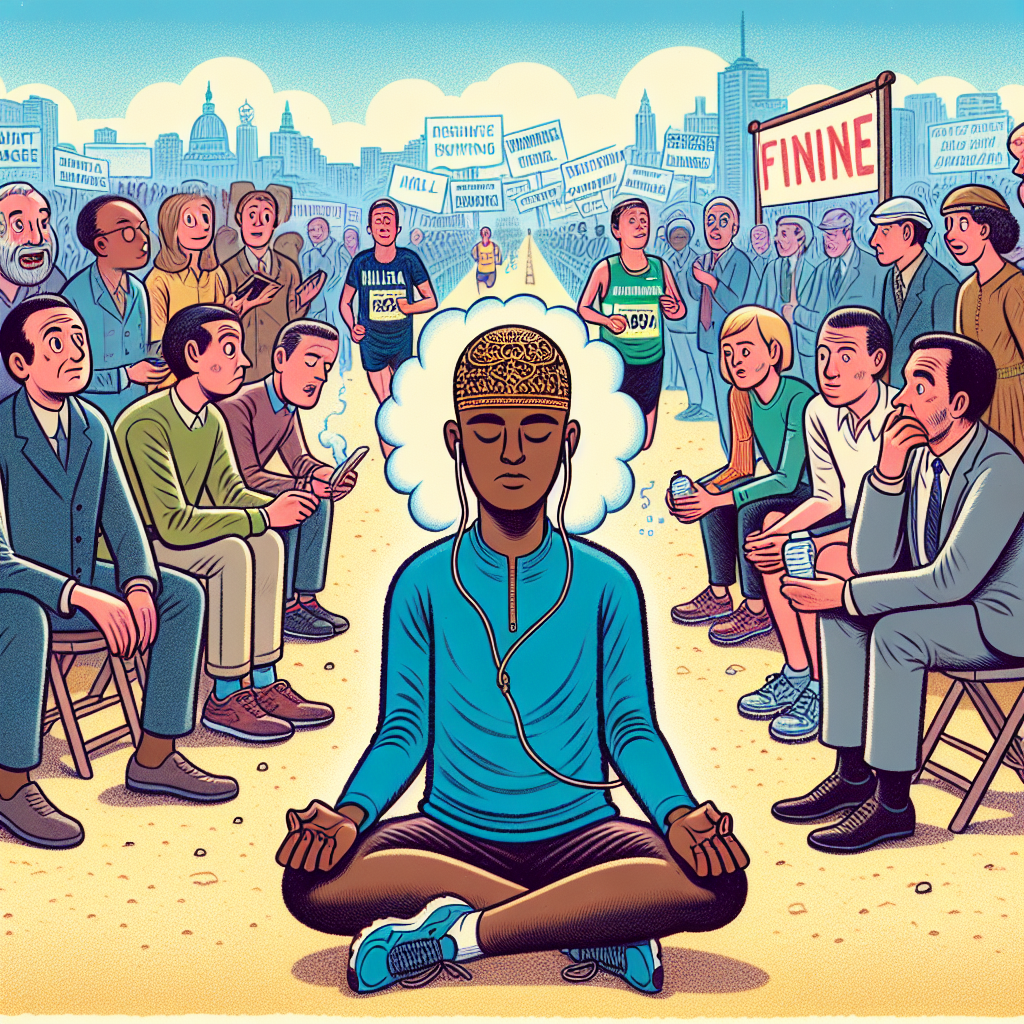
Inhale for 4 seconds, hold for 4, exhale for 4, hold for 4. Repeat 4–6 times. This directly activates the parasympathetic nervous system — the physiological mechanism that reduces heart rate and cortisol. Used by military special forces and elite athletes for the same reason: it works reliably under high stress, not just in low-stakes settings.
Body Scan
Before the swim start, spend 2–3 minutes consciously relaxing from head to feet — jaw, shoulders, hands, hips. Most athletes carry tension in their shoulders and jaw without realising. A relaxed upper body improves swim technique, especially in cold water where tension compounds inefficiency.
Intention Setting
Unlike outcome goals (“I want to finish in 11 hours”), intention setting focuses on how you want to race: “I will be patient on the bike”, “I will run to effort, not pace”. This redirects mental energy from anxiety about outcomes to action-oriented process focus. The intention travels with you through the race; the outcome is outside your control.
Building a Pre-Race Routine That Reduces Variables
Anxiety thrives on uncertainty. A structured pre-race routine eliminates unnecessary variables and gives your nervous system something familiar to orient around.
Sample Race Morning Timeline (Ironman)
| Time Before Race Start | Activity | Purpose |
|---|---|---|
| 3 hours | Race breakfast (tested in training) | Fuel without GI risk |
| 2 hours | Arrive at transition | Avoid rush, set up calmly |
| 90 minutes | Gear check, bike tyres, rack setup | Eliminate equipment anxiety |
| 45 minutes | Wetsuit on, warm-up swim (5–10 min) | Reduces cold water shock at start |
| 20 minutes | Box breathing, quiet time, headphones | Mental settling, focus |
| 10 minutes | Move to start area, light movement | Activate muscles without adding fatigue |
This routine becomes more powerful each time you use it. Athletes who’ve raced multiple times at the same event (Ironman Melbourne at Frankston, for example) report that the familiar routine of venue setup, transition layout, and swim warm-up dramatically reduces first-wave anxiety year on year.
Visualisation: Rehearsing the Race Before You Race It
Visualisation is mental rehearsal — not daydreaming. The distinction matters. Effective visualisation is specific, sensory, and includes obstacles:
- Picture the swim start clearly: the crowd, the water colour, the sound of the horn, your stroke settling after the first 200 metres
- Visualise a puncture on the bike — and yourself calmly changing the tube and continuing
- Rehearse kilometre 35 of the run, when you’re tired, and see yourself maintaining form and forward movement
Athletes at Tri Alliance who incorporate structured visualisation in the 2–3 weeks before their A-race consistently report lower anxiety on race morning — they’ve already “raced” the event multiple times in their heads. Nothing feels entirely unfamiliar.
Race Day Nutrition and Anxiety: The Gut-Brain Connection
Anxiety suppresses digestion. This is a physiological fact, not a mind game. An athlete who is severely anxious on race morning may not process their pre-race meal effectively, arriving at the swim start under-fuelled and with an unsettled gut.
Practical strategies:
- Eat your race breakfast at least 2.5–3 hours before the swim start — not 90 minutes before
- Stick to foods proven in training. No new products on race day, regardless of what other athletes recommend at the expo
- Small, carbohydrate-dense: 2 slices of white toast with Vegemite and honey, a banana, 400ml water is a reliable Ironman breakfast for most athletes
- Avoid high-fibre foods (whole grains, leafy vegetables) the day before — they increase GI risk under racing conditions
Frequently Asked Questions
Is race day anxiety normal, even for experienced triathletes?
Yes — it’s physiologically normal and not something to eliminate. Research on performance anxiety consistently shows that a moderate level of arousal improves performance in endurance events. The goal is to keep anxiety in the “facilitative” range, not to feel completely calm. Professional triathletes get nervous before races. The difference is their management tools, not the absence of anxiety.
How do I stop my mind from catastrophising the night before a race?
The most effective technique is scheduled worry: set aside 10 minutes to deliberately write down your worst-case scenarios and your planned response to each. This externalises the anxiety rather than letting it circulate. Once the 10 minutes is done, the concerns are documented and addressed — the mind doesn’t need to keep processing them. Then use box breathing to physically downregulate before sleep.
What’s the best thing to do in the swim start if I feel panicked?
Roll onto your back, breathe, and float for 15–20 seconds. This is race-legal, costs you very little time, and breaks the panic cycle. Most panic responses in open water start are triggered by cold water hitting the face and mild hyperventilation — floating breaks that cycle immediately. Practise this in training at Elwood Beach or Williamstown so it’s automatic on race day.
Should I listen to music before my race to calm down?
It depends on your response to music. High-energy music raises arousal (useful if you’re flat, harmful if you’re already anxious). Calm, low-tempo music can reduce heart rate before a race start. Some athletes do better in silence. Test this in your key training races and race simulations — don’t experiment on Ironman race day itself.
How does Tri Alliance prepare athletes for race day mentally?
The Tri Alliance Victoria program includes structured race simulation sessions — open water swims, race-pace brick sessions, and time trials — that deliberately replicate race-day conditions. Athletes who’ve experienced the discomfort of a hard swim start, a sustained tempo bike, and a tired run in training have fewer novel stimuli to manage on race day. The mental preparation is built into the training structure.
Discover more from Tri Alliance Triathlon Community
Subscribe to get the latest posts sent to your email.