Road Bike vs. Triathlon Bike: Making the Right Call
The bike leg in an Ironman covers 180 km — 60–65% of most athletes’ total race time. Getting the bike decision right matters more than almost any other equipment choice. But it’s also one of the most expensive decisions in the sport, with entry-level tri bikes starting at AU$3,000 and serious race rigs exceeding AU$15,000. Here’s a clear-headed guide to making the right call for your budget and goals.
Triathlon Bike vs. Road Bike: The Core Tradeoff
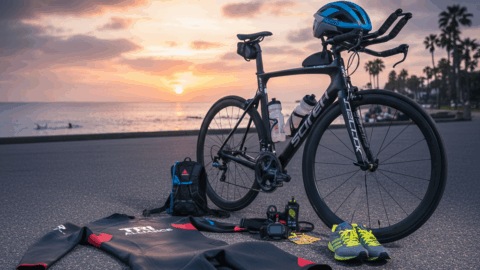
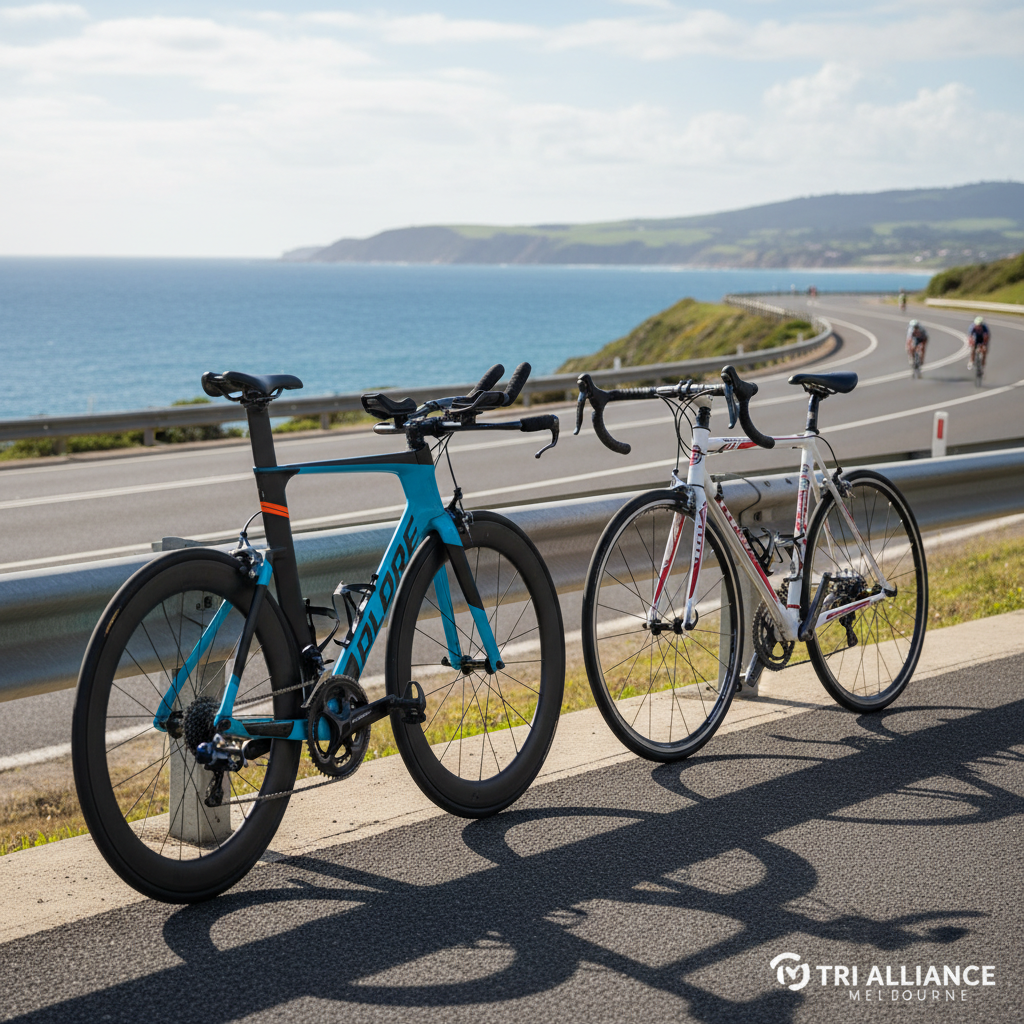
A dedicated triathlon bike (also called a TT or time trial bike) positions you in an aerodynamic tuck with forearms resting on aero bars. At 40 km/h, aerodynamics accounts for 80–90% of resistance. A rider on a tri bike in a good aero position saves 3–5 minutes per hour compared to the same rider on a road bike in the hoods.
The tradeoff: tri bikes are harder to handle, less comfortable on climbs and technical descents, and require dedicated bike fittings to set up correctly. They’re also illegal in draft-legal events.
| Factor | Triathlon Bike | Road Bike + Clip-ons |
|---|---|---|
| Aerodynamics | Optimised (saves 3–5 min/hr) | Moderate (saves 2–4 min/hr) |
| Handling | Requires practice | Familiar and responsive |
| Comfort (long rides) | Position-dependent | More forgiving |
| Versatility | Triathlon/TT only | Training, groups, events |
| Entry price (AUD) | $3,000–$5,000 | $2,000–$3,500 + $150 clip-ons |
| Fit complexity | High — needs specialist fit | Moderate |
Recommended Bikes by Budget (AUD)
AU$3,000–$5,000: Entry-Level Tri Bike
Trek Speed Concept AL (~AU$3,500): Aluminium frame, integrated storage, SRAM Rival groupset. Heavier than carbon but aerodynamics still significantly beat a road bike at this price.
Giant Trinity Advanced (~AU$4,200): Carbon frame, good out-of-the-box fit for a range of body types, hydraulic disc brakes.
AU$5,000–$9,000: Mid-Range Carbon
Cervelo P3X (~AU$6,500): Full internal storage, wide tyre clearance, refined aerodynamics. The storage system is race-day practical — nutrition, tubes, CO2 all internal.
Scott Plasma 6 (~AU$7,200): Clean integration, disc brakes, fits 28mm tyres. Scott’s geometry is generally accessible for athletes new to TT positions.
AU$10,000+: Race-Ready
Cervelo P5 (~AU$12,000): SRAM Red AXS, 40mm deep wheels included. This is the benchmark for sub-10 hour Ironman athletes.
Canyon Speedmax CFR (~AU$11,500): German engineering, direct-from-manufacturer pricing (no retail markup), highly adjustable geometry for precise fitting.
The Bike Fit Is Not Optional
An expensive bike in the wrong position is slower and more injurious than a cheap bike set up well. A triathlon-specific bike fit costs AU$250–$400 at Melbourne specialists (Cadence, The Hub Cycling, BikeForce) and typically includes a position on the trainer with video analysis, saddle height, cleat setup, and aero bar adjustment.
The fit should happen before you finalise your bike purchase if possible — your ideal frame size can change based on fit findings. This is especially important for athletes with lower back, hip flexor, or ITB issues.
Tri Alliance coaching programs include guidance on bike fit recommendations — ask your coach before booking independently.
Wheels: More Impact Than Almost Anything Else
Deep-section carbon wheels are the single best aerodynamic upgrade after the bike itself. A 60mm front / 80mm rear combination can save 3–6 minutes over a 180 km course in normal conditions. Zipp 404 (AU$2,800/pair), Enve 4.5 AR (AU$4,500/pair), and Hunt 4 Season Aero (AU$1,400/pair) are commonly raced in Australian events.
In Melbourne’s changeable wind conditions, a 60mm or shallower front wheel is safer than 80mm+ — deep front wheels become difficult to handle in crosswinds above 30 km/h. For Ironman Melbourne (historically run at Shepparton or surrounds), winds are variable and a 60mm front is the practical choice.
Key Components to Prioritise
- Groupset: Shimano 105 Di2 or SRAM Rival AXS are the minimum for reliable electronic shifting. Mechanical groupsets are fine but electronic shifting removes a variable in transition and long race efforts
- Saddle: Budget AU$200–$400 for a proper tri saddle fitting (ISM, Fizik Tritone, Selle SMP). Tri saddles are flatter and shorter than road saddles to accommodate the rotated-forward hip position
- Tyres: 25–28mm width at 75–80 psi for Melbourne roads. Continental GP5000S TR tubeless or Vittoria Corsa TLR are the benchmark race tyres in Australia
Frequently Asked Questions
Can I do an Ironman on a road bike?
Yes — many athletes complete Ironman on road bikes, particularly for first events. Add clip-on aero bars (AU$120–250) and you recover most of the aero disadvantage. A well-fitted road bike with clip-ons is faster than a poorly fitted tri bike.
What’s the minimum spend for a race-competitive bike in Australia?
For age-group athletes targeting sub-12 hours in an Ironman, a AU$4,000–$5,000 carbon tri bike with stock wheels is sufficient. The gains from spending AU$10,000+ are real but diminishing — an athlete who trains consistently on a AU$4,500 bike will beat a poorly prepared athlete on a AU$12,000 setup.
Should I buy new or second-hand?
Second-hand tri bikes offer excellent value — aero technology doesn’t change as rapidly as road bikes. A 3–5 year old Cervelo P3 or Trek Speed Concept in good condition can be purchased for AU$1,800–$3,000 and is still competitive. Check the frame for cracks around the BB shell and headtube carefully before buying.
How important is weight vs. aerodynamics for Ironman?
On flat courses (Busselton, Cairns), aerodynamics matters far more than weight. On hillier courses (Canberra, some NZ events), a lighter bike pays dividends. For most Australian Ironman courses, prioritise aero over weight savings.
Do I need a bike fit before my first triathlon?
For a sprint or Olympic distance, a basic fit (saddle height, cleat position) is adequate. For a 70.3 or Ironman, a full triathlon bike fit is essential — you’ll spend 4.5–6+ hours in that position and a poor fit will cost you the run leg.
Discover more from Tri Alliance Triathlon Community
Subscribe to get the latest posts sent to your email.