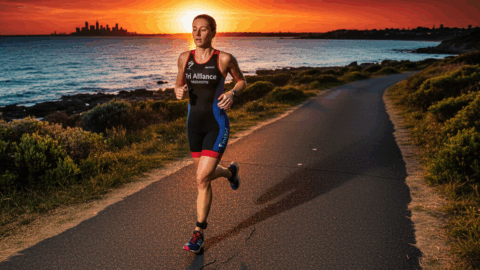

Setting and Achieving Realistic Goals in Triathlon Training
Goal setting is the most talked-about and least effectively practised mental skill in endurance sport. Most triathletes have a race goal — a finish time, a podium position, completing their first event. Fewer have a structured goal framework that actually changes how they train, how they manage setbacks, and how they make decisions on race day.
For Melbourne triathletes navigating the balance between work, family, and training on Beach Road or Albert Park, setting the right goals — and then building the process to achieve them — is the difference between a training block that produces results and one that ends in frustration or injury.
Why Generic Goal Advice Fails Triathletes
The standard SMART goal framework (Specific, Measurable, Achievable, Relevant, Time-bound) is useful but incomplete for endurance athletes. It tells you how to structure a goal but not how to select the right type of goal or sequence multiple goals within a season.
Two specific failures are common among triathletes:
- Over-reliance on outcome goals — targeting finish times or placings that depend on factors outside the athlete’s control (course conditions, competition, weather at Albert Park on race day)
- Under-investment in process goals — the daily and weekly behaviours that actually determine whether outcome goals are achieved
A well-structured triathlon goal framework uses all three goal types in a deliberate hierarchy.
The Three-Tier Goal Framework for Triathletes
Tier 1: Outcome Goals
These are the “what” — finish the race, achieve a sub-5 hour Ironman 70.3, qualify for a world championship slot. Outcome goals provide direction and meaning. They belong at the top of the hierarchy but should not be the primary focus of daily training decisions.
Tier 2: Performance Goals
These are measurable performance benchmarks on the path to the outcome goal. Examples include: swim the first 750m of an Olympic-distance race in under 12 minutes, maintain 270W average power on the Beach Road ride, run the last kilometre of The Tan time trial as fast as the first. Performance goals are largely within the athlete’s control and provide clear feedback on whether training is working.
Tier 3: Process Goals
These are the specific behaviours — the training sessions completed, the recovery protocols followed, the nutrition strategies practised. “Complete all three swim sessions this week,” “execute race nutrition plan in Sunday’s long ride,” “arrive at Port Phillip Bay swim practice 15 minutes early to warm up properly.” These are entirely within the athlete’s control and are the most direct lever on performance outcomes.
The key insight is this: focus 80% of your daily attention on process goals. The outcome goals take care of themselves when the process is right.
How to Set Realistic Goals Without Selling Yourself Short
The word “realistic” is often misunderstood in goal setting. It does not mean conservative or modest. A realistic goal is one that is achievable with optimal execution of your training plan — it should require your best effort, not your average effort.
For first-time triathletes, realistic goal setting should be based on:
- Current fitness benchmarks (recent swim times, cycling FTP, running threshold pace)
- Available training time and recovery capacity
- Historical training data if available (prior race times, training volume tolerance)
- Input from a coach who can objectively assess your trajectory
Tri Alliance Victoria coaches work with athletes at all levels to establish meaningful, realistic goals grounded in actual fitness data. Explore coaching options at vic.tri-alliance.com/coaching.
Strategies for Staying on Track With Your Goals
Weekly Goal Reviews
Set a 10-minute weekly appointment — Sunday evening works well for most athletes — to review the process goals for the past week and set them for the coming week. What was achieved? What wasn’t? What adjustment is needed? This creates a feedback loop that keeps goals live and connected to training behaviour.
Adjust Goals When Circumstances Change
Life happens — illness, work pressure, family commitments. A rigid commitment to a goal set in December may be inappropriate in March when circumstances have changed. Adjusting a goal when circumstances genuinely warrant it is not failure. Continuing to pursue a goal that no longer fits your reality, and then blaming yourself for the inevitable shortfall, is the failure pattern to avoid.
Distinguish Between Obstacles and Excuses
A persistent mental skill in goal achievement is accurately distinguishing genuine obstacles (injury, illness, family emergency) from excuses (tired, weather, motivation dip). Both exist. Treating every missed session as a genuine obstacle undermines the process. Treating every genuine obstacle as an excuse causes injury and burnout. Developing honest self-assessment in this distinction is one of the most valuable mental skills a triathlete can build.
Measuring Progress and Adjusting Your Goals
| Goal Type | How to Measure | Review Frequency | Adjustment Trigger |
|---|---|---|---|
| Process goals | Training log (sessions completed, adherence to plan) | Weekly | Consistently missing same type of session |
| Performance goals | Training test results, race splits, Strava segments | Monthly | No progress after 6-8 weeks, or rapid improvement ahead of target |
| Outcome goals | Race results, timing data | Per race | Significant life change, injury, or major performance shift |
The Mental Side of Goal Achievement
Goal setting is a mental skill before it is a planning tool. Research in achievement psychology shows that athletes with clear, personally meaningful goals demonstrate greater persistence under fatigue, recover faster from setbacks, and make better pacing decisions during competition.
The specificity of the goal matters more than the ambition of it. “I want to run the Melbourne Ironman 70.3 run leg in under 1:45, negative split, starting at 5:05/km” triggers more consistent training behaviour than “I want to run well.” The brain responds to specific targets — it can plan backwards from them, assess current progress against them, and generate sustained motivation toward them.
Tri Alliance Victoria incorporate structured goal-setting sessions as part of their athlete onboarding and seasonal planning. Visit vic.tri-alliance.com/training-programs to learn more about structured triathlon programs in Melbourne.
Frequently Asked Questions
How many goals should I set for a triathlon season?
Most athletes perform best with one clear A-race outcome goal, 3-5 performance goals supporting it, and weekly process goals that are reset each week. More than one A-race goal per season tends to dilute focus unless the events are genuinely complementary in terms of distance and timing.
What should I do when I’ve missed several weeks of training and the goal now seems unrealistic?
First, reassess honestly: how much training is left, what can realistically be achieved from here, and what adjustment to the performance goal is warranted? Then reset. A revised goal based on your actual current fitness is better than abandoning the goal or pursuing an outcome you can no longer support. Completing the event with adjusted targets is almost always more valuable than a DNS.
Should my training partner and I share the same goals?
Shared participation goals (both completing the same race) can be powerful for mutual motivation. Shared performance targets (both targeting the same finish time) can cause problems if one athlete is ahead of the other’s trajectory — either creating pressure to go out too fast on race day, or creating resentment. Be specific and honest about where shared goals help and where individual goals are more appropriate.
How do I set goals if I’m new to triathlon and don’t have benchmark data?
Focus heavily on process goals for your first season — sessions completed, skills practised, consistent attendance at training. For your first race, make the outcome goal simply “finish the race feeling in control.” Collect the benchmark data your first race provides, then build a more structured goal framework for your second event.
Can a coach help me set better goals?
Absolutely. A coach brings objective performance data, experience with many athletes at similar stages, and the ability to identify whether a goal is appropriately challenging or inadvertently self-limiting. Tri Alliance Victoria coaches work with athletes from first-time sprint-distance competitors to experienced long-course racers. Visit vic.tri-alliance.com/coaching to find out more.
Discover more from Tri Alliance Triathlon Community
Subscribe to get the latest posts sent to your email.